
We offer medical detox and multiple addiction treatment options in our
luxury treatment centres in Port Hope, Cobourg, and Ottawa.
What Is Alcohol Flushing and Is It Dangerous?

A warm, reddened face after a drink or two is one of the more visible ways the body responds to alcohol, and for many people it raises a fair question about what that colour means for their health.
The reaction has a name, alcohol flushing, and the redness on the surface reflects how the body copes with the drink as it moves into the bloodstream. For some people, the flush stays a mild inconvenience, and for others it carries a health signal worth taking seriously.
Key Takeaways
- The red face is only the surface of a reaction that involves the heart, the stomach, and the skin all at once.
- A single toxic by-product causes the colour, and the body's speed at clearing it decides who flushes.
- Genetics set the odds, and one population carries the trait far more than any other.
- The danger question has a real answer, and it involves a cancer risk that rarely gets mentioned over drinks.
- Intolerance and allergy get confused constantly, and the difference changes what you should do next.
- Years of flushing leave their mark, and a face that stays red can say more than one evening ever could.
What Is Alcohol Flushing?
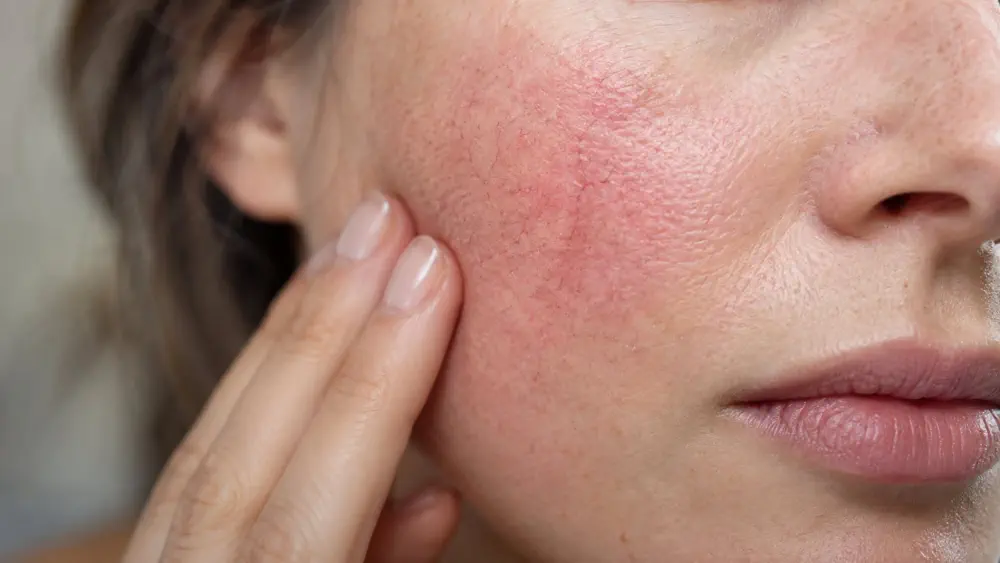
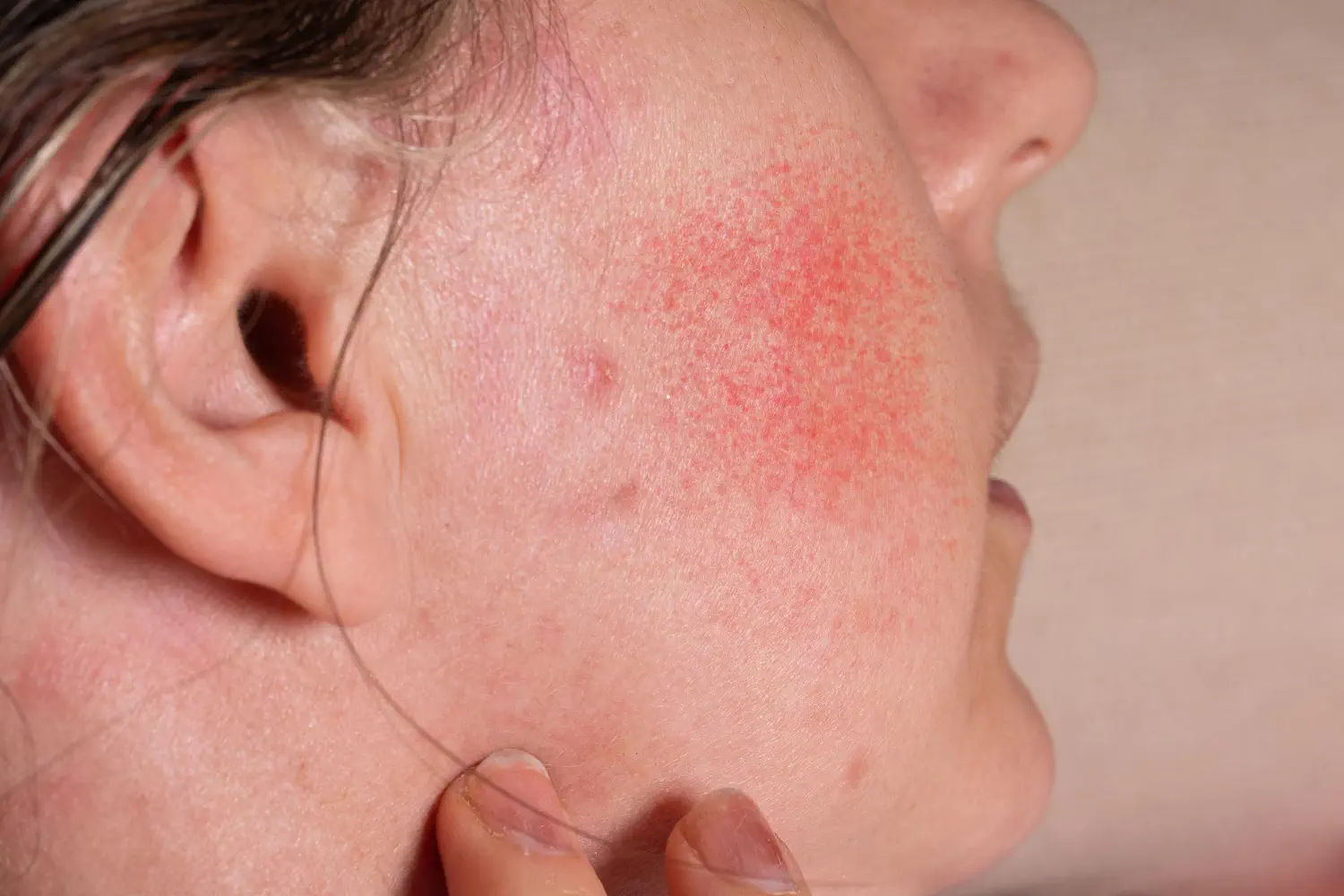
Alcohol flushing is the reaction that brings warmth and a pink to red colour across the face soon after drinking, and the colour can reach the neck and upper chest as well.
Other symptoms usually appear alongside the redness, and taken together they show how hard the body is working to clear the drink. Some people meet the reaction after a single glass, and others feel it build as the evening goes on.
The most common of those symptoms are:
- a fast or pounding heartbeat
- nausea or a queasy stomach
- a throbbing headache
- a blocked or stuffy nose
- a hot, prickly feeling on the skin
Doctors sometimes call this pattern alcohol flushing syndrome, and the name covers the full cluster of symptoms and not the redness on its own.
Why Does My Face Get Red When I Drink Alcohol?
The colour has a clear origin in how the body handles alcohol once it reaches the liver. It takes two enzymes, each responsible for one stage:
- An enzyme called alcohol dehydrogenase turns the ethanol from the drink into acetaldehyde, a toxic compound.
- A second enzyme, aldehyde dehydrogenase 2 (ALDH2), converts that acetaldehyde into acetate, a harmless substance the body clears with ease.
When the second stage runs slowly, acetaldehyde collects in the blood faster than the body can remove it. The buildup widens the small blood vessels in the face and sets off a release of histamine, and that pairing produces the visible redness along with the warmth that comes with it.
Enzyme speed varies from person to person, which is what leaves some people flushed within minutes of their first alcohol of the evening and others with no colour at all.
What Causes Alcohol Flushing Syndrome, and Who Experiences It?
The slow second enzyme is almost always inherited through a variant of the ALDH2 gene, which produces a version of the enzyme that works at a fraction of its normal speed. People carry this trait from birth, and it is far more concentrated in some populations than others.
| Group | Roughly how many flush |
| Worldwide | about 8% of people, close to 540 million [1] |
| East Asian descent (Japanese, Chinese, Korean) | around 36% [8] |
| European or African ancestry | uncommon |
The trait picked up the nickname Asian glow because of that concentration, and alcohol flushing runs in families as an inherited trait, with no bearing on how much drinking experience a person has.
Is Alcohol Flushing Dangerous?

For an occasional drinker, the flush passes within an hour and leaves no lasting harm. The concern grows for people who keep drinking through the reaction, because the acetaldehyde that causes the redness accumulates and damages cells each time the body falls behind on clearing it. Acetaldehyde produced as the body clears alcohol is listed by the International Agency for Research on Cancer as a Group 1 carcinogen [6], the same category used for the most established cancer-causing agents.
The clearest risk appears in the esophagus, and it rises sharply with heavy use, since people with the inactive enzyme who take in around 33 or more standard drinks a week carry a risk of esophageal cancer close to 89 times that of people who do not drink [1]. The danger reaches past cancer, since drinkers who cannot clear acetaldehyde efficiently show greater susceptibility to cardiovascular problems over time [5].
The reaction works as an early warning from the body, and reading it that way opens a chance to act before harm accumulates.
For anyone whose drinking has grown hard to slow down even as the flush keeps returning, medically supervised alcohol rehab in a residential setting offers the safest way to stop, with round-the-clock care through withdrawal and support that continues long after the first weeks. The body is flagging a cost that climbs with every drink, and that is what makes alcohol flushing worth taking seriously.
Is Alcohol Flushing the Same as an Alcohol Allergy?
The flush gets labelled an allergy all the time, and the two conditions come from entirely separate systems in the body. One is a metabolic intolerance tied to the enzyme described earlier, and the other is an immune response.
| Alcohol intolerance (the flush) | Alcohol allergy | |
| Cause | slow ALDH2 enzyme, a metabolic trait | immune system reacting to alcohol or an ingredient |
| Common signs | facial redness, warmth, fast heartbeat, nausea | hives, itching, swelling, wheezing |
| Severity | uncomfortable and health-relevant over time | can turn severe, and in rare cases life-threatening |
| How common | widespread, especially in East Asian populations | genuinely rare |
At the mild end, the two can look similar, which is where the confusion starts. A genuine alcohol allergy calls for medical assessment, and any drinking that brings on swelling, difficulty breathing, or a spreading rash is a reason to stop and seek care straight away.
Can Repeated Flushing Change Your Skin Over Time?
A single flush fades, but a pattern of flushing week after week starts to leave visible traces on the skin. Repeated widening of the facial blood vessels can make some of them stay dilated, showing as lasting redness and fine broken capillaries across the cheeks and nose. Heavy drinking also pulls moisture from the skin and dulls its tone, and for people prone to rosacea the flush can set off flare-ups that deepen over the years.
The changes that tend to build up include:
- redness that lingers long after the drink is gone
- small broken vessels visible near the surface
- dryness and a rough or uneven texture
- a ruddy, inflamed look around the nose and cheeks
A persistent red face after alcohol points to more than one evening of drinking, and there is more to how alcohol affects your skin, from hydration and healing to the visible signs of long-term use.
What Does an Alcoholic Face Reveal About Long-Term Drinking?

There is a difference between the flush of a single night and the settled appearance that years of heavy drinking can leave on a face. Where an occasional reaction comes and goes, the look tied to long-term use tends to hold, with a redness that no longer clears, puffiness around the eyes and cheeks, and a tired, uneven tone that stays day to day.
The look people call an alcoholic face is not a diagnosis on its own, and appearance can mislead, so the value in learning how to spot an alcoholic face lies in reading it as one signal among several worth weighing.
When a flushed, changed face lines up with drinking that has become heavier or harder to control, the combination is a stronger prompt to look closer than either would be on its own. A pattern of alcohol flushing that has settled into a permanent colour can be one of the clues that drinking has moved past a casual habit, and catching that early leaves far more room to change course.
What the Flush Is Really Telling You
Taken seriously and acted on early, a flushed face becomes useful information about how a body reacts to alcohol and where its limits lie. The people who benefit most are the ones who treat alcohol flushing as a reason to reassess their drinking well before the heavier risks have time to take hold, and that window stays open far longer than most drinkers assume.
Ready to take the first step?
Addiction doesn't get better on its own. Call us today for a free, confidential consultation and find out which program is right for your needs.
Sources
- Brooks, P.J., et al. "The Alcohol Flushing Response: An Unrecognized Risk Factor for Esophageal Cancer from Alcohol Consumption." PLoS Medicine. https://journals.plos.org/plosmedicine/article?id=10.1371/journal.pmed.1000050
- National Institute on Alcohol Abuse and Alcoholism (NIH). "Alcohol Flush Signals Increased Cancer Risk among East Asians." https://www.nih.gov/node/17331
- Cleveland Clinic. "Alcohol Flush: Why Alcohol Makes Your Face Red." https://health.clevelandclinic.org/facial-flushing-should-you-worry-if-your-face-turns-red-when-you-drink
- Cleveland Clinic. "Alcohol Intolerance: Symptoms, Tests and Alcohol Allergy." https://my.clevelandclinic.org/health/diseases/17659-alcohol-intolerance
- Alcohol Change UK. "Why does my face go red when I'm drinking?" https://alcoholchange.org.uk/alcohol-facts/fact-sheets/why-does-my-face-go-red-when-im-drinking-understanding-alcohol-intolerance
- Rumgay, H., et al. "The IARC Perspective on Alcohol Reduction or Cessation and Cancer Risk." New England Journal of Medicine. https://www.nejm.org/doi/full/10.1056/NEJMsr2306723
- Chang, J.S., et al. "ALDH2 polymorphism and alcohol-related cancers in Asians: a public health perspective." Journal of Biomedical Science. https://link.springer.com/article/10.1186/s12929-017-0327-y
- Yokoyama, A., et al. "Facial flushing response to alcohol and the risk of esophageal squamous cell carcinoma: a systematic review and meta-analysis." Cancer Epidemiology. https://www.sciencedirect.com/science/article/abs/pii/S1877782115002222
FAQ
Does a red face when I drink mean I'm allergic to alcohol?
No. The flush is a metabolic intolerance caused by a slow enzyme, and a true allergy is an immune reaction that shows up as hives, swelling, or trouble breathing. Any reaction that involves swelling or difficulty breathing needs medical care right away.
Is alcohol flushing more common in some backgrounds than others?
Yes. It appears in close to 36% of people of East Asian descent and stays uncommon in people of European or African ancestry, because the ALDH2 gene variant behind it is concentrated in those populations.
Can antihistamines like famotidine stop the flush safely?
They can dial down the visible redness, but the acetaldehyde keeps building underneath. Masking the flush and continuing to drink pushes the health risk higher, because the damage underneath carries on unseen.
Do some drinks trigger more flushing than others?
The amount of ethanol is the important factor, so higher-proof drinks and larger servings tend to bring a stronger reaction. Certain additives and congeners in red wine or darker spirits can add to it for some people.
Does alcohol flushing get worse with age?
It can feel stronger over the years as the body clears alcohol more slowly and repeated drinking wears on the skin and blood vessels. The genetic trait itself does not change, though its visible effects can deepen.