We offer medical detox and multiple addiction treatment options in our
luxury treatment centres in Port Hope, Cobourg, and Ottawa.
How does alcohol affect your skin?

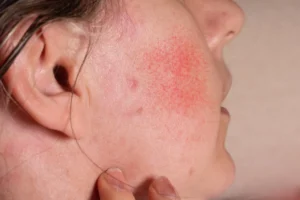
Alcohol damages skin long before it shows up in blood work or liver scans. A single drink produces flushing within minutes, a weekend of heavy drinking swells the face by morning, and years of steady consumption deepen wrinkles that no moisturizer can smooth.
Through a chain reaction of dehydration, inflammation, and nutrient loss that begins the moment alcohol enters the bloodstream. Skin damage can also serve as one of the earliest warnings that a drinking habit has crossed into dependency.
You'll Learn
- The one chemical byproduct responsible for most alcohol-related skin damage
- Why your body's overnight skin repair cycle shuts down after drinking
- Which skin effects reverse on their own and which need medical treatment
- The three skin conditions alcohol aggravates and why each one responds differently
- Skin changes that quietly warn a drinking habit has become a dependency
- A specific week-by-week recovery timeline for alcohol-damaged skin
Why Does Alcohol Dry Out, Inflame, and Starve Your Skin?
Dehydration and Acetaldehyde
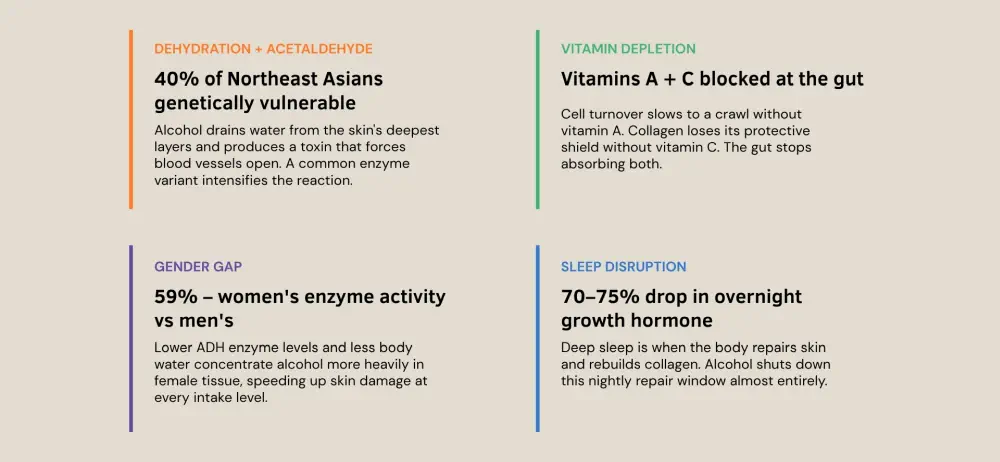
Alcohol acts as a diuretic, forcing the kidneys to expel water faster than the body can absorb it. The dermal layer loses moisture from the inside out, and no topical cream or serum can replace what the bloodstream has already pulled away from skin cells.
The liver converts alcohol into acetaldehyde, a toxic compound that stimulates histamine release and widens blood vessels beneath the skin surface. According to DermNet, up to 40% of people of Northeast Asian descent carry a mutation in aldehyde dehydrogenase (ALDH2) that prevents efficient clearing of acetaldehyde, making them especially prone to alcohol-related skin reactions.
Vitamin Loss and Collagen Damage
Chronic drinking impairs the gut's ability to absorb vitamins A and C. Vitamin A governs how quickly dead skin cells shed and new ones take their place. Vitamin C protects existing collagen from degradation. Without adequate supplies of both, the skin loses its ability to regenerate, and its structural integrity weakens month by month.
Why Women's Skin Is More Vulnerable
The biological toll of alcohol on skin is not equal between sexes. Women produce less gastric alcohol dehydrogenase than men, and a study found that women's gastric ADH activity measured just 59% of men's, meaning more alcohol reaches the bloodstream per drink. A lower ratio of body water to body fat concentrates alcohol further in female tissue. Women accumulate skin damage at lower consumption levels and over shorter timeframes than men drinking the same amounts.
Disrupted Sleep and Lost Repair Time
Alcohol disrupts sleep architecture, suppressing the slow-wave phase when the body releases the majority of its daily growth hormone. Research revealed that alcohol reduced nighttime growth hormone concentrations by 70–75%. Growth hormone drives skin cell repair and collagen synthesis during the overnight hours. Heavy drinkers lose this nightly repair window, and the alcohol effects on skin accumulate across dehydration, nutrient loss, and impaired sleep all at once. Over time, the visible markers of an alcoholic face reflect every one of these internal disruptions.
How Does Heavy Drinking Age and Reshape Your Face?
Short-term effects of alcohol on the skin fade within a day or two. Chronic damage does not. The appearance effects of alcohol range from temporary discomfort to lasting harm.
| Effect | Timeframe | Reversibility |
| Facial flushing | Within 10–15 minutes of drinking | Fades hours after the last drink |
| Puffiness around eyes and jaw | By the next morning | Clears quickly with sobriety |
| Dull, dry skin texture | Within 24 hours | Improves within 1–2 weeks |
| Dark circles under the eyes | Overnight from disrupted sleep | Fades with consistent rest over 1–2 weeks |
| Broken capillaries (spider veins) | After months of regular drinking | May need laser treatment to remove |
| Deepened wrinkles and sagging | After months to years | Partial; deep lines may persist |
| Yellowed skin and eyes (jaundice) | With sustained liver damage | Only when liver function recovers |
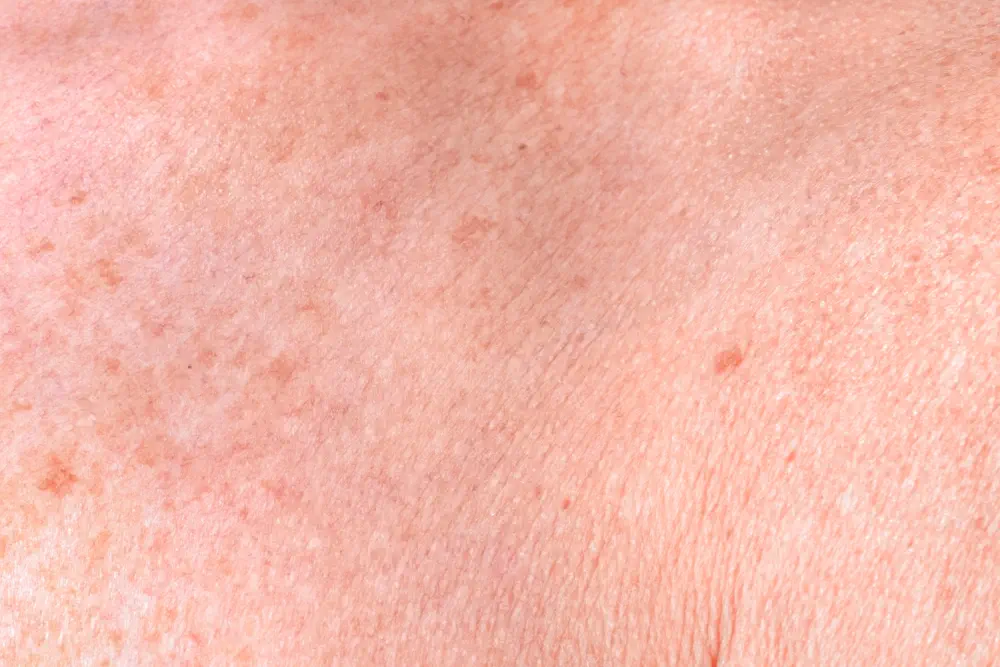
Beyond the face, alcohol marks the body in ways many drinkers never connect to their habit. Spider angiomas, small red dots with radiating blood vessels, appear on the chest, shoulders, and upper arms when the liver struggles to metabolize estrogen. Palmar erythema creates a persistent redness across both palms. And alcoholic nose, a term long associated with heavy drinking, refers to rhinophyma, a rosacea-related condition that alcohol can worsen but does not cause.
Can Drinking Trigger Acne, Skin Sores, and Persistent Flare-Ups?
Alcohol and Acne
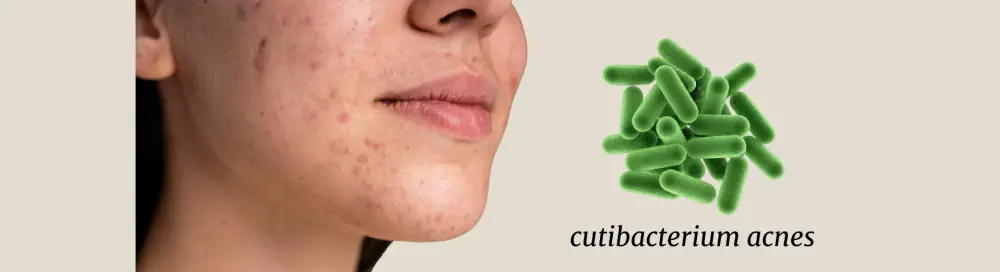
Alcohol and acne have an indirect but measurable connection. Heavy drinking raises both cortisol and androgen levels, and both hormones drive sebaceous glands to overproduce oil. Blood sugar spikes from sugary cocktails and sweetened wines trigger insulin responses that push oil production even higher. A suppressed immune system then allows Cutibacterium acnes bacteria to multiply in clogged pores. Sugary mixed drinks and sweet wines carry the highest glycemic loads and pose the greatest breakout risk. Beer contributes both histamines and carbohydrates. Clear spirits served neat carry the least skin-specific irritation per serving.
Alcoholic Skin Sores
Prolonged heavy drinking produces alcoholic skin sores that resist healing. Impaired blood circulation and a weakened immune system mean that minor cuts, scratches, or insect bites linger for weeks when they should close in days. Nutritional deficiencies in zinc and B vitamins remove the body's raw materials for tissue repair. Sores appear most commonly on the arms and legs, where blood flow is already limited, and scarring persists long after the wounds themselves close. Alcohol-related liver stress can also cause persistent itching (pruritus), and scratching damaged skin creates new wounds that heal just as poorly.

Psoriasis, Rosacea, and Eczema
Psoriasis, rosacea, and eczema all flare more severely in people who drink regularly. A 2024 dose-response meta-analysis of 48 studies covering over 1.7 million participants found that alcohol drinkers had 47% higher odds of psoriasis compared to non-drinkers. Rosacea flares intensify with repeated blood vessel dilation. Discoid eczema occurs more frequently among heavy drinkers with liver stress. Seborrheic dermatitis worsens under the same immune suppression. The Malassezia yeast behind persistent dandruff and red, flaking patches on the scalp and face multiplies more freely when the body's defences are compromised by alcohol. A 2023 review also found that alcohol reduces the effectiveness of medications prescribed for these conditions, meaning heavier drinkers need higher doses and still see weaker results.

When Do Skin Problems Point to Alcohol Dependency?
No single skin change confirms alcohol use disorder, but several appearing together form a recognisable pattern. Signs of alcoholism visible on the skin include:
- Persistent facial redness that does not clear between drinking sessions
- Visible spider veins spreading across the nose and cheeks
- A yellowish tint to the skin or whites of the eyes
- Chronic puffiness that does not respond to rest or hydration
- Slow-healing wounds or sores on the arms and legs
- Rough, dry patches that do not improve with moisturizers
When these skin changes appear alongside increased tolerance, withdrawal symptoms, mood swings, and an inability to cut back, the pattern points clearly toward dependency.
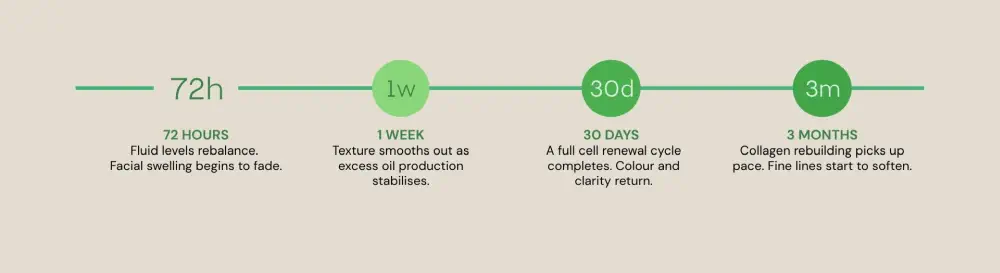
Recovery follows a general timeline. Hydration levels normalize within the first 72 hours, and facial puffiness starts to recede. By the end of the first week, skin texture improves as oil production rebalances. Around the 30-day mark, the skin completes at least one full cell renewal cycle, and tone and clarity return. At three months, collagen production increases and fine lines begin to soften.
Seeing how alcohol has affected your skin can motivate the decision to seek help, and professional alcohol addiction treatment supports this physical recovery alongside the behavioural work needed to sustain it.
Give Your Body the Time It Needs to Recover
Skin damage from alcohol originates beneath the surface, beyond what any moisturizer or skincare routine can address. Professional treatment gives the body the conditions it needs to recover. At the Canadian Centre for Addictions, recovery begins with a free, confidential conversation at 1-855-499-9446.
FAQ
How quickly does alcohol affect your skin after drinking?
Redness can appear within 10 minutes of a first drink, and the flush deepens with each additional glass. Over the following hours, the body loses fluid at an accelerated rate, and by morning, visible puffiness and dull texture become noticeable. Each drinking episode adds another round of dehydration and inflammation to the skin's total exposure.
Does alcohol make your skin more sensitive to the sun?
Alcohol increases the skin's sensitivity to UV radiation, making sunburn more likely even during brief exposure. Acetaldehyde, the primary byproduct of alcohol metabolism, interacts with UV rays to amplify cellular damage. People who drink outdoors during summer face higher UV-related skin risks than non-drinkers under the same conditions.
Can a few drinks a week still affect my skin?
Even moderate drinking produces measurable dehydration and mild inflammatory responses after each session. People with sensitive skin or pre-existing conditions like rosacea or psoriasis may notice flare-ups from amounts that cause no visible damage in others. The absence of obvious breakouts does not mean the skin is unaffected beneath the surface.
Will my skin go back to normal if I stop drinking?
Recovery depends on how long and how heavily a person drank. Surface-level damage like dryness, puffiness, and minor redness improves within weeks of quitting. Broken capillaries, scars from skin sores, and deep collagen loss may need dermatological treatment to fully resolve.
Do vitamins or supplements protect your skin if you keep drinking?
Supplements can partially offset nutritional deficiencies, but they cannot block the direct damage alcohol causes to blood vessels, sleep quality, and hormonal balance. Reducing alcohol intake remains the most effective way to protect skin health, and no supplement can replace what sobriety restores.
Article sources
- DermNet NZ. "Cutaneous Adverse Effects of Alcohol." DermNet. https://dermnetnz.org/topics/cutaneous-adverse-effects-of-alcohol
- Liu L, Chen J. "Advances in Relationship Between Alcohol Consumption and Skin Diseases." Clinical, Cosmetic and Investigational Dermatology. 2023;16:3785-3791. https://www.dovepress.com/advances-in-relationship-between-alcohol-consumption-and-skin-diseases-peer-reviewed-fulltext-article-CCID
- Svanström C, et al. "Dose-response analysis between alcohol consumption and psoriasis: A systematic review and meta-analysis." Journal of the European Academy of Dermatology and Venereology. 2024. https://pubmed.ncbi.nlm.nih.gov/38679782/
- Prinz PN, et al. "Effect of Alcohol on Sleep and Nighttime Plasma Growth Hormone and Cortisol Concentrations." Journal of Clinical Endocrinology & Metabolism. 1980;51(4):759-764. https://pubmed.ncbi.nlm.nih.gov/7419664/
- Frezza M, et al. "High Blood Alcohol Levels in Women: The Role of Decreased Gastric Alcohol Dehydrogenase Activity and First-Pass Metabolism." New England Journal of Medicine. 1990;322(2):95-99. https://www.nejm.org/doi/full/10.1056/NEJM199001113220205