

We offer medical detox and multiple addiction treatment options in our
luxury treatment centres in Port Hope, Cobourg, and Ottawa.
Fentanyl Withdrawal Symptoms and Timeline

Fentanyl withdrawal hits harder and less predictably than withdrawal from other opioids. Fentanyl is 50 to 100 times more potent than morphine, and it accumulates in body fat, so the brain and nervous system react with unusual intensity when the drug is removed. In Canada, fentanyl was involved in 74% of the 7,146 opioid-related deaths recorded in 2024, with many occurring after people returned to using following a period of abstinence and diminished tolerance. Knowing what to expect from the symptoms, the timeline, and the medical options available during detox gives anyone in this position a genuine advantage.
You'll Learn
- Why fentanyl produces a withdrawal pattern distinct from heroin or prescription painkillers
- The three stages your body moves through after your last dose
- How fat-stored fentanyl can restart symptoms days after they seem to fade
- Which medications reduce withdrawal severity in supervised clinical settings
- When psychological symptoms pose a greater relapse risk than physical ones
What Happens in Your Brain During Fentanyl Withdrawal?
The widespread fentanyl effects on the body start at the receptor level. Fentanyl binds to mu-opioid receptors with extreme affinity, far stronger than heroin or oxycodone. One of the drug's most damaging actions is suppression of the locus coeruleus, a small neuron cluster in the brainstem that controls norepinephrine release across the body. During active fentanyl use, the drug keeps this region chemically silenced.
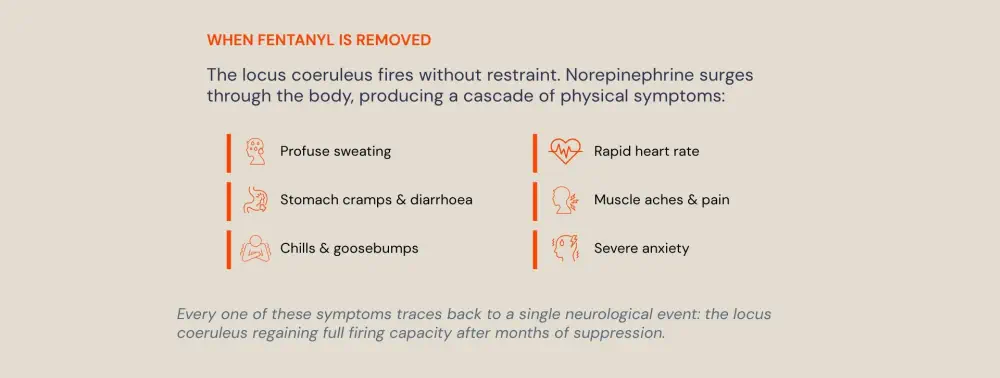
Remove fentanyl, and the locus coeruleus rebounds all at once. Norepinephrine floods the nervous system in what clinicians call a noradrenergic storm. Sweating, racing heart rate, stomach cramps, diarrhea, goosebumps, and muscle aches all result from this norepinephrine overwhelming tissues that were suppressed for weeks or months. Every recognizable symptom of fentanyl withdrawal traces back to this single neurological event.
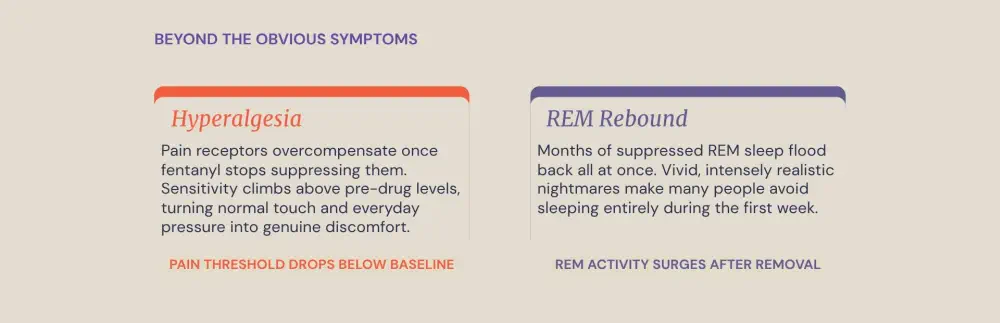
Fentanyl withdrawal also produces two effects that most people do not expect. The first is hyperalgesia, a state where pain sensitivity rises well above its pre-drug baseline. Normal touch and pressure become noticeably painful, and everyday activities like sitting or lying down cause real discomfort. The second is REM rebound. Fentanyl suppresses REM sleep during active use, and withdrawal triggers a surge of REM activity associated with vivid, distressing dreams. Many people avoid sleeping entirely because the nightmares are intensely realistic, which compounds the physical exhaustion of the first several days.
How Long Does Each Stage of Fentanyl Withdrawal Last?
The timeline for fentanyl withdrawal moves through three distinct stages, and the duration of each depends on the amount used, how long fentanyl was taken, body composition, and the specific formulation involved.
Early Withdrawal (6 to 24 Hours)
Anxiety arrives first, accompanied by yawning, muscle aches, restlessness, watery eyes, and a runny nose. Cravings emerge quickly as opioid receptors lose stimulation. Most people describe this stage as worsening flu-like discomfort that builds steadily hour by hour.
Peak Withdrawal (Days 1 to 3)
Severe nausea, vomiting, diarrhea, stomach cramps, dilated pupils, insomnia, and intense drug cravings dominate this window. The body's temperature regulation fails, producing alternating hot flashes and chills. Persistent vomiting and diarrhea during this stage can cause dangerous dehydration within hours, especially for individuals already malnourished from prolonged fentanyl use. Relapse risk peaks here, and it is the primary reason supervised detox from fentanyl saves lives.
Subsiding Acute Withdrawal (Days 4 to 10)
Fatigue, irritability, and disrupted sleep linger even after the most severe physical symptoms begin to fade. Appetite starts returning, and concentration slowly improves. Most medically supervised detox programs stabilize patients within this window.
Transdermal fentanyl patches carry a longer half-life of roughly 17 hours, which pushes withdrawal onset to 18 to 48 hours and stretches the full course accordingly.

Who Faces the Hardest Fentanyl Withdrawal?
Several clinical variables predict how intense and prolonged any individual's fentanyl withdrawal will be.
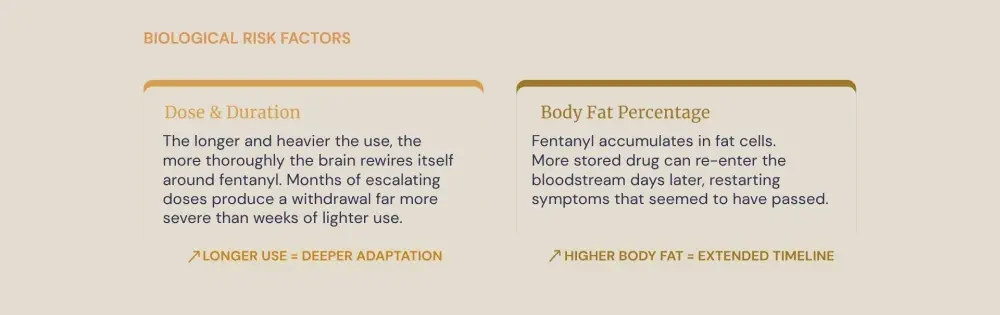
The brain adapts more deeply to fentanyl with each passing week, which makes dose and duration of use the strongest predictors of withdrawal severity. Someone using for six months at escalating doses will face a more severe acute phase than someone who used for a few weeks at lower amounts. Body composition plays a direct role because fentanyl molecules embed themselves in adipose tissue and re-release into the bloodstream days after the last dose. Higher body fat stores more of the drug, which can extend withdrawal and restart symptoms in waves after they appear to resolve.
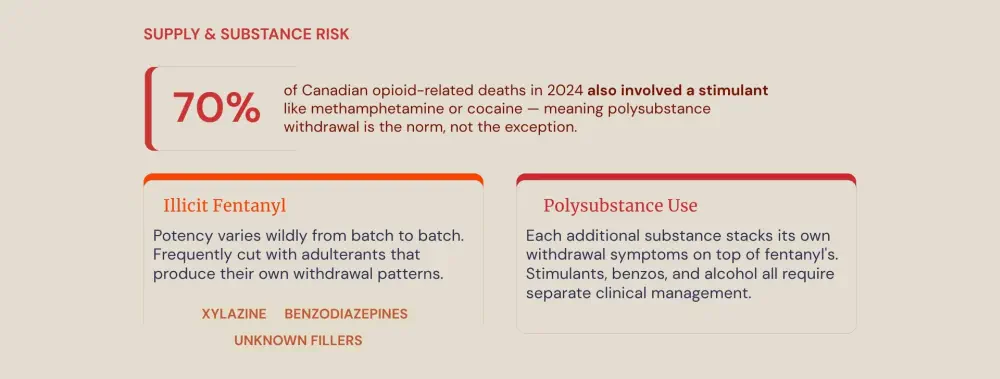
The source of fentanyl affects how predictable withdrawal will be. Street fentanyl carries unknown potency and is frequently mixed with other substances, including the veterinary tranquillizer xylazine. Withdrawal from a contaminated supply produces overlapping patterns that are harder to treat. Polysubstance use compounds this. In 2024, 70% of Canadian opioid-related deaths also involved a stimulant, and stimulants, benzodiazepines, and alcohol each introduce their own withdrawal symptoms that clinicians must manage at the same time.
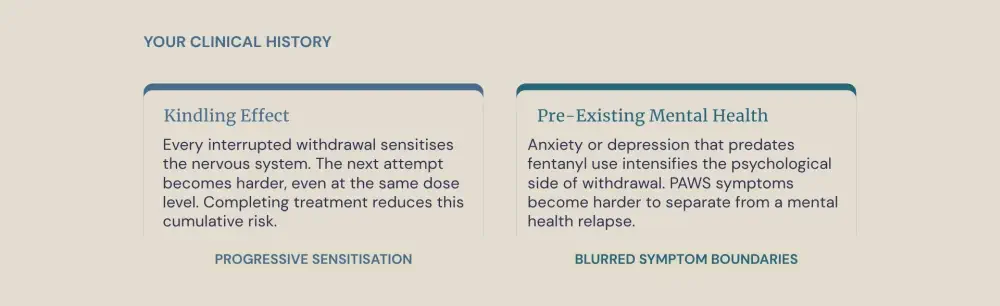
Each incomplete withdrawal can sensitize the nervous system, a phenomenon clinicians call kindling. Prior withdrawal episodes make each subsequent one more intense, even at comparable doses. Pre-existing mental health conditions like anxiety or depression amplify the psychological withdrawal symptoms and make PAWS episodes harder to distinguish from a mental health relapse.
Why Do Symptoms Return Weeks After Detox?
Post-Acute Withdrawal Syndrome (PAWS) catches many people off guard. The acute phase ends. Sleep normalizes. Appetite returns. Then, weeks later, the same withdrawal symptoms re-emerge without warning.
Acute withdrawal and PAWS differ in clinically meaningful ways:
| Acute Withdrawal | PAWS | |
| Onset | 6 to 24 hours after last dose | Weeks after acute phase resolves |
| Duration | 7 to 10 days | Up to 6 to 8 months |
| Primary symptoms | Physical: GI distress, sweating, pain, chills | Psychological: mood, sleep, concentration, cravings |
| Pattern | Steady escalation, then gradual decline | Waves of distress separated by symptom-free windows |
PAWS symptoms cycle between these windows and waves. A person might feel clearheaded for three days, then wake on the fourth unable to get out of bed. The episodes persist because fentanyl's extreme receptor affinity forces the brain's reward circuitry to reorganize entirely around the drug, and recalibrating that circuitry takes months, not days.
Many people give up at precisely the point where their brain is already rebuilding its receptor sensitivity. Without clinical guidance, a wave of insomnia and cravings at the three-month mark can feel indistinguishable from day one. Structured clinical support through this period, including ongoing counselling and medication-assisted treatment, substantially lowers relapse risk.

Which Medications Are Used During Fentanyl Detox?
Supervised medical detox provides 24/7 monitoring, medication management, and stabilization during the acute withdrawal window. Three main categories of medication are used:
- Methadone activates the same opioid receptors as fentanyl at lower intensity, reducing cravings and preventing severe withdrawal without producing a high at prescribed doses. It is dispensed daily under direct supervision.
- Buprenorphine (marketed as Suboxone) is a partial opioid agonist. It attaches to opioid receptors without fully activating them, easing both pain and cravings. For fentanyl users, timing buprenorphine initiation requires careful clinical judgment because starting too early, before fentanyl fully clears the receptors, can trigger precipitated withdrawal. Many programs now use micro-dosing or high-dose induction protocols to manage this risk.
- Clonidine is a non-opioid medication that targets specific autonomic symptoms like sweating, rapid heart rate, and anxiety. It works by dampening the noradrenergic surge described in the brain section above.
- Naltrexone is introduced after detox is complete, not during active withdrawal. It blocks opioid receptors entirely, preventing any high if fentanyl is used again, and serves as a relapse-prevention tool once the acute phase has passed.
Anti-nausea drugs, muscle relaxants, and sleep aids also target specific symptoms that the primary medications listed above do not fully cover.
Going through fentanyl withdrawal without medical supervision carries serious risks. Severe dehydration from uncontrolled gastrointestinal symptoms can cause electrolyte imbalances and cardiac complications. Reduced opioid tolerance after even a brief period of abstinence dramatically raises overdose risk if fentanyl use resumes. Professional fentanyl addiction treatment extends beyond detox into the counselling, group work, and structured aftercare that address the psychological and behavioural dimensions of dependence.
The Hardest Part Has a Timeline
Fentanyl withdrawal is a medical event, not a test of willpower. The same brain chemistry that created dependence is precisely why professional support during withdrawal matters. The brain does heal with time, and structured treatment from detox through ongoing counselling is what makes lasting sobriety achievable.
FAQ
Can I taper off fentanyl on my own at home?
Self-tapering with illicit fentanyl is extremely dangerous because the potency varies from dose to dose, making a controlled reduction nearly impossible. Prescription fentanyl can be tapered under direct medical supervision, where a physician adjusts the dosage incrementally based on symptom monitoring.
Can fentanyl withdrawal cause seizures?
Opioid withdrawal on its own rarely produces seizures, unlike alcohol or benzodiazepine withdrawal. Seizure risk increases when fentanyl was used alongside benzodiazepines or alcohol, as withdrawing from multiple substances simultaneously creates additional neurological instability that demands specialized medical oversight.
What if I'm withdrawing from fentanyl and another substance at the same time?
Polysubstance withdrawal is more medically demanding and requires specialized supervision. Stimulants, benzodiazepines, and alcohol each produce their own withdrawal patterns, and combining them with fentanyl withdrawal raises the risk of dehydration, seizures, and cardiac events that would not occur with a single opioid withdrawal alone.
Will I need to stay on Suboxone or methadone indefinitely after detox?
Duration of medication-assisted treatment varies by individual. Some people benefit from maintenance for several months before a supervised taper, and others stay on medication for a year or longer to prevent relapse during the months when PAWS symptoms are most likely to surface. Clinical evidence consistently shows that longer treatment durations produce better long-term results.
How can I support a family member who is going through fentanyl withdrawal?
Encourage them to seek medical detox and avoid pressuring them to quit cold turkey, as unsupervised withdrawal can be dangerous. During and after the acute phase, consistent emotional presence matters more than specific words. Educating yourself about the timeline and PAWS helps you set realistic expectations and avoid interpreting setbacks as failures.
Article sources
- Centre for Addiction and Mental Health. "Fentanyl." CAMH. https://www.camh.ca/en/health-info/mental-illness-and-addiction-index/fentanyl
- Government of Canada. "Opioid- and Stimulant-related Harms in Canada." Public Health Agency of Canada. https://health-infobase.canada.ca/substance-related-harms/opioids-stimulants/
- Kosten TR, George TP. "The Neurobiology of Opioid Dependence: Implications for Treatment." Science & Practice Perspectives. https://pmc.ncbi.nlm.nih.gov/articles/PMC2851054/
- Ramos-Matos CF, Bistas KG, Lopez-Ojeda W. "Fentanyl." StatPearls. https://www.ncbi.nlm.nih.gov/books/NBK459275/
- Gupta M, Gokarakonda SB, Attia FN. "Withdrawal Syndromes." StatPearls. https://www.ncbi.nlm.nih.gov/books/NBK459239/
- Zubieta A, et al. "Buprenorphine-Precipitated Fentanyl Withdrawal Treated with High-Dose Buprenorphine." Frontiers in Pain Research. https://pmc.ncbi.nlm.nih.gov/articles/PMC10521070/