
We offer medical detox and multiple addiction treatment options in our
luxury treatment centres in Port Hope, Cobourg, and Ottawa.
What Is the Fentanyl Fold?

Across many Canadian cities, one body position has become a familiar sign of the opioid crisis. A person bends sharply forward at the waist, head dropped toward the chest, and stays frozen that way for minutes or even hours.
People call this the fentanyl fold, also known as the fentanyl lean. Many mistake it for ordinary sleep, and it signals a serious problem in both the brain and the body.
Key Takeaways
- The bent posture goes by several street names, and one reason bystanders keep walking.
- Two forces pull the body down, and the first one begins inside the brain.
- Researchers still cannot fully explain the muscle side, and a Vancouver study offers the best clue so far.
- The fold can look identical to an overdose, and one common street additive makes reversal harder.
- Folding signals dependence, and the way out rarely works as a solo effort.
What Does the Fentanyl Fold Look Like?
The stance known as the fentanyl fold drops the upper body forward at the waist, sometimes close to parallel with the ground. The head hangs toward the chest, the knees bend a little, and the arms fall loose at the sides.
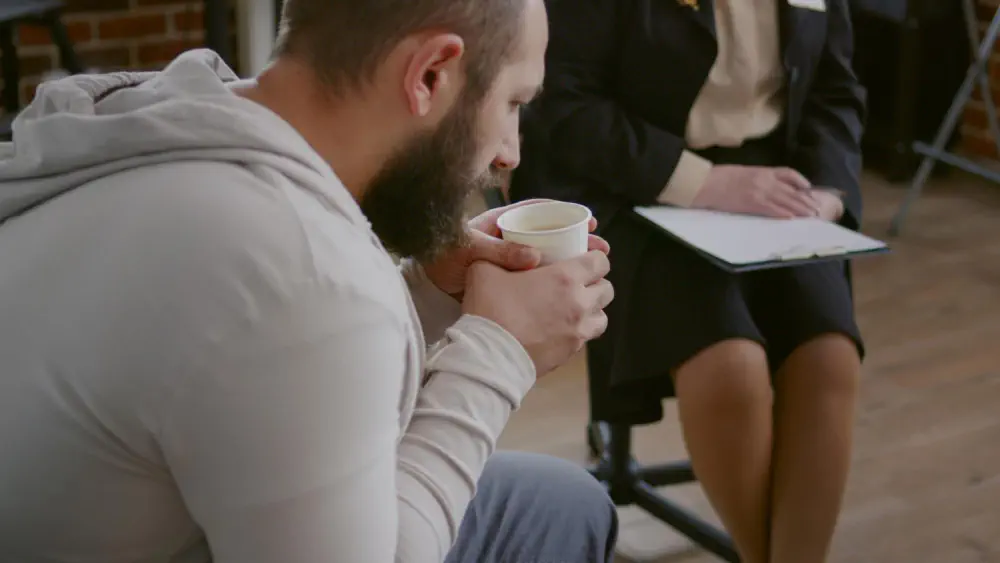
A person in this state stays semi-conscious. They are awake enough to keep from falling over, and too sedated to answer a question or move on their own. In this state, the fentanyl posture can last a few minutes or stretch across several hours.
You might see it on a sidewalk, at a transit stop, or in a doorway, and it can take hold as a person stands, sits, or stops mid-step. Even upright, the person is mostly unaware of what is happening around them, and calling their name may bring no reaction. Most people walking by assume the person has just fallen asleep on their feet, and they move on without stopping to check.
On the street, the same position picks up other names, including the fenty fold, the fentanyl lean, and the fentanyl slump. It shows up with other strong opioids as well, and it has grown tied to fentanyl because of the drug's strength and how widely it now fills the illegal supply.
Why Does Fentanyl Make You Fold Over?
The fold comes down to how hard fentanyl hits the systems that keep the body upright. The drug overpowers them faster than the body can push back, and the bent posture is what that loss of control looks like from the inside.
Several separate effects combine to produce it, and each one is worth taking on its own.
What Causes the Fentanyl Fold?
No single effect explains the fold. It comes from several of fentanyl's actions landing at the same time, along with what the street supply adds to each dose.
H3: The central nervous system slows down
Fentanyl binds to the opioid receptors that control alertness and movement, then slows the central nervous system.
Heavy sedation follows, the same drowsiness Health Canada names among the drug's main effects.1
This is the state users call nodding out, deep enough to leave a person upright yet unresponsive. As the nervous system quiets, the brain stops holding the back and neck muscles engaged, so the torso tips forward and cannot right itself.
The trunk and chest muscles stiffen
Fentanyl can also set off sudden stiffness in the muscles of the trunk and chest.
Research in the Journal of Applied Physiology found that a fentanyl overdose can bring on severe muscle rigidity that locks the torso and cuts down airflow.2
A Canadian study at a Vancouver supervised injection site recorded the same rigidity right after opioid use.3 That stiffness fixes the bent trunk in place, and because the spine stays unharmed, a person can straighten up again once the drug clears.
Breathing slows and oxygen drops
Opioids slow breathing, and fentanyl does it fast and hard.
Health Canada notes that the drug depresses the respiratory system, the effect that makes an overdose deadly.1
Shallow breaths carry less oxygen to the brain and muscles, which deepens the sedation already underway and drags the body lower. The outcome is a heavier, longer fold that can edge toward a medical emergency.
Fentanyl's strength overwhelms the body
Strength is what sets fentanyl apart from weaker opioids.
Health Canada reports it runs 50 to 100 times more potent than morphine and 20 to 40 times stronger than heroin.1 At that level, a tiny, uneven street dose can bend a person over within minutes, and no two batches carry the same amount.
That overwhelming strength is a large part of why fentanyl is so addictive, and it is why the fentanyl fold shows up far more with this drug than with any opioid before it.
Street additives deepen and prolong it
Fentanyl is listed in Schedule I of the Controlled Drugs and Substances Act, and the illegal supply that feeds the street rarely arrives pure. Suppliers cut it with other depressants, and xylazine, a veterinary sedative, now shows up in batches across Canada.
Xylazine deepens the sedation and stretches it out, one reason the fold can last for hours. Benzodiazepines and alcohol in the mix act the same way, stacking one depressant on another.
These additives also blunt naloxone, since the overdose medication reverses opioids and does nothing for xylazine. A contaminated dose can leave a person down longer and harder to wake.
Is the Fentanyl Fold a Warning Sign of Overdose?

Yes, and knowing the difference can save a life. The fold shows that a heavy dose is already affecting the body, and it can slide into a full overdose within moments.
In 2024, 7,146 people in Canada died from opioid toxicity, and close to three-quarters of those deaths involved fentanyl.4 The table below shows how to tell the two states apart.
| Sign | The fold | Overdose emergency |
| Consciousness | Semi-awake, still upright | Unconscious, cannot be roused |
| Breathing | Slowed but present | Very slow, gasping, or stopped |
| Response | Limited and sluggish | None to voice or touch |
| Lips and skin | Normal to slightly pale | Blue or grey, cold and clammy |
| What to do | Watch closely, stay ready | Call 911 and give naloxone now |
Many street batches now carry xylazine, a veterinary sedative that deepens the sedation and causes slow-healing wounds. Naloxone still reverses the fentanyl in the mix, so it should go in without delay. Xylazine does not respond to naloxone, which is why the call to 911 and support for breathing both matter after the naloxone is given.
If breathing has stopped, rescue breaths between doses can keep oxygen moving until paramedics arrive, and a second dose of naloxone is sometimes needed because it can wear off before the fentanyl does.
The same physical dependence that leads to the fold also makes quitting alone dangerous. Withdrawal sets in within hours and feels severe enough to send many people back to the drug for relief. Medical support during fentanyl withdrawal takes that danger away and gives recovery a steady starting point.
H2: How Is Fentanyl Addiction Treated?
The fold marks a physical dependence that willpower alone cannot fix. Trying to stop at home rarely holds, because the pull of dependence and the reach of the local supply are hard to break alone.
Recovery works best in a residential setting, where a person steps away from daily triggers and the street supply and gets round-the-clock care. Program length can run 30, 45, 60, 75, or 90 days, matched to how deep the dependence goes. Structured fentanyl addiction treatment at the Canadian Centre for Addictions moves through clear stages.
Medically monitored detox comes first
Round-the-clock nursing manages withdrawal safely and keeps the person stable as fentanyl clears the body.
Residential care rebuilds daily function
Living on-site for 30 to 90 days puts real distance between the person and the drug supply, with steady support through individual counselling and group work.
Dual-diagnosis care treats the whole person
Anxiety, depression, and past trauma sit beneath fentanyl use for many people. Treating those conditions alongside the addiction lowers the odds of relapse and helps recovery hold long after detox ends. Skipping that mental health work leaves many people vulnerable to using again soon after detox.
Recovery Is Within Reach

The bent-over fentanyl posture is one of the most visible signs of the opioid crisis, and it also marks a moment when help can still change the outcome. Reaching out early, before the next dose or the next overdose, gives a person a real chance at recovery. That first phone call is where recovery starts.
Ready to take the first step?
Addiction doesn't get better on its own. Call us today for a free, confidential consultation and find out which program is right for your needs.
Sources
- Health Canada. "Fentanyl." Government of Canada. - https://www.canada.ca/en/health-canada/services/substance-use/controlled-illegal-drugs/fentanyl.html
- Haouzi P, Tubbs N. "Effects of fentanyl overdose-induced muscle rigidity and dexmedetomidine on respiratory mechanics and pulmonary gas exchange in sedated rats." Journal of Applied Physiology. - https://pmc.ncbi.nlm.nih.gov/articles/PMC9190730/
- Kinshella M-L.W., Gauthier T., Lysyshyn M. "Rigidity, dyskinesia and other atypical overdose presentations observed at a supervised injection site, Vancouver, Canada." Harm Reduction Journal. - https://harmreductionjournal.biomedcentral.com/articles/10.1186/s12954-018-0271-5
- Public Health Agency of Canada. "Opioid- and Stimulant-related Harms in Canada." Health Infobase. - https://health-infobase.canada.ca/substance-related-harms/opioids-stimulants/
FAQ
Why do people who use drugs end up bent over in public?
The bent stance comes from fentanyl slowing the brain and stiffening the trunk muscles at the same time. The person is semi-conscious and cannot hold the body upright, so the chest and head sink forward. It can last minutes or hours, and it is a warning sign, not restful sleep.
Is the fold the same as an overdose?
No. The fold shows that a heavy dose is affecting the body, and it can turn into an overdose, but the two are not the same state. Slowed or stopped breathing, blue lips, and no response to voice or touch are the signs that an overdose is already underway.
Can you overdose just by touching someone who is folded over?
No. Health Canada notes that brief skin contact with fentanyl is very unlikely to cause harm. Checking on the person, giving naloxone, and calling 911 carry little risk to you.
Does the folding happen with prescription fentanyl patches?
It is uncommon with patches used as prescribed, because the dose is measured and released slowly over time. The posture is tied to high, unpredictable street doses that reach the brain fast. Chewing or smoking a patch changes that and raises the danger sharply.
Are some people more likely to fold than others?
People who take large or uneven street doses face the highest chance, along with anyone mixing fentanyl with alcohol or other sedatives. A higher tolerance and a body worn down by long-term use raise the risk further.