
We offer medical detox and multiple addiction treatment options in our
luxury treatment centres in Port Hope, Cobourg, and Ottawa.
What Does Cocaine Do to Your Face?

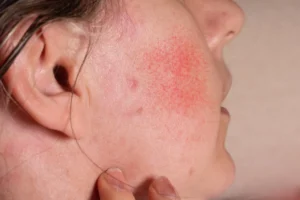
Facial changes rank among the first visible costs of stimulant use, arriving long before the heart or lungs give any warning. Some people who use cocaine end up with a swollen, puffy face that looks heavier than it did a year earlier, and others turn hollow-cheeked and drawn, which leaves families uncertain about what they are seeing.
Both pictures come from the same drug acting on the same tissue at different points in a person's use. We see both ends of that range, and we will explain what drives each change and how much recovers once the drug stops.
You'll Learn:
- Why the face shows damage years before the heart or lungs do.
- The two-part reason a face swells after one heavy night.
- What the sores blamed on "coke bugs" respond to.
- The moment nasal damage stops being cosmetic.
- Which changes point to drug use, and which mislead families.
- The timeline separating what heals alone from what needs surgery.
- The one change that must happen before treatment holds.
Why Does Cocaine Show Up on the Face Before Anywhere Else?

Cocaine blocks the reuptake of norepinephrine at nerve endings across the body, keeping blood vessels clamped down for as long as the drug stays active, and the vessels nearest the skin respond hardest of all. Facial skin runs thinner than skin anywhere else and carries a dense network of small vessels close to the surface, so marks appear there years before identical damage inside the chest produces any symptom.
Health Canada's 2023 survey put lifetime cocaine or crack use at 12% among Canadians aged 15 and older, with 3% using in the previous year and 6% among those rating their mental health poor or fair1.
Two changes run in parallel under that reduced blood flow. Oxygen delivery to skin cells drops, stalling the turnover that keeps the surface clear, and lymphatic drainage backs up behind the narrowed passages.
Appetite and sleep collapse on top of that, removing the nutrition and overnight repair skin depends on. Everything visible in the first months stays small enough to explain away, including dull tone, puffiness that comes and goes, and scratches taking two weeks to close.
What Is Coke Bloat and Why Does the Swelling Come and Go?
Coke bloat describes the puffiness settling into the cheeks, the soft tissue under the chin, and the skin around the eyes. It is painless, which is part of why people dismiss it, and it can follow one heavy night in someone with no history of use. Of everything cocaine does to a face, this change is fastest.
Four separate causes feed the same swelling:
- Lymphatic fluid pools behind constricted vessels with nowhere to drain until circulation normalizes.
- Levamisole, a livestock deworming drug used to cut cocaine, enlarges the salivary glands in front of the ears.
- Dehydration from raised body temperature and sweating triggers fluid retention once the body rehydrates.
- Sleep loss across a binge leaves fluid sitting in the face by morning.
Adulterant load varies by city, which explains why two people using the same drug can look nothing alike. A cross-Canada study in BMC Public Health detected levamisole in close to half of participants tested in Montreal, against 10.4% in British Columbia2.
What families notice is the rhythm. Swelling peaks a day or two after use, recedes over the week, and returns heavier each cycle as the tissue takes longer to clear. Puffiness gathers around the eyes as readily as the cheeks, which is why cocaine eyes and facial swelling get discussed together.
How Does Cocaine Damage Skin, and What Causes Cocaine Acne and Sores?
Breakouts That Ignore Every Skincare Routine
Reduced blood flow starves skin cells of oxygen and slows the turnover that pushes dead cells off the surface, so pores block with material that would otherwise clear on its own. Disrupted hormone signalling raises sebum output at the same time, giving those pores plenty to fill with.
Cocaine acne clusters along the jawline, cheeks and forehead, resisting topical treatment for as long as the drug continues, since nothing applied to the surface restores circulation underneath. Repeated inflammation leaves pitted scarring that outlasts the breakouts by years3.
Sores, Picking and the Sensation of Insects
Cocaine sores come from two directions at once. Formication, the sensation of insects moving underneath the skin, sets in during heavy use and drives compulsive picking that opens matching patches across both cheeks and around the mouth. Poor perfusion slows wound closure, so an injury that would seal in four days stays open for weeks and invites infection4.
Lesions Produced by the Adulterant
Levamisole causes skin damage that gets misread as picking damage. The lesions begin as purple, irregularly outlined patches on the cheeks, ear tips and the end of the nose, and severe ones break down into black necrotic tissue requiring surgical removal5. Dark purple patches on the ears need assessment quickly, since the adulterant behind them also drops white blood cell counts far enough to make ordinary infections dangerous.
Complexion changes across all three patterns, with oxygen deprivation leaving a grey cast and healed inflammation darkening the skin in some people and lightening it in others.
What Happens to the Nose and the Structure Underneath?

Snorting delivers the drug straight onto the nasal lining, where its anesthetic action hides the damage being done. Blood supply to the septum runs through fine vessels that clamp shut with every use, and repeated oxygen starvation kills the cartilage from the inside, producing a small perforation first and later a hole wide enough that the bridge drops. The collapsed shape people call cocaine nose, known clinically as saddle nose deformity, marks where damage becomes a reconstructive surgery question6.
Severe cases run past the septum entirely, with cocaine-induced midline destructive lesions reaching the hard palate and sinus walls, affecting speech and swallowing and sometimes opening a passage between the mouth and nasal cavity7.
The lower face changes through a completely different route. Clenching and grinding thicken the masseter muscles over months, squaring the jawline and stripping enamel at a rate that would normally take decades, a pattern common enough to carry its own name in cocaine jaw. Enamel never regrows, which is why dentists frequently identify stimulant use before the household does.
Which Facial Changes Are Early Signs of Cocaine Use in Someone You Love?
No single feature confirms anything. What carries weight is several changes appearing together and tracking with a schedule, so puffiness arriving every Monday and fading by Thursday says far more than puffiness alone. Nosebleeds without a cold, sores reopening in the same spots, and sunglasses worn indoors all gain meaning when they cluster.
Plenty of harmless explanations produce an overlapping picture, and reading cocaine into every change in a relative's face costs trust that will be needed later. Conditions creating similar appearances include:
- Rosacea, which brings redness, visible vessels and swelling across the cheeks and nose
- Hypothyroidism, which puffs the tissue around the eyes and jawline
- Corticosteroids prescribed for asthma or inflammatory conditions, which round the cheeks within weeks
- Seasonal allergies, which deliver congestion, redness and swelling under the eyes
The visible signs of cocaine use open a conversation and settle nothing by themselves, so the useful next step is asking directly and listening closely, since most people give away more through how they answer than through anything on their skin.
What Heals After the Last Use, and What Needs a Surgeon?
Everything here turns on how fast normal blood flow returns. Changes driven by poor perfusion and dehydration reverse quickly once the vessels open, because those cells were starved and never destroyed. Damage that killed cartilage does not reverse at all.
| Change to the face | Timeline after the last use | Reversible without surgery |
| Coke bloat and facial puffiness | Days to three weeks | Yes |
| Dry, flaking, dull skin | Two to six weeks | Yes |
| Breakouts and clogged pores | Six to twelve weeks | Usually |
| Cocaine sores from picking | Weeks to close, scarring varies | Partly |
| Darkened patches and uneven tone | Three to twelve months | Usually |
| Enamel loss from grinding | Permanent | No, restoration required |
| Septal perforation | Does not close on its own | No |
| Saddle nose deformity | Permanent | No |
Duration of use explains most of the variation in that middle band. Four months leaves almost no permanent mark on skin tone, and six years frequently leaves scarring and pigment change for good, though even then a first year of recovery shows clearly in photographs twelve months apart.
Where Do Canadians Get Help Before the Damage Becomes Permanent?

Nothing on the reversible side of that table moves until the drug stops, which turns the medical question into one of timing. Cocaine withdrawal carries no seizure risk of the kind alcohol produces, though the crash brings exhaustion, heavy depression, and cravings intense enough that few people hold a decision through it alone8. Medically monitored detox with 24/7 nursing covers that window.
Residential care follows detox, and program lengths at the Canadian Centre for Addictions run 30, 45, 60, 75 or 90 days. Individual and group counselling carry the clinical weight, since cocaine addiction treatment has no approved medication and depends on behavioural change, with dual-diagnosis support for the anxiety, depression and trauma underneath most stimulant use.
Our intake team answers at 1-855-499-9446 around the clock.
Timing keeps coming up because the tissue sets its own deadline. Skin, glands and lymphatic drainage wait for a person to stop, and cartilage does not, so every extra month moves more of what cocaine has done to a face out of the column that heals and into the column needing surgery.
What Makes the Face Different From Every Other Warning Sign?
Every other organ this drug damages stays hidden until a test or an emergency reveals it, and the face is the only one a person looks directly at each morning. That daily visibility counts for something, because what shows in the mirror arrives years ahead of anything bloodwork would flag, and most of it still asks a question answerable in time.
Sources
- Health Canada. "Canadian Substance Use Survey (CSUS): Summary of Results for 2023." Government of Canada. https://www.canada.ca/en/health-canada/services/canadian-alcohol-drugs-survey/2023-summary.html
- Kolla, G., et al. "Towards Cross-Canada Monitoring of the Unregulated Street Drug Supply." BMC Public Health. https://link.springer.com/article/10.1186/s12889-021-11757-x
- Brewer, J. D., et al. "Cocaine Abuse: Dermatologic Manifestations and Therapeutic Approaches." Journal of the American Academy of Dermatology. https://www.jaad.org/article/S0190-9622(08)00412-X/abstract
- Sánchez-Puigdollers, A., Just-Sarobé, M., Pastor-Jané, L. "Cutaneous and Mucosal Conditions Associated With Cocaine Use." Actas Dermo-Sifiliográficas. https://www.sciencedirect.com/science/article/pii/S0001731022010134
- Lawrence, L. A., et al. "Levamisole-Adulterated Cocaine Induced Skin Necrosis of Nose, Ears, and Extremities: Case Report." Allergy & Rhinology. https://journals.sagepub.com/doi/10.2500/ar.2014.5.0101
- Di Cosola, M., et al. "Cocaine-Induced Midline Destructive Lesions (CIMDL): A Real Challenge in Diagnosis." International Journal of Environmental Research and Public Health. https://www.mdpi.com/1660-4601/18/15/7831
- Melo, C. A. A., et al. "Oral Changes in Cocaine Abusers: An Integrative Review." Brazilian Journal of Otorhinolaryngology. https://www.sciencedirect.com/science/article/pii/S1808869421000835
- Centre for Addiction and Mental Health. "Cocaine and Crack." CAMH. https://www.sciencedirect.com/science/article/pii/S1808869421000835
FAQ
How long does facial swelling take to go down after someone stops?
Most clears within one to three weeks once hydration and circulation return to normal. Swelling from enlarged salivary glands lingers closer to six weeks, and anything persisting beyond two months warrants a check for kidney or thyroid involvement.
Do sores from picking leave permanent scars?
Shallow ones heal cleanly within weeks of the last use. Wounds reopened repeatedly leave pale or darkened marks fading over six to eighteen months, and any sore reaching the underlying tissue leaves a permanent indentation.
Does crack affect appearance differently from snorted powder?
Smoking spares the nasal septum and adds burns and cracking to the lips from hot pipes and heated vapour. Grinding, swelling, skin damage and premature ageing appear with both forms, since both trace back to the drug's effect on blood vessels.
Can a dentist or dermatologist recognize cocaine use during a routine exam?
Frequently, yes. Dentists spot the combination of worn enamel, dry mouth and gum recession, and dermatologists recognize the purple patches levamisole produces. Both are bound by confidentiality if you choose to be honest.
Do facials, fillers or prescription skincare help someone who is still using?
They deliver very little, because every treatment depends on the blood flow the drug removes. Fillers and injectables carry added risk during active use, since poor circulation raises the chance of tissue death at the injection site.