We offer medical detox and multiple addiction treatment options in our
luxury treatment centres in Port Hope, Cobourg, and Ottawa.
Music Therapy for Addiction Recovery

Addiction rewires the brain's reward circuits, and music activates many of those same circuits without a single substance involved. Music therapy for addiction pairs this neurological overlap with structured clinical interventions, giving people in recovery a way to regulate emotions, reduce cravings, and rebuild self-expression. Here's how it works, what the research says, and who stands to gain the most from adding rhythm, melody, and songwriting to their treatment program.
Key Takeaways
- Music triggers dopamine release in the same brain regions as addictive substances — without the toxicity
- Educational songwriting on detox units has produced measurable drops in craving expectancy after just one session
- Not all music aids recovery; songs tied to past substance use can spike cravings, and trained therapists turn these triggers into clinical tools
- Drumming, improvisation, and lyric writing give trauma survivors an emotional outlet when talk therapy hits a wall
- The Cochrane review confirms music therapy's strongest effects appear when paired with medical detox, counselling, and group therapy
- CAMH's Art of Healing program brings Toronto Symphony Orchestra musicians into direct collaboration with youth in addiction treatment
What Is Music Therapy?
The American Music Therapy Association1 defines it as the clinical, evidence-based use of music interventions to meet individualised goals within a therapeutic relationship, delivered by a credentialled professional who has completed an approved program. That definition matters. A playlist on a streaming app isn't music therapy. Neither is a karaoke night at a community centre.
What separates music therapy from casual music listening is intent, structure, and professional oversight. A board-certified music therapist assesses each client's needs, designs targeted interventions, and measures progress against recovery goals. Sessions might involve writing original lyrics about relapse triggers, improvising on a hand drum to express anger that resists verbal description, or analysing the emotional content of a specific song. None of these activities require prior musical training.
For people struggling with substance use disorders, the appeal is straightforward. Talk therapy demands verbal fluency that many clients, especially those carrying trauma, find paralysing. Music opens a parallel channel. Feelings that resist language can pour through a drumbeat, a melody hummed in a minor key, or a set of lyrics scratched onto a page. The instrument becomes a translator for what the mouth can't say.
How Does Music Affect the Brain During Recovery?
The neuroscience here is worth pausing on. Addictive substances hijack the mesolimbic dopamine system, the brain's core reward circuitry. Alcohol, opioids, stimulants: they all flood this system with dopamine, teaching the brain to crave the substance above almost anything else.
Music does something strikingly similar, without the toxicity. A 2011 study published in Nature Neuroscience2 demonstrated that peak emotional experiences during music listening trigger dopamine release in the striatum, the same region activated by drugs of abuse. The anticipation of a favourite musical passage lit up the caudate nucleus; the emotional climax itself activated the nucleus accumbens. The study revealed two distinct phases of pleasure, both driven by dopamine, both mirroring the anticipation-reward cycle that substances exploit.
This overlap has real clinical value. Because music engages the reward system through a non-toxic pathway, it offers people in recovery a way to experience genuine pleasure during the early, brutal weeks when anhedonia (the inability to feel enjoyment) makes sobriety feel unbearable. A Cochrane systematic review3 identified music therapy as a valuable add-on treatment to standard care for substance use disorders, noting improvements in motivation and emotional regulation.
Beyond dopamine, music also influences the amygdala, the brain's emotional centre. Soothing music can reduce amygdala activation, easing the anxiety and hypervigilance that plague early recovery. Rhythmic auditory stimulation has been shown to lower cortisol levels, offering a biochemical counterweight to the chronic stress that drives relapse.
What Are the Benefits of Music Therapy for Addiction?

The benefits of music therapy in addiction treatment span emotional, social, and physical domains. A systematic review in PLOS ONE4 analysed 40 studies and found beneficial effects on emotional and motivational outcomes, participation rates, and clients' perceived helpfulness of treatment.
Here's where those benefits show up most clearly.
Substance use disorders and emotional dysregulation feed each other in a vicious loop. Clients drink to numb anxiety; the hangover breeds deeper anxiety; the cycle tightens. Music therapy teaches alternative coping responses through guided listening exercises that pair specific musical elements (tempo changes, harmonic tension, dynamic contrasts) with emotional states, helping clients recognise and name what they're feeling before reaching for a substance.
Craving reduction is another measurable effect. Educational songwriting, a technique where clients write lyrics about relapse prevention and recovery, has shown promising results. A cluster-randomised study of 129 participants on a detoxification unit found that a single group-based songwriting session produced statistically notable reductions in craving expectancy compared to a control group. The act of externalising a craving in lyrics seems to weaken its grip.
For clients carrying unresolved trauma, the expressive dimension of music therapy for addiction treatment may be the most valuable. Addiction and unprocessed trauma are deeply entangled; many people turn to substances precisely because their emotional pain defies articulation. Playing a drum doesn't require words. Neither does improvising a melody that mirrors the emotional arc of a painful memory. For clients who freeze in talk therapy, musical expression can bypass verbal defences and access buried material.
Social benefits deserve their own mention. Group drumming circles, ensemble singing, and collaborative songwriting create a sense of belonging that many clients haven't felt in years. Music therapist Kathleen Killeen has observed fraternal camaraderie in group sessions that some patients had never encountered in their own families or communities. This connection counters the social isolation that both fuels and results from addiction. And then there's the quieter benefit of self-esteem: mastering even a simple rhythm or completing a short original composition generates genuine accomplishment, tangible and sober, for someone whose self-worth has been gutted by years of substance use.
| Benefit | How Music Therapy Delivers It | Who Gains the Most |
| Emotional regulation | Guided listening paired with emotional identification exercises | Clients with co-occurring anxiety or depression |
| Craving reduction | Educational songwriting targeting relapse triggers | Clients in early detoxification |
| Self-expression | Improvisation, lyric writing, musical role-play | Trauma survivors who struggle with verbal therapy |
| Social bonding | Group drumming, ensemble singing, collaborative composition | Clients experiencing social isolation |
| Stress relief | Receptive listening, rhythmic entrainment, relaxation protocols | Clients with high cortisol and sleep disruption |
What Happens in a Music Therapy Session?
Sessions generally follow one of two broad models, or a blend of both.
Receptive techniques centre on listening. The therapist selects pre-recorded or live music calibrated to the session's clinical goal. A relaxation-focused session might use slow-tempo pieces with predictable harmonic progressions. An analytical session might involve dissecting the lyrics of a song that resonates with a client's experience, examining what the songwriter conveyed, how the music reinforces the emotional message, and where parallels to the client's own life emerge.
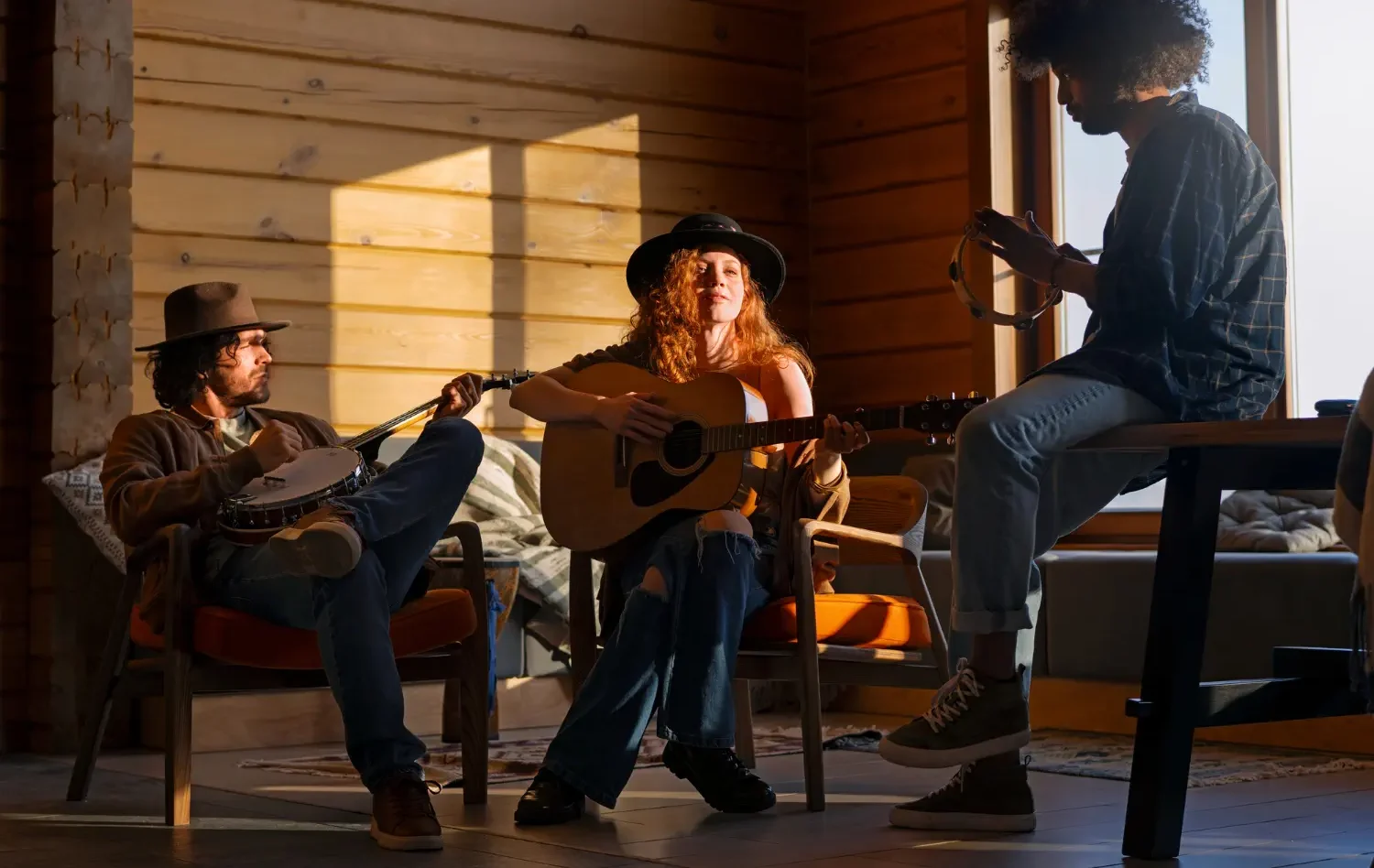
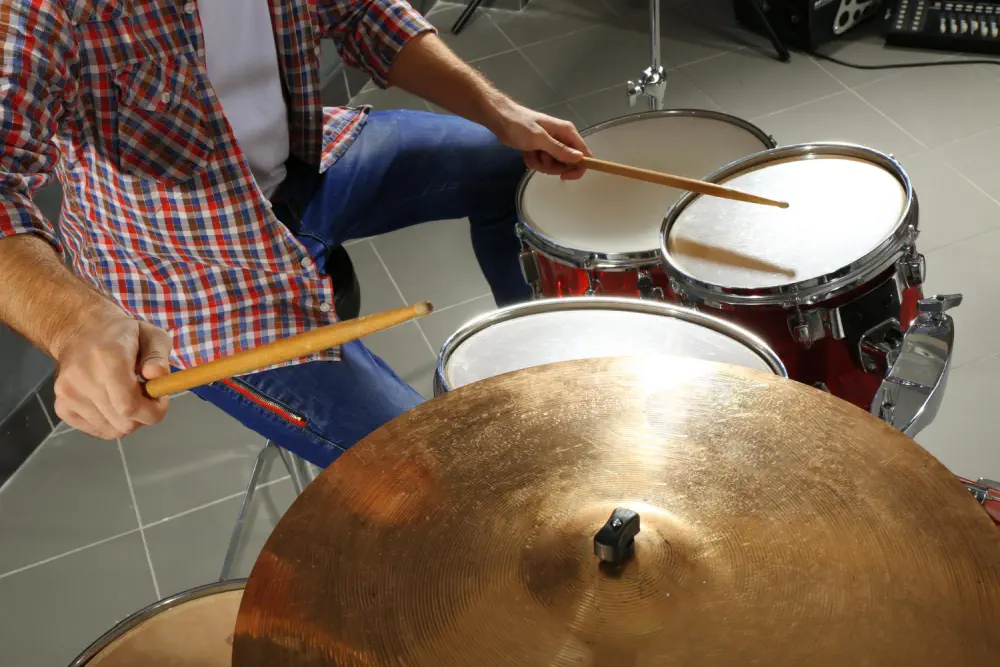
Active techniques put instruments in people's hands. Drumming is especially popular because it requires zero musical background; you hit the drum, and a sound comes out. The freedom of that simplicity lets clients focus entirely on expression without fear of playing a wrong note. Guitar and piano appear frequently in sessions too, with guitar favoured for its portability and intimate sound, and piano for its capacity to anchor group activities.
Other active interventions include:
- Songwriting — Clients write original lyrics, sometimes set to existing melodies. The content circles around triggers, memories, or recovery goals.
- Improvisation — Individuals or groups create spontaneous music, responding to each other in real time. Each person listens to what others are playing and decides how to contribute, a powerful exercise in social attunement.
- Musical analysis — Deconstructing a song's lyrics, structure, and emotional content to draw parallels with personal experience.
- Movement and dance — Responding physically to music to reconnect with bodily awareness that substance use may have dulled.
No session requires prior musical skill. A client who has never touched an instrument can participate fully on day one. The goal isn't musical proficiency; it's emotional access.
Can Music Be Harmful During Recovery?
This is a question that rarely gets asked, and it deserves attention. Not all music supports recovery. A 2024 study in the Journal of Substance Use and Addiction Treatment5 explored how music consumption at treatment centres affects clients, and the findings were nuanced.
Certain songs become conditioned triggers. When someone repeatedly pairs a particular substance with a specific genre or track, the brain forms a strong associative bond between that music and the drug experience. Hearing that song later, even months into recovery, can spike cravings with startling intensity. Researchers describe this as "dangerous music," though they caution that no genre is inherently problematic. What makes a song risky is the individual's personal history with it.
Trained music therapists address this directly. In a technique called the "musical presentation," therapists ask clients to bring in songs connected to their substance use history and discuss them in a clinical setting. By examining these associations consciously (naming the trigger, exploring the emotions it evokes, deciding how to respond), clients build awareness and coping skills around their musical triggers. Some choose complete avoidance of certain songs. Others learn to tolerate them without acting on the craving.
This duality is precisely why professional guidance matters. An unsupervised playlist can undermine recovery. A therapist-directed session can turn that same vulnerability into a source of strength.
How Does Music Therapy Fit Into a Broader Treatment Plan?
Music therapy for addiction works best as one thread in a multi-layered treatment plan, not a standalone cure. The Cochrane review makes this clear: music therapy shows its strongest effects when combined with standard care, including medical detox, individual counselling, group therapy, and other evidence-based interventions.
In Canada, organisations like the Centre for Addiction and Mental Health (CAMH)6 have embraced music's therapeutic potential. CAMH's Art of Healing program, a collaboration with the Toronto Symphony Orchestra, brings professional musicians into direct creative partnership with clients in their Youth Addiction and Concurrent Disorders Service. In 2026, the program expanded to serve youth experiencing substance use and co-occurring mental health challenges.
Music therapy also complements other creative treatments. Art therapy for addiction recovery, for example, uses visual media (drawing, painting, sculpting) to achieve similar goals through a different sensory channel. Combining both gives clients multiple pathways to emotional material that a purely verbal treatment might never reach.
Where music therapy fits within a daily treatment schedule varies by program. Some facilities offer dedicated weekly sessions with a credentialled therapist. Others weave musical activities into group therapy or recreational programming. The most effective integration treats music therapy as a deliberate clinical intervention with defined goals, measured outcomes, and regular reassessment.
Sources
- American Music Therapy Association. "What Is Music Therapy?" AMTA. https://www.musictherapy.org/about/musictherapy/
- Salimpoor, V.N. et al. "Anatomically distinct dopamine release during anticipation and experience of peak emotion to music." Nature Neuroscience, 2011. https://pubmed.ncbi.nlm.nih.gov/21217764/
- Ghetti, C. "Music therapy for people with substance use disorders." Cochrane Database of Systematic Reviews, 2022. https://www.cochranelibrary.com/cdsr/doi/10.1002/14651858.CD012576.pub3/full
- Hohmann, L. et al. "Effects of music therapy and music-based interventions in the treatment of substance use disorders: A systematic review." PLOS ONE, 2017. https://www.ncbi.nlm.nih.gov/pmc/articles/PMC5687713/
- Bensimon, M. "Beneficial and harmful music for substance use disorder clients." Journal of Substance Use and Addiction Treatment, 2024. https://www.sciencedirect.com/science/article/abs/pii/S0197455624000066
- CAMH & Toronto Symphony Orchestra. "Orchestral Music Meets Mental Health." CAMH, 2026. https://www.camh.ca/en/camh-news-and-stories/orchestral-music-meets-mental-health
FAQ
Does music therapy for addiction require musical talent?
No. Music therapy sessions accommodate all skill levels, including people who have never touched an instrument. The focus is emotional and therapeutic, not performative; therapists design activities around clinical goals, not musical ability.
How long does a typical music therapy session last?
Most sessions run between 30 and 60 minutes, depending on the clinical setting and the client's treatment plan. Group sessions tend toward the longer end, and individual sessions may be shorter and more focused.
Can I choose the music used in my sessions?
Therapists balance client preferences with clinical needs. You may bring in songs that resonate with you, but the therapist will guide selections to ensure they support your recovery goals. Songs linked to past substance use are handled carefully and therapeutically.
Is music therapy covered by provincial health plans in Canada?
Coverage depends on the specific program and province. Music therapy delivered within an accredited residential therapy for addiction program may be included as part of the overall treatment cost. Contact your treatment provider for specifics.
What's the difference between music therapy and listening to music on my own?
Clinical music therapy involves a credentialled therapist who assesses your needs, sets therapeutic goals, and uses structured interventions to meet them. Listening to music independently can be enjoyable and calming, but it lacks the intentional clinical framework that produces measurable therapeutic outcomes.