

We offer medical detox and multiple addiction treatment options in our
luxury treatment centres in Port Hope, Cobourg, and Ottawa.
Can You Take Zopiclone and Melatonin Together?

Combining zopiclone and melatonin is generally considered safe under medical supervision, though increased sedation becomes a real concern. Knowing how zopiclone works alongside melatonin helps you make informed decisions about managing persistent sleep troubles.
Key Takeaway:
- How zopiclone forces sleep through GABA receptors while melatonin adjusts your internal clock, and why these different actions matter for combination use
- What clinical research reveals about safety when taking both medications together, including specific dosages studied in aircrew trials
- Which serious risks demand attention beyond ordinary drowsiness, including next-day impairment that affects driving and fall risks in older adults
- Why physical dependence develops faster than expected—sometimes within just 2 months of nightly use, even at prescribed doses

How Does Zopiclone Work in Your Brain?
Zopiclone enhances GABA neurotransmitter activity by binding to specific brain receptors, creating powerful sedative effects that help you fall asleep quickly.
The GABA Connection
This Z-drug belongs to the cyclopyrrolone class of medications. The science behind it involves gamma-aminobutyric acid (GABA), your brain's primary calming neurotransmitter. Think of GABA as your brain's brake pedal. Zopiclone attaches to GABA-A receptors and makes them more responsive to GABA's natural calming signals. This enhanced activity slows down neural firing across your brain, producing that drowsy feeling you need for sleep.
Timing and Duration
The medication kicks in surprisingly fast. Most people feel the effects within 30 to 60 minutes of taking it. Zopiclone works through the night with a half-life of approximately 5 hours (ranging from 3.8 to 6.5 hours), then your liver breaks it down into inactive compounds. Your body typically clears it before morning, though some grogginess can linger.
Older sleep medications flooded your entire nervous system with sedation. Zopiclone takes a more targeted approach by focusing on specific GABA receptor subtypes. This selective binding creates effective sleep without quite as many next-day effects as benzodiazepines cause.
What Does Melatonin Actually Do for Sleep?
Melatonin regulates your body's internal clock rather than forcing sleep like medications do, working with natural rhythms instead of overpowering them.
Natural Sleep Signal
Your pineal gland naturally produces this hormone as darkness falls. Melatonin doesn't knock you unconscious. Instead, it signals your body that nighttime has arrived and sleep should follow soon. The hormone binds to MT1 and MT2 receptors scattered throughout your brain, particularly concentrated in the suprachiasmatic nucleus—your brain's master clock.
When melatonin attaches to these receptors, several changes begin. Your core body temperature drops slightly. Brain activity shifts toward patterns associated with rest. Alertness fades as your internal systems prepare for sleep. What happens mimics your natural evening transition as the circadian rhythm cycles through its 24-hour pattern.
Why Melatonin Differs from Sleep Medications
Melatonin creates conditions favourable for sleep without forcing it. You become relaxed and ready for rest, making it easier to drift off naturally. Natural sleep architecture remains largely intact, unlike with medications that artificially alter sleep stages.
Melatonin use works best when timed correctly—typically 1 to 2 hours before bed. Taking it at random times can actually disrupt your sleep-wake cycle by confusing your internal clock about when nighttime should occur.

Can These Medications Work Together Safely?
Research shows zopiclone and melatonin can be combined safely under medical guidance, but increased drowsiness becomes the primary concern requiring attention.
Clinical studies examined exactly this combination. Researchers tested aircrew members who needed to sleep at unusual times due to flight schedules. Both melatonin (2 mg sustained-release) and zopiclone (5 mg) improved sleep quality compared to placebo. Participants fell asleep faster, slept longer, and reported better rest. The studies found no significant safety issues when these substances were used together for short periods.
How They Complement Each Other
Both drugs work differently, which creates complementary effects. Zopiclone dampens overall brain activity through GABA enhancement. Melatonin simultaneously adjusts your circadian timing signals. One forces the brain toward sleep states while the other tells your body clock that sleep time has arrived. Using both can prove more effective than either substance alone.
When Doctors Recommend Combination Therapy
Doctors might recommend combining them when insomnia proves particularly stubborn. Someone with severe circadian rhythm disruption plus difficulty maintaining sleep could benefit from both. The melatonin addresses timing issues while zopiclone ensures adequate sedation once bedtime arrives.
However, additive sedation effects demand respect. Taking both substances together increases overall nervous system depression beyond what either produces individually. You'll likely feel drowsier, potentially affecting coordination and judgment more severely than expected.

What Risks Come with Combining Zopiclone and Melatonin?
Main risks include excessive drowsiness, next-day impairment affecting daily activities, and potential zopiclone dependence developing with extended use.
Excessive Sedation and Coordination Problems
Enhanced sedation tops the concern list. Both substances make you sleepy, and combining them can create overwhelming drowsiness. You might have trouble walking steadily, experience dizziness when standing, or find your reaction times badly slowed. These effects become particularly dangerous if you need to get up during the night for bathroom visits or emergency situations.
Next-Day Impairment Risks
Morning impairment persists longer than many people expect. Zopiclone alone can leave residual grogginess for hours after waking. Add melatonin to the mix, and you might struggle through your entire morning routine feeling foggy. Driving becomes risky. Operating machinery at work could pose safety hazards. Complex decision-making suffers when sedation lingers.
Older adults face elevated fall risks. Balance problems combined with mental confusion create dangerous conditions, especially at night. Hip fractures and head injuries from falls represent serious complications that far outweigh sleep benefits.
Development of Physical Dependence
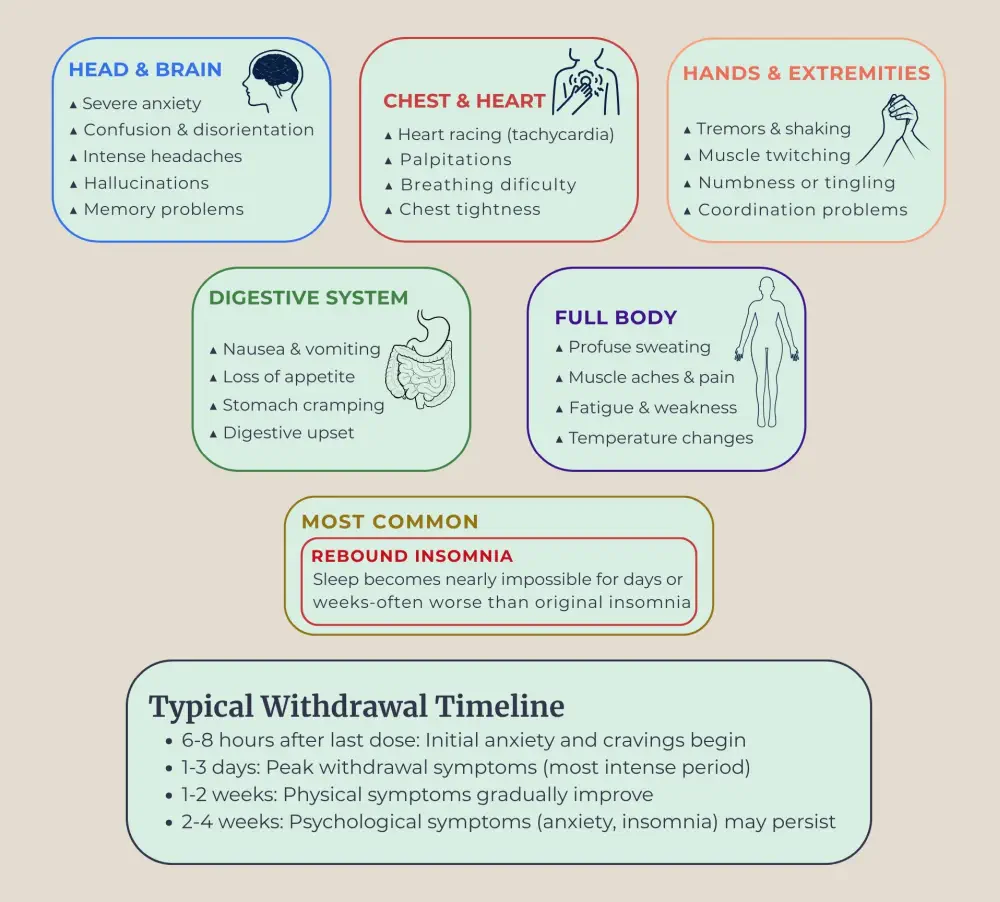
Zopiclone dependence develops more easily than most realize. Your body adapts to the medication within weeks, sometimes faster. Physical dependency can emerge even at prescribed doses. Stopping suddenly triggers withdrawal symptoms, including rebound insomnia far worse than your original sleep troubles, anxiety that feels unbearable, and potentially dangerous seizures in severe cases.
Special Populations at Higher Risk
Avoid this combination if you have respiratory issues like sleep apnea. Both substances depress breathing to some degree. Combining them could worsen oxygen desaturation during sleep, creating life-threatening situations.
Anyone with a history of substance use should exercise extreme caution. Zopiclone addiction risk increases substantially for people with past dependencies on alcohol or other drugs. The medication's GABA effects mirror those of alcohol and benzodiazepines, potentially triggering familiar cravings and behaviours from earlier addictions.
How Can Zopiclone Dependence Develop?
Zopiclone addiction can form within weeks, even at prescribed doses, particularly when use continues beyond the recommended 4-week maximum.
Physical Changes in Your Brain
Your brain adjusts to having GABA receptors constantly stimulated by the medication. Natural GABA signalling becomes less effective without the drug's enhancement. Within as little as 2 months of nightly use, your nervous system may require zopiclone just to maintain normal function.
Psychological Reliance
The psychological component proves equally powerful. Sleep becomes mentally linked with taking the pill. You start believing you absolutely cannot sleep without it, even after your body no longer physically needs the medication. This mindset creates powerful cravings that drive continued use despite mounting problems.
Withdrawal Symptoms
Withdrawal symptoms emerge when you try to stop. Severe rebound insomnia hits first, and sleep becomes nearly impossible for days or weeks. Intense anxiety makes every moment feel unbearable. Your heart races. Hands tremble. Some people experience hallucinations or confusion. In extreme cases, seizures can occur during zopiclone withdrawal, making medical supervision crucial for anyone who's been using the drug long-term.
Risk Factors for Faster Dependence
Risk factors accelerate zopiclone dependence formation. Previous substance abuse history tops the list. Mental health conditions like depression or anxiety increase vulnerability. Taking higher doses than prescribed speeds things up. Using the medication for stress relief rather than purely for sleep creates problematic behaviours.
Official Guidelines on Duration
The Compendium of Pharmaceuticals and Specialties recommends limiting zopiclone prescriptions to 7 to 10 days specifically because of addiction and tolerance concerns. The product data sheet allows up to 4 weeks of continuous treatment, though shorter duration use remains ideal. Extended use should only occur under close medical monitoring with clear justification for continued treatment.
When Should You Seek Professional Help?
Contact your doctor before combining these medications and immediately if you experience severe side effects, signs of zopiclone dependence, or worsening sleep despite treatment.
Medical supervision becomes non-negotiable when mixing sleep aids. Your physician needs to know about all medications and supplements you're taking. They can assess whether combining zopiclone and melatonin makes sense for your specific situation, adjust dosages appropriately, and monitor for problems.
If you're struggling with zopiclone dependence or concerned about combining sleep medications safely, professional guidance makes all the difference. Contact the Canadian Centre for Addictions at 1-855-499-9446 to discuss treatment options and create a personalized recovery plan that addresses your sleep concerns and substance dependency issues.
FAQ
Can I take zopiclone and melatonin together every night?
Taking zopiclone and melatonin nightly isn't recommended long-term. Zopiclone should only be used for 4 weeks maximum to prevent dependence, while melatonin works best as a short-term solution. Daily use of both increases side effects and zopiclone addiction.
How long does it take for each to work?
Zopiclone starts working within 30 to 60 minutes of taking it. Melatonin works differently; take it 1 to 2 hours before your target sleep time for best results, as it adjusts circadian signals rather than forcing immediate drowsiness.
What if I feel too drowsy the next morning?
Excessive morning drowsiness signals that dosages may be too high or the combination isn't right for you. Contact your doctor immediately rather than continuing to be impaired. Never drive or operate machinery while feeling drowsy—accident risks increase dramatically.
Is melatonin addictive like zopiclone?
Melatonin doesn't create physical dependence or addiction like zopiclone does. It's a natural hormone rather than a sedative drug, so you won't experience withdrawal symptoms when stopping. Zopiclone dependence involves actual brain chemistry changes that make stopping difficult and potentially dangerous.
How do I safely stop taking zopiclone?
Never stop zopiclone abruptly after regular use. Work with your doctor to create a gradual tapering schedule that slowly reduces your dose over weeks. Professional support through withdrawal improves success rates and safety, especially if zopiclone addiction has formed.
Article sources
- Suhner, A., et al. (2004). "Melatonin and zopiclone as facilitators of early circadian sleep in operational air transport crews." Aviation, Space, and Environmental Medicine. Available at: https://pubmed.ncbi.nlm.nih.gov/15152897/
- Paul, M.A., et al. (2001). "Melatonin and zopiclone as pharmacologic aids to facilitate crew rest." Aerospace Medicine and Human Performance, 72, 11. Available at: https://pubmed.ncbi.nlm.nih.gov/11718517/
- Medsafe (New Zealand Medicines and Medical Devices Safety Authority). "Dependence with Zopiclone." Available at: https://www.medsafe.govt.nz/profs/puarticles/3.htm
- Terzano, M.G., et al. (2003). "The mechanism of action of zopiclone." European Psychiatry, 11, Suppl 4. Available at: https://pubmed.ncbi.nlm.nih.gov/19698408/
- Sack, R.L., et al. (2007). "Melatonin and Its Receptors: A New Class of Sleep-Promoting Agents." Journal of Clinical Sleep Medicine, 3, 5 Suppl. Available at: https://pmc.ncbi.nlm.nih.gov/articles/PMC1978320/
- Hardeland, R., et al. (2011). "Melatonin: Pharmacology, Functions and Therapeutic Benefits." Current Neuropharmacology, 15, 3. Available at: https://pmc.ncbi.nlm.nih.gov/articles/PMC5405617/
- Sikdar, S., Ruben, S.M. (2008). "Zopiclone: Is it a pharmacologic agent for abuse?" Canadian Family Physician, 54, 9. Available at: https://pmc.ncbi.nlm.nih.gov/articles/PMC2231551/
- Chen, Y., et al. (2025). "Dependence on zopiclone: a case report." Frontiers in Psychiatry, 16. Available at: https://www.frontiersin.org/journals/psychiatry/articles/10.3389/fpsyt.2025.1592065/full