
We offer medical detox and multiple addiction treatment options in our
luxury treatment centres in Port Hope, Cobourg, and Ottawa.
Meth Sores and Ways to Recognize Them

Meth sores represent one of the most visible consequences of chronic drug use—painful, open wounds that appear across the face, arms, and other exposed areas. These lesions don't just affect appearance. They signal deeper health crises that demand immediate attention and professional intervention.
Recognizing meth sores early creates opportunities for life-saving conversations. Families across Ontario see these wounds developing on people they care about, yet many don't grasp what they're witnessing or how rapidly the situation can deteriorate.

Key Takeaways:
- Appearance matters - These wounds look distinctly different from acne or allergic reactions, often appearing as clusters of picked-at scabs in various healing stages
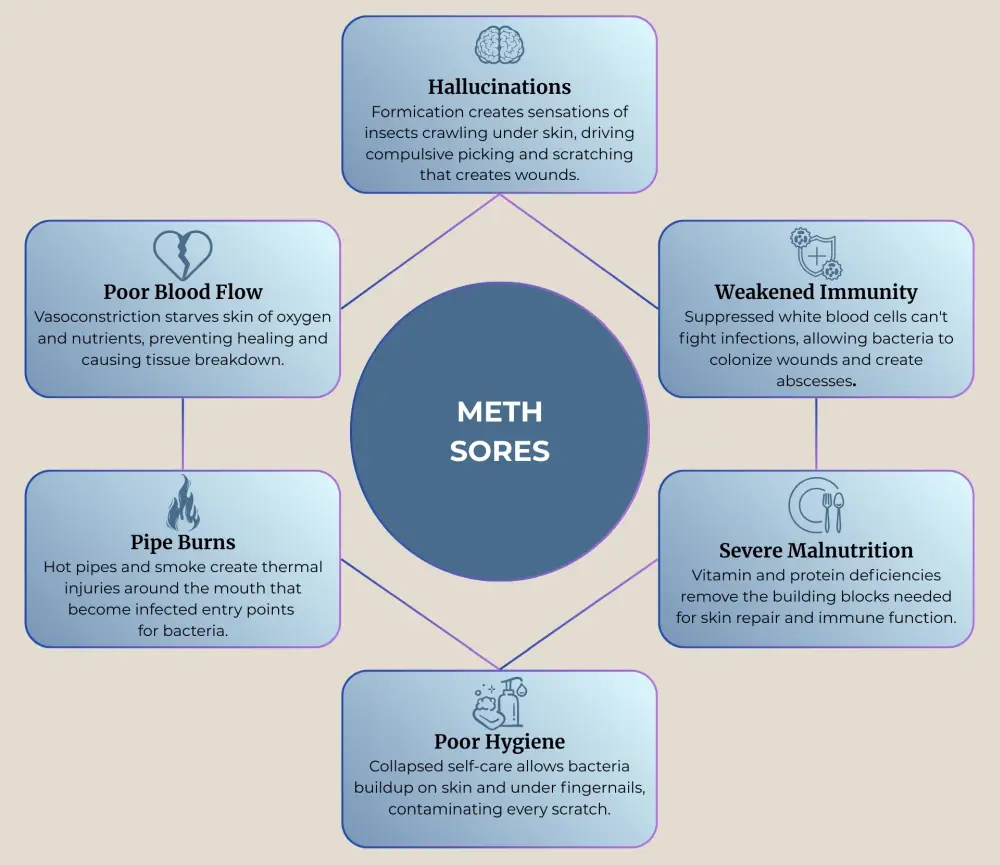
- Six factors converge - Hallucinations, weakened immunity, restricted blood flow, malnutrition, pipe burns, and poor hygiene attack the skin simultaneously
- Progression follows stages - Surface irritation in days becomes chronic infected wounds within weeks, with permanent scarring developing by 4-12 weeks
- Recognition requires pattern-spotting - Visual wounds plus dramatic weight loss, premature aging, and obsessive scratching behaviours reveal the complete picture
- Healing demands dual treatment - Wounds won't close without addressing both proper wound care and the underlying addiction driving continued damage
What Are Meth Sores?
Meth sores are open wounds and lesions that develop on the skin of people who regularly use methamphetamine. They look like red, inflamed patches that progress into crusty scabs and deep ulcers. Some resemble acne breakouts or insect bites at first glance. Others appear as burns around the mouth. The wounds refuse to heal properly, creating cycles of picking, infection, and scarring that disfigure faces beyond recognition.
These sores typically cluster on the face, especially around the mouth, cheeks, and forehead. Arms and legs also develop extensive damage. Hands show signs of constant scratching. The pattern reflects both the drug's internal effects and the obsessive behaviours methamphetamine addiction triggers in users.
Meth face describes the constellation of changes that accompany these wounds—sunken cheeks, premature aging, hollow eyes, and skin that appears decades older than the person's actual age. Fat loss under the skin creates a skeletal appearance. Teeth decay rapidly. These changes happen so quickly that friends barely recognize someone after just months of heavy use.
Not everyone who uses methamphetamine develops visible sores immediately. Frequency matters. Duration matters. Individual skin sensitivity plays a role. But chronic users almost always show these wounds eventually, with severity increasing as use continues.
What Causes Meth Sores?
Multiple factors combine to create the perfect storm for skin breakdown. Methamphetamine addiction damages skin through multiple mechanisms—attacking from several directions simultaneously and overwhelming the body's natural healing systems.
Hallucinations Drive Compulsive Picking
The primary cause of meth sores stems from a disturbing side effect called formication. Users experience intense sensations of bugs crawling under their skin. These tactile hallucinations feel completely real despite being phantom sensations created by the drug's neurological effects. People scratch and pick relentlessly, trying to remove insects that don't exist. They dig into their skin with fingernails, creating wounds that start small but expand through repeated trauma.
This behaviour happens during both active intoxication and the crash that follows. Sleep-deprived individuals become increasingly paranoid about the imagined insects. Hours are spent in front of mirrors, convinced movement exists beneath their skin. The psychological torment drives destructive behaviours that rational thinking can't stop.
Immune System Suppression
Methamphetamine weakens the body's infection-fighting capabilities severely. White blood cells, which normally defend against bacteria and viruses, function poorly under the drug's influence. Even minor skin breaks that would typically heal within days become entry points for serious infections. The compromised immune response allows bacteria to colonize wounds, creating pus-filled abscesses that spread rapidly.
Restricted Blood Flow
Methamphetamine acts as a powerful vasoconstrictor, tightening blood vessels throughout the body. Skin receives severely reduced blood flow, starving cells of oxygen and nutrients needed for repair. Wounds heal slowly or not at all. The pale, grey complexion many users develop reflects this circulatory damage. Without an adequate blood supply, skin loses resilience and breaks down under minimal stress.
Severe Malnutrition
Methamphetamine addiction destroys appetite. Binge periods often mean days without eating. Food consumption, when it happens, typically involves sugary drinks and junk food that provide calories but lack vitamins and minerals the skin needs to maintain integrity. Deficiencies in vitamin C, vitamin A, and zinc—all crucial for wound healing—become severe. The body literally lacks building blocks to repair damaged tissue.
Burns from Drug Paraphernalia
Smoking methamphetamine involves heating glass pipes to extremely high temperatures. Contact with overheated surfaces causes burns around the mouth and on the lips. These thermal injuries create their own category of meth sores, distinct from picking-related wounds but equally disfiguring. Hot smoke itself damages delicate mucous membranes inside the mouth, contributing to "meth mouth" alongside dental decay.
Poor Hygiene Practices
Personal care routines collapse during active methamphetamine addiction. Weeks pass without showering. The same clothes get worn repeatedly. Basic handwashing stops. This allows bacteria, dirt, and oil to accumulate on skin, setting the stage for infections when wounds inevitably appear. Unwashed hands with bacteria under the fingernails turn every scratching session into an opportunity for contamination.

How Fast Do Meth Sores Progress Without Treatment?
Meth sores progress through predictable stages, with symptoms worsening if drug use continues. Recognizing each phase helps families understand urgency and prognosis.
Stage 1: Early Signs (First Few Days to 1 Week)
Initial symptoms appear subtle and easily dismissed. Small red bumps emerge, resembling pimples or minor allergic reactions. Skin becomes itchy. Slight tenderness develops when the affected areas are touched. At this point, wounds remain superficial—just surface irritation that could heal quickly if picking stops and drug use ends.
Small scratches that look like normal skin injuries appear on some individuals. Others show tiny dots of broken capillaries where blood vessels have ruptured. The meth face changes haven't become obvious yet. Casual observers might not notice anything alarming.
Stage 2: Progression (1-4 Weeks)
Continued methamphetamine use and compulsive scratching deepen initial lesions. Small bumps evolve into open sores. Inflammation spreads around wound sites, creating angry red halos. Pus may appear as bacterial infections take hold. Scabs form but are repeatedly picked off before healing can occur.
Multiple wounds often cluster together at this stage. The face shows more obvious damage—several sores across the cheeks, forehead, or around the mouth. Arms display long scratch marks and circular lesions. Weight loss becomes noticeable, contributing to the gaunt appearance that characterizes meth face.
Poor circulation and weakened immunity slow healing substantially. What should resolve in a week persists for months. The skin's texture changes, becoming rough and damaged even in areas without active sores.
Stage 3: Chronic Wounds (4-12 Weeks)
Untreated sores evolve into chronic wounds that medical professionals struggle to heal, even with intervention. Deep ulcers penetrate through multiple skin layers. Surrounding tissue dies (necrosis), creating black or dark brown centers within wounds. Infections spread from the skin into the underlying fat and muscle.
MRSA (methicillin-resistant Staphylococcus aureus) becomes a serious threat. These antibiotic-resistant infections require specialized medical treatment and can spread through the bloodstream if neglected. Abscesses form—pockets of pus that swell painfully beneath the skin surface.
Scarring becomes permanent at this stage. Even if drug use stops and wounds eventually close, the tissue damage leaves visible marks. Keloid scars (thick, raised scar tissue) often develop, particularly on the face. The meth face changes become irreversible without surgical intervention.
Stage 4: Severe Complications (Beyond 12 Weeks)
Long-term methamphetamine addiction creates catastrophic skin damage. The entire face may be covered in overlapping scars and active wounds. Some lesions never heal, remaining open for months or years. Cellulitis—a spreading bacterial infection—becomes recurrent, requiring repeated hospitalizations for intravenous antibiotics.
Sepsis represents the most dangerous complication. When bacteria from skin infections enter the bloodstream, they trigger a body-wide inflammatory response that can cause organ failure and death. Warning signs include fever, rapid heartbeat, confusion, and extremely low blood pressure. Sepsis requires emergency medical care.
Bone infections (osteomyelitis) can develop when deep facial wounds expose underlying skull structures. These require months of treatment with powerful antibiotics and sometimes surgical debridement to remove infected tissue.
What Red Flags Indicate Methamphetamine Skin Damage?
Distinguishing meth sores from other skin conditions helps families make informed decisions about seeking help. Several characteristics set these wounds apart from typical acne, allergic reactions, or other dermatological conditions.
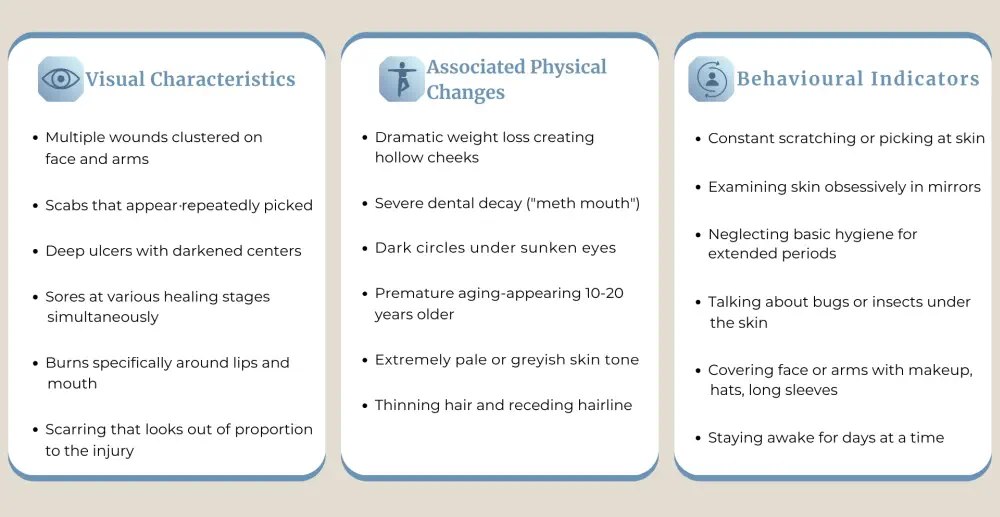
When meth sores appear alongside these other indicators, the pattern becomes unmistakable. Isolated skin problems might have innocent explanations, but the complete picture reveals methamphetamine addiction.
Can Meth Sores Heal After Stopping Drug Use?
Healing meth sores requires addressing both the wounds themselves and the underlying addiction driving their formation. Surface-level treatment fails without tackling the root cause.
Some wounds require surgical debridement—removal of dead tissue that prevents healing. Plastic surgeons can address scarring after recovery stabilizes, though prevention through early intervention works better than reconstruction attempts.
Meth sores won't stop appearing until methamphetamine addiction receives proper treatment. The cycle of use, picking, and wound formation continues otherwise. Professional help offers the best chance for lasting recovery.
FAQ
How quickly do meth sores develop after starting methamphetamine use?
Meth sores typically appear after weeks or months of regular use, not during initial experimentation. Heavy users may show wounds within the first month, while others take longer, depending on use frequency, individual biology, and whether formication hallucinations develop.
Can meth sores heal completely, or is the damage permanent?
Early-stage meth sores can heal without permanent scarring if drug use stops and proper wound care begins immediately. Once wounds progress to deep ulcers or chronic infections, scarring becomes permanent even with treatment.
How can I tell if meth sores are infected?
Warning signs include increasing redness spreading beyond the wound, warmth, swelling that worsens over 24-48 hours, yellow or green pus, red streaks extending from the sore, fever above 38°C, and intense pain. Any suspected infection requires prompt medical evaluation.
Are meth mites real insects?
No. "Meth mites" are hallucinations caused by methamphetamine's effects on the nervous system. The sensations feel completely real despite nothing being present, triggering compulsive scratching that creates meth sores.
What's the difference between meth face and meth sores?
Meth face refers to the overall facial changes from methamphetamine addiction—including meth sores, extreme weight loss, premature aging, and dental decay. Meth sores specifically describe the open wounds that appear on the skin.
Can someone recover from meth addiction and reverse the damage?
Yes, recovery from methamphetamine addiction is achievable with proper treatment. Physical healing begins once drug use stops—immune function strengthens, blood flow improves, and wounds close naturally.
Article sources
- Cohen, A.L., Shuler, C., & McAllister, S. (2007). "Methamphetamine Use and Methicillin-Resistant Staphylococcus aureus Skin Infections." Morbidity and Mortality Weekly Report, Centers for Disease Control and Prevention. Available at: https://www.cdc.gov/mmwr/preview/mmwrhtml/mm5612a1.htm
- Substance Abuse and Mental Health Services Administration. (2019). "Key Substance Use and Mental Health Indicators in the United States: Results from the 2018 National Survey on Drug Use and Health." NSDUH Series. Available at: https://www.samhsa.gov/data/sites/default/files/reports/rpt29393/2019NSDUHFFRPDFWHTML/2019NSDUHFFR1PDFW090120.pdf
- Shoptaw, S.J., et al. (2009). "Treatment for amphetamine psychosis." Cochrane Database of Systematic Reviews. Available at: https://www.ncbi.nlm.nih.gov/pmc/articles/PMC7388308/
- Sommers, I., Baskin, D., & Baskin-Sommers, A. (2006). "Methamphetamine use among young adults: Health and social consequences." Addictive Behaviors, 31(8), 1469-1476. Available at: https://www.sciencedirect.com/science/article/abs/pii/S0306460305003370
- Lappin, J.M., et al. (2017). "Chronic methamphetamine use and cognitive function in older adults." Drug and Alcohol Dependence, 181, 51-57. Available at: https://pubmed.ncbi.nlm.nih.gov/29024873/
- Rusyniak, D.E. (2013). "Neurologic manifestations of chronic methamphetamine abuse." Neurologic Clinics, 29(3), 641-655. Available at: https://www.ncbi.nlm.nih.gov/pmc/articles/PMC3280383/
- National Institute on Drug Abuse. (2023). "Methamphetamine DrugFacts." U.S. Department of Health and Human Services. Available at: https://nida.nih.gov/publications/drugfacts/methamphetamine