
We offer medical detox and multiple addiction treatment options in our
luxury treatment centres in Port Hope, Cobourg, and Ottawa.
Is CBD Addictive in Regular Use?

CBD doesn't create physical addiction. Research from the World Health Organization confirms that cannabidiol shows no signs of abuse potential or dependence in humans. But here's what catches people off guard: psychological reliance can develop when this cannabinoid becomes your only tool for managing stress, anxiety, or sleep problems.

The distinction matters. Your body won't crave CBD the way it craves opioids or alcohol. You won't experience withdrawal seizures or dangerous symptoms if you stop suddenly. Still, some people find themselves reaching for cannabidiol products multiple times daily, convinced they can't cope without them.
Key takeaway:
- Why cannabidiol's brain chemistry effects differ fundamentally from truly addictive substances like opioids and nicotine—and what the WHO discovered about its abuse potential
- When tolerance develops, but addiction doesn't— the crucial difference between your body adapting to this cannabinoid and becoming dependent on it
- The one psychological pattern that transforms non-addictive CBD into a crutch you can't imagine living without
- Which common medications interact dangerously with cannabidiol, and why even "natural" products require doctor supervision
- The three side effects that affect roughly 1 in 5 regular users, and which warning signs demand immediate medical attention
What Is CBD and How Does It Work?
CBD (cannabidiol) is a non-intoxicating compound extracted from cannabis plants. Unlike THC, the psychoactive cannabinoid that gets you high, this compound interacts with your body's endocannabinoid system without altering your mental state or producing euphoria.
Your endocannabinoid system regulates sleep, pain response, mood, and immune function. CBD works by influencing cannabinoid receptors throughout your body, particularly CB1 and CB2 receptors in your nervous system. This interaction explains why people turn to cannabidiol for managing chronic pain, sleep disturbances, and stress-related symptoms.
How Product Format Affects Cannabidiol Absorption
In Canada, hemp-derived Cannabidiol products containing less than 0.3% THC are legal. You'll find this cannabinoid in oils, capsules, edibles, topical creams, and vape products. Each delivery method affects how quickly cannabis-derived cannabidiol enters your bloodstream and how long the effects last.
Sublingual oils absorb within 15-30 minutes, providing relatively quick relief that lasts 4-6 hours. Edibles take 45-90 minutes to kick in, but effects can persist for 6-8 hours. Topical applications work locally on the skin and muscles without entering your bloodstream at all.
The appeal makes sense. People want relief from anxiety and chronic pain without risking the intoxication or impairment that comes with THC-containing marijuana products.
Is CBD Addictive According to Scientific Research?
No. Scientific evidence consistently shows that CBD is not addictive in the traditional sense.
The World Health Organization published findings in 2017 stating that "evidence from well-controlled human experimental research indicates that CBD is not associated with abuse potential." This conclusion came after an extensive review of available clinical data and animal studies.
Here's what researchers discovered: Cannabidiol doesn't trigger the reward pathways in your brain that drive addiction to substances like cocaine, nicotine, or opioids. When scientists studied CBD's effects on brain chemistry, they found it doesn't produce the dopamine surges that reinforce compulsive drug-seeking behaviour.
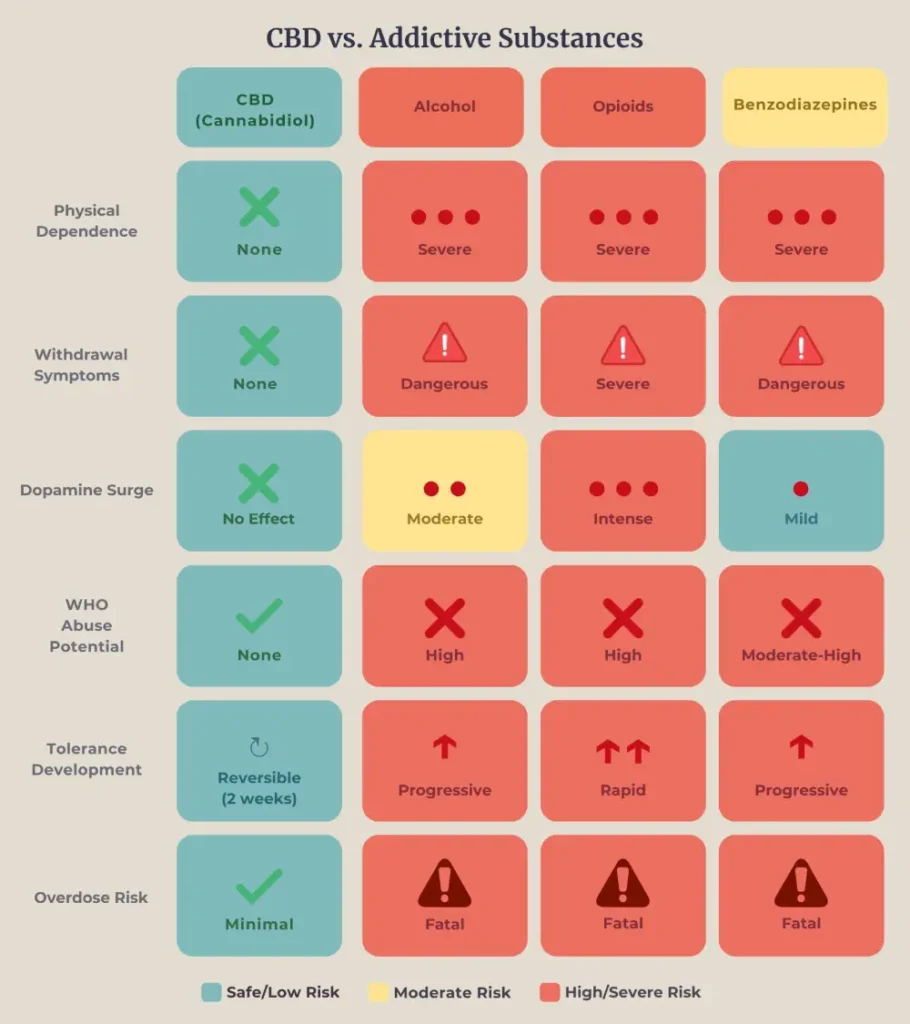
Physical dependence, where your body adapts to a substance and requires it to function normally, doesn't develop with CBD use. Stop taking cannabidiol tomorrow, and you won't experience tremors, nausea, or the dangerous withdrawal symptoms associated with alcohol or benzodiazepines.
Why Tolerance Develops Without Creating Addiction
But tolerance can develop. Some people find they need higher doses over time to achieve the same relief they initially experienced. This happens because your cannabinoid receptors temporarily decrease in sensitivity after prolonged exposure to the compound.
This tolerance resets quickly. Taking a two-week break typically restores your receptors to baseline sensitivity, allowing lower doses to work effectively again. This reversible tolerance differs dramatically from true addiction, where your brain's reward pathways permanently rewire themselves.
Research limitations exist. Most studies examining cannabidiol addiction potential have been relatively short-term, lasting weeks or months instead of years. We don't have complete long-term data on what happens after decades of daily use of this hemp extract.
Can You Develop Psychological Dependence on This Cannabinoid?
Yes, and this distinction determines how you assess CBD addiction risks.
Psychological dependence happens when you believe you need the substance to function normally, even though your body doesn't physically require it. You might feel anxious about running out of your cannabidiol oil. Perhaps you panic when you forget to take your usual dose. Some people structure their entire day around consumption schedules for this compound.
The risk increases when CBD becomes your only coping strategy. Using the substance exclusively to manage work stress, relationship conflicts, or unresolved trauma creates vulnerability. You're not addressing underlying issues—you're temporarily masking symptoms.
People in recovery from substance use disorders face a heightened risk. Years of relying on external substances to regulate emotions can make any new substance feel like a necessary crutch, even one without addiction potential. This pattern deserves professional attention and support from addiction specialists who recognize these dynamics.
What Are CBD Side Effects from Regular Use?
Beyond addiction concerns, this cannabinoid produces physical reactions that deserve attention. Common reactions include tiredness, digestive upset, and appetite changes. Most people tolerate CBD well, but side effects can interfere with daily life for some users.
Drowsiness hits roughly 20% of people using the compound, particularly at higher doses. You might feel groggy for hours after taking cannabidiol, affecting your ability to drive safely or concentrate at work. This effect intensifies when combining CBD with other sedating medications or alcohol.
Gastrointestinal problems (mainly diarrhea and stomach discomfort) affect about 17% of regular users. These symptoms most often emerge during the first few weeks of use and may lessen as your body adjusts.
Changes in appetite and weight occur in about 16% of users. Some people experience increased hunger, while others lose interest in food entirely.
When Side Effects Become Dangerous
Liver enzyme elevation concerns doctors most. High doses of this compound—particularly above several hundred milligrams daily—can stress your liver, especially when combined with other medications. People taking anti-seizure drugs like valproate face the highest risk, with studies showing significant liver enzyme increases when these medications combine with cannabidiol.
Regular blood tests become necessary for people taking CBD alongside other drugs metabolized by the liver.
Drug interactions create serious risks. This cannabis compound affects how your liver processes many common medications, including blood thinners, anti-seizure drugs, and some antidepressants. These interactions can make medications either less effective or dangerously potent.
Medical supervision matters. Never assume cannabidiol is harmless simply because it's "natural" or widely available. Your doctor needs to know you're using this hemp-derived supplement, especially if you take any prescription medications.

Does Cannabidiol Help with Anxiety or Make It Worse?
Research on cannabidiol for anxiety shows promise, but results vary dramatically between individuals. Some people experience substantial symptom relief. Others notice no change. A troubling minority report worsening anxiety after using the compound.
A 2022 study found that people with moderate to severe anxiety experienced 60-70% symptom reduction after four weeks of high-CBD treatment. Participants reported feeling calmer, sleeping better, and functioning more effectively in daily activities.
Contrasting data exists. One retrospective study of 72 adults found that 79% reported anxiety improvements during the first month of CBD treatment, but nearly 20% developed worse symptoms. These mixed outcomes reflect how differently this cannabinoid affects individual brain chemistry.
Why This Cannabinoid Works for Some But Not Others
Dose matters enormously. Lower doses (around 300mg) tend to reduce anxiety in controlled settings, like before public speaking. Higher doses sometimes produce opposite effects, increasing agitation or nervousness in certain people.
Your individual response depends on several factors: your unique endocannabinoid system sensitivity, existing anxiety severity, other medications you take, and even genetic variations in how your liver processes CBD. What helps your friend might worsen your symptoms.
The research landscape remains incomplete. Most studies involve small participant numbers and relatively short timeframes. We need large-scale, long-term clinical trials before definitively recommending cannabidiol as an anxiety treatment.
CBD should never replace evidence-based mental health treatment. Cognitive behavioural therapy, exposure therapy, and FDA-approved medications have decades of research supporting their effectiveness. Cannabidiol might serve as a complementary tool alongside professional treatment, but it can't substitute for proper psychological care.
How Can You Use Cannabidiol Safely and Avoid Dependence Issues?
Consult your doctor before trying cannabidiol products, especially if you take other medications. CBD affects how your liver processes dozens of common drugs, including blood thinners, anti-seizure medications, and antidepressants. Your doctor can identify dangerous interactions before they occur.
Start with 10-25mg daily and increase gradually over several weeks. This identifies the lowest effective dose while minimizing side effects.
How Do You Choose Safe Cannabidiol Products
Choose products with third-party laboratory testing certificates. Canadian regulations around cannabidiol remain inconsistent—unregulated products sometimes contain significantly less of the active compound than claimed, unlisted THC, or contaminants like heavy metals and pesticides.
Never replace prescribed treatments with CBD. Cannabidiol might complement your existing care plan, but it can't substitute for proven interventions.
What Are the Warning Signs of This Supplement Dependence
Monitor your patterns. Taking cannabidiol at scheduled times for specific symptoms differs from reaching for it impulsively whenever discomfort arises.
Warning signs include: escalating doses without medical guidance, hiding use of the supplement from family or doctors, anxiety about running low on supply, or panic-buying backup products.
Maintain diverse coping strategies. Exercise, meditation, social connection, adequate sleep, and stress management skills all support mental health. CBD should enhance these practices, not replace them.

When Does Use Require Specialist Intervention?
Contact addiction specialists if you feel incapable of functioning without CBD. This includes panic about running out, structuring your entire day around cannabidiol use, or avoiding situations where the substance won't be available.
Using CBD to avoid addressing underlying problems signals concern. Perhaps you're self-medicating undiagnosed depression, untreated trauma, or chronic anxiety that needs professional assessment. Substances, even non-addictive ones, can postpone necessary healing work.
Professional treatment addresses why you turned to this hemp extract initially and provides tools for sustainable wellness. For support with cannabidiol reliance or underlying mental health challenges, contact the Canadian Centre for Addictions at 1-855-499-9446.
FAQ
Can you get addicted to CBD oil?
No, CBD oil doesn't cause physical addiction. However, psychological dependence can develop if you rely on it exclusively for managing stress or anxiety without other coping strategies or professional support.
Is CBD safer than marijuana?
This non-intoxicating cannabinoid lacks the psychoactive effects of THC found in marijuana, making it less likely to be misused recreationally. Both substances can cause side effects and interact with medications, requiring careful consideration before use.
How long does it take to develop tolerance to cannabidiol oil?
Tolerance may develop after several weeks or months of consistent use, requiring higher doses for the same effects. Taking periodic two-week breaks often resets tolerance, allowing lower doses to work effectively again.
Can this cannabinoid help treat addiction to other substances?
Some research suggests cannabidiol may reduce cravings for opioids and other substances. It should only be used as part of complete addiction treatment under medical supervision, never as a standalone solution.
What dose of cannabidiol is safe for daily use?
Research indicates up to 200mg daily for 13 weeks is generally safe for most adults, though individual responses vary significantly. Always start with lower doses (10-25mg) and consult healthcare providers, especially when taking other medications that might interact with this compound.
Article sources
- World Health Organization. (2017). "Cannabidiol (CBD) Critical Review Report." Expert Committee on Drug Dependence. Available at: https://www.who.int/publications/i/item/9789240034013
- Shannon, S., et al. (2019). "Cannabidiol in Anxiety and Sleep: A Large Case Series." The Permanente Journal, 23, 18-041. Available at: https://pmc.ncbi.nlm.nih.gov/articles/PMC6326553/
- Chesney, E., et al. (2020). "Adverse effects of cannabidiol: a systematic review and meta-analysis of randomized clinical trials." Neuropsychopharmacology, 45, 1799–1806. Available at: https://www.nature.com/articles/s41386-020-0667-2
- Geffrey, A.L., et al. (2015). "Drug-drug interaction between clobazam and cannabidiol in children with refractory epilepsy." Epilepsia, 56(8), 1246-1251. Available at: https://pubmed.ncbi.nlm.nih.gov/26114620/
- Iffland, K., & Grotenhermen, F. (2017). "An Update on Safety and Side Effects of Cannabidiol: A Review of Clinical Data and Relevant Animal Studies." Cannabis and Cannabinoid Research, 2(1), 139-154. Available at: https://pmc.ncbi.nlm.nih.gov/articles/PMC5569602/
- Government of Canada. (2024). "Cannabis in Canada: Get the Facts." Health Canada. Available at: https://www.canada.ca/en/health-canada/services/drugs-medication/cannabis.html