

We offer medical detox and multiple addiction treatment options in our
luxury treatment centres in Port Hope, Cobourg, and Ottawa.
Exploring the Hidden Dangers of ADHD Medications

Your reaction to ADHD medication depends heavily on which type you're taking. Non-stimulant and stimulant ADHD medications produce different side effect profiles, affecting everything from your energy levels to your cardiovascular system. Your body adjusts to treatment over time, though the adjustment period varies dramatically between individuals.
However, some individuals face more persistent challenges. Dosage adjustments help. Sometimes switching medications becomes necessary. Knowing which side effects are normal versus concerning helps you work effectively with your healthcare provider to find the right balance between symptom control and comfort.
Key Takeaways:
- Why stimulant and non-stimulant ADHD medications create completely different side effect patterns based on how they affect your brain chemistry
- Which physical reactions affect 80% of people taking stimulants, and why do some symptoms improve after just a few weeks, while others persist
- The psychological side effects that signal your dosage needs immediate adjustment, versus those requiring emergency medical attention
- Specific timing strategies and food interactions that can reduce side effects by up to 40% without changing your medication
- Whether ADHD treatment actually increases or decreases your risk of developing substance use problems
- Red flag symptoms that mean you should stop medication immediately and contact your doctor before taking another dose
How Do Different Types of ADHD Medication Cause Side Effects?
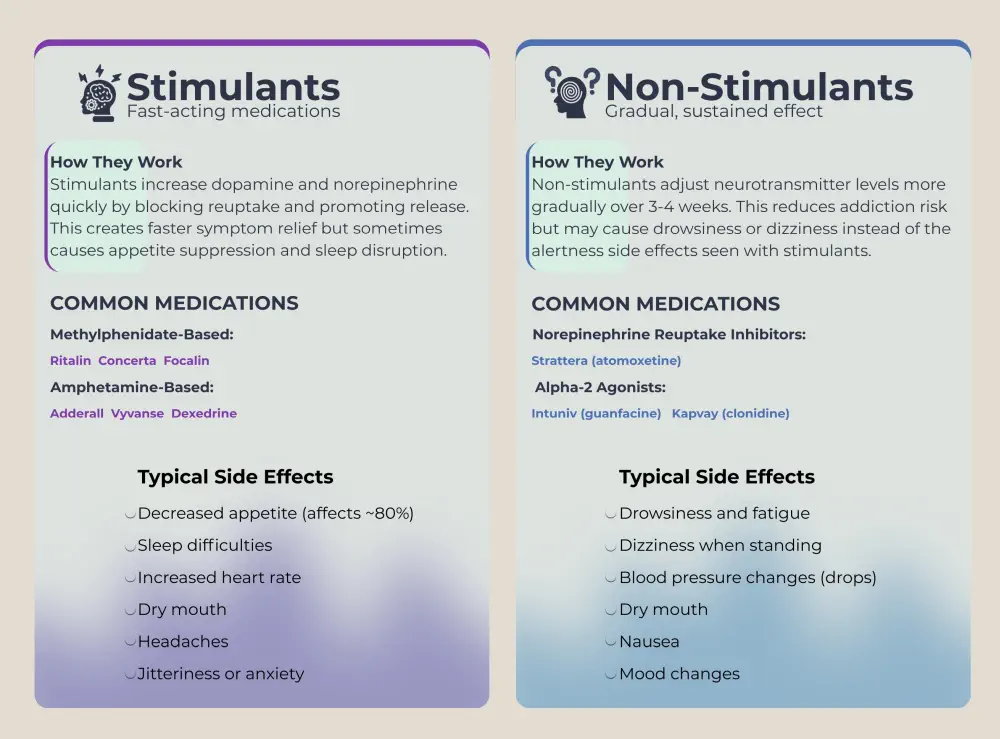
Stimulants rapidly increase dopamine and norepinephrine, providing faster symptom relief, but can sometimes cause appetite suppression and sleep disruption. Non-stimulant ADHD medications adjust neurotransmitter levels more gradually, reducing addiction risk but potentially causing drowsiness or dizziness instead.

The difference matters because your brain responds uniquely to each medication type. Methylphenidate-based medications like Concerta or Ritalin work differently from amphetamine-based options such as Adderall or Vyvanse. Some people tolerate one category beautifully but struggle with the other.
Non-stimulants like Strattera (atomoxetine) or Intuniv (guanfacine) take three to four weeks to reach full effectiveness. This slower onset means fewer dramatic side effects initially, though different challenges can emerge. Your body's chemistry, metabolism speed, and even what you eat influence how you respond to any type of ADHD medication.
Timing and dosage dramatically affect your experience. Taking medication with food might reduce nausea, but could delay how quickly it works. Extended-release formulations spread effects across 12 hours, compared to immediate-release versions that peak faster and wear off sooner.
What Are the Most Common Physical Side Effects?
Decreased appetite affects roughly 80% of people taking stimulant medications. Food suddenly loses appeal. Meals feel like obligations instead of pleasures. This improves after the first month as your body adapts in most cases.
Sleep disturbances range from trouble falling asleep to restless nights with poor-quality rest. Hours pass as you lie awake, exhausted but unable to drift off. Medication timing matters enormously—long-acting formulations taken too late remain active at bedtime.
Headaches emerge during the first week for many people. They're usually mild and temporary. If they persist or intensify, your dosage might need adjustment.
Weight loss follows naturally from appetite suppression. Research shows children may lose one to three pounds during the first month of stimulant treatment. Growth velocity can slow temporarily, though final adult height remains unaffected. Most children regain lost weight within three months as their bodies adapt. Adults sometimes welcome this effect, though losing more than 5% of body weight deserves medical attention.
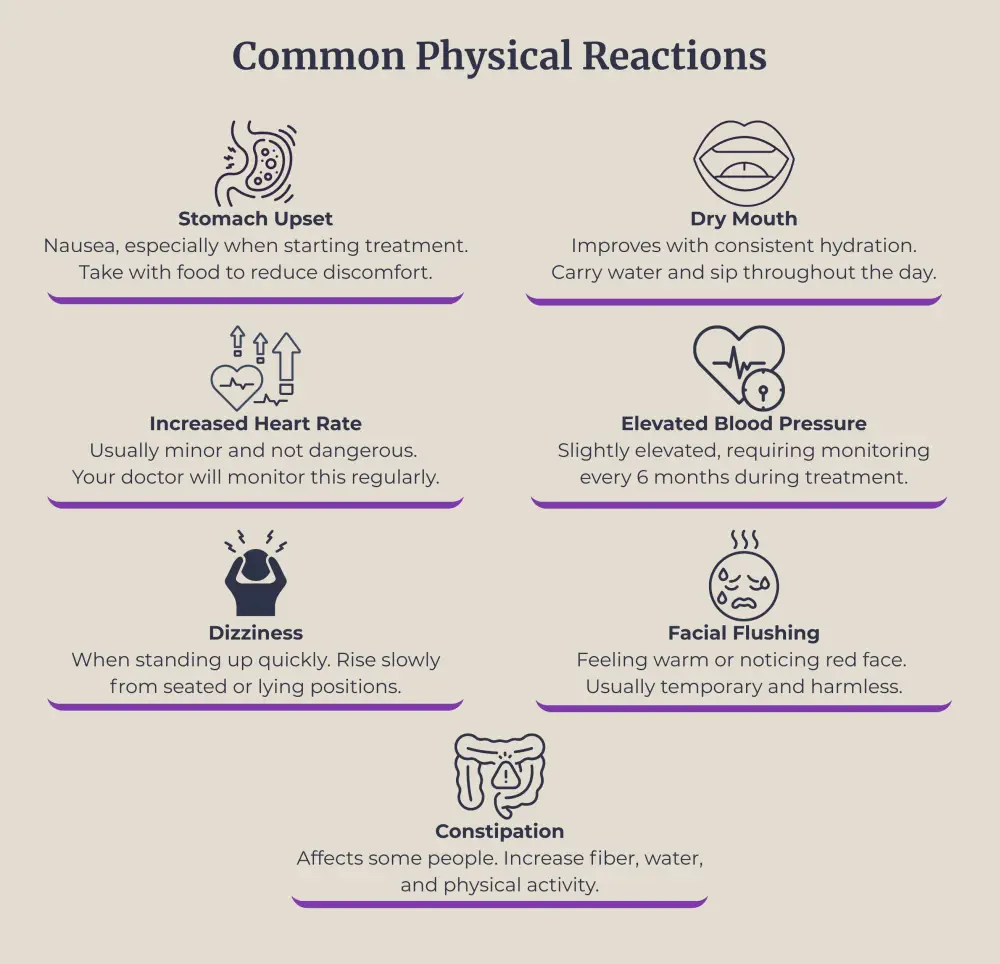
Dry mouth can progress to a more severe condition where tongue irritation, sores, or unusual sensations develop. This condition, known as Adderall tongue, results from how stimulant medications reduce saliva production by affecting your autonomic nervous system.
Non-stimulant medications produce different physical effects. Drowsiness hits many people, particularly when first starting treatment. Some experience fatigue that makes getting through the day challenging. Blood pressure can drop instead of rising, causing lightheadedness.
Which Psychological Side Effects Should You Watch For?
Mood changes represent the most concerning psychological side effects. Some people become irritable or emotionally flat. Others experience anxiety that wasn't there before. The medication might be working for focus, but creating new emotional struggles.
Stimulants can occasionally cause personality changes, including withdrawal in children. Parents describe their kids as "not themselves"—overly quiet, less playful, almost robotic. This "zombie-like" effect usually signals that the dosage is too high.
Tics can emerge or worsen with stimulant treatment. These quick, involuntary movements affect the face most commonly. Most resolve when medication is stopped, though some persist if there's a family history of tic disorders.
The rebound effect creates a brief period of irritability, fatigue, or hyperactivity as medication wears off. Children might become extremely moody in late afternoon as their dose fades. Adjusting timing or adding a small afternoon dose can help.
Depression and anxiety can emerge during treatment. Distinguishing between medication effects and underlying ADHD challenges requires careful observation. People with ADHD commonly struggle with mood regulation anyway, making this assessment tricky.
When Do ADHD Medication Side Effects Become Dangerous?
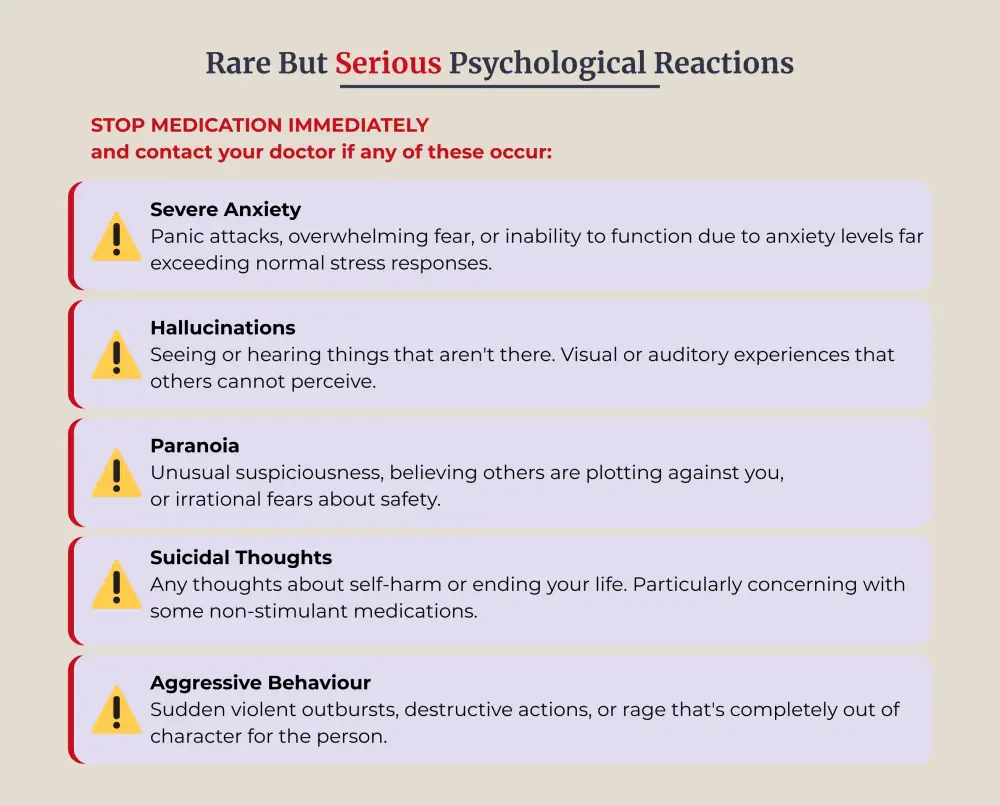
Chest pain demands immediate attention. So does shortness of breath, irregular heartbeat, or feeling like you might faint. These cardiovascular symptoms could indicate serious complications, especially if you have existing heart conditions.
Severe mood changes, including thoughts about self-harm, require emergency intervention. Don't wait until morning or your next scheduled appointment. Mental health emergencies deserve the same urgent response as physical ones.
Signs of psychosis(hallucinations, extreme paranoia, losing touch with reality) mean stopping medication immediately and contacting your doctor. Though rare, affecting roughly 1 in 660 patients on stimulants, these reactions resolve once the medication clears your system.
Allergic reactions can include:
- Hives or a severe rash spreading across your body
- Swelling of the face, lips, tongue, or throat
- Difficulty breathing or swallowing
- Fever combined with skin changes
Liver problems occur rarely with atomoxetine (Strattera). Yellowing skin or eyes signals potential liver damage requiring immediate medical evaluation.
High blood pressure readings consistently above 140/90 need addressing. Regular monitoring every six months helps catch concerning trends before they become dangerous.
How Can You Manage Common Side Effects Effectively?
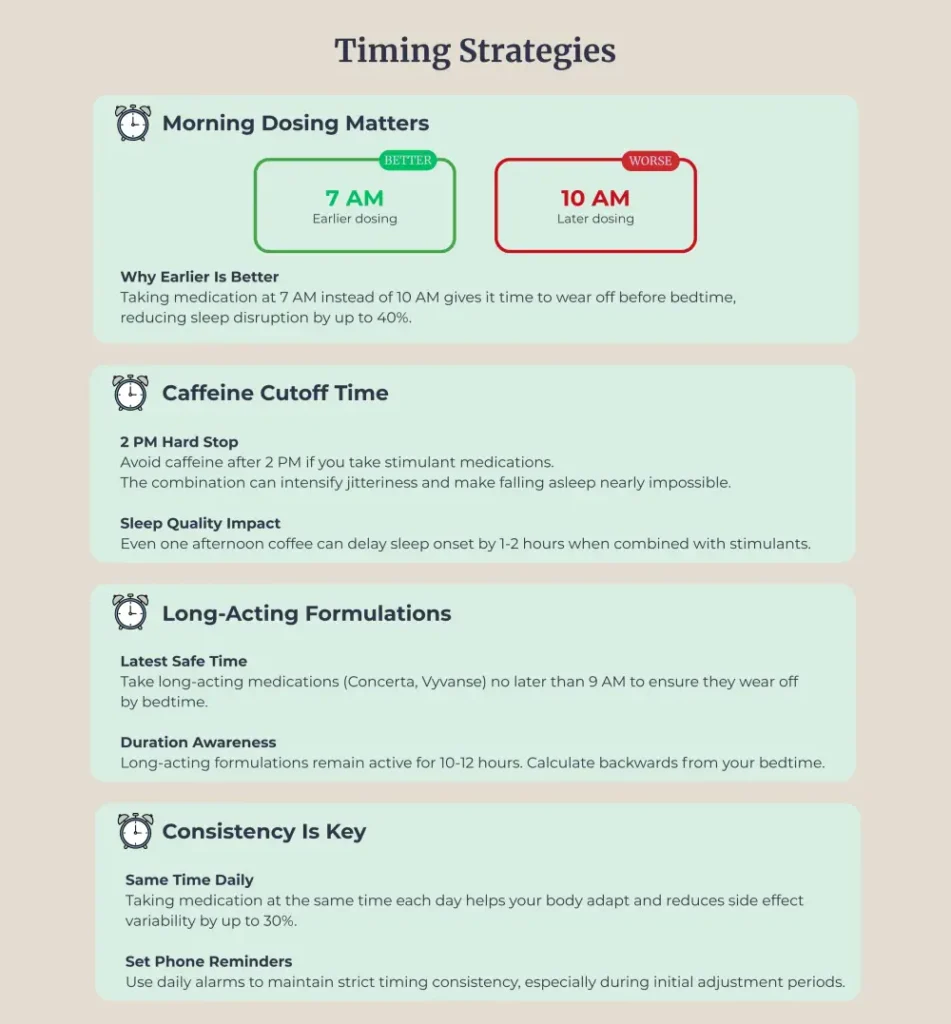
Medication timing creates a domino effect throughout your day. Taking extended-release formulations after 10 a.m. keeps them active at bedtime for most people. Taking them before 7 a.m. usually prevents sleep disruption. Short-acting medications need careful spacing—doses too close together cause jitteriness, too far apart create symptom gaps.
Food interactions vary by medication type. Citrus juices and vitamin C reduce amphetamine medication absorption (Adderall, Vyvanse) by acidifying your stomach, making morning orange juice problematic if you take these medications. This doesn't affect methylphenidate medications like Ritalin or Concerta. High-fat meals delay absorption but don't reduce effectiveness. Protein-rich breakfasts extend how long stimulants work, providing smoother coverage through morning hours.
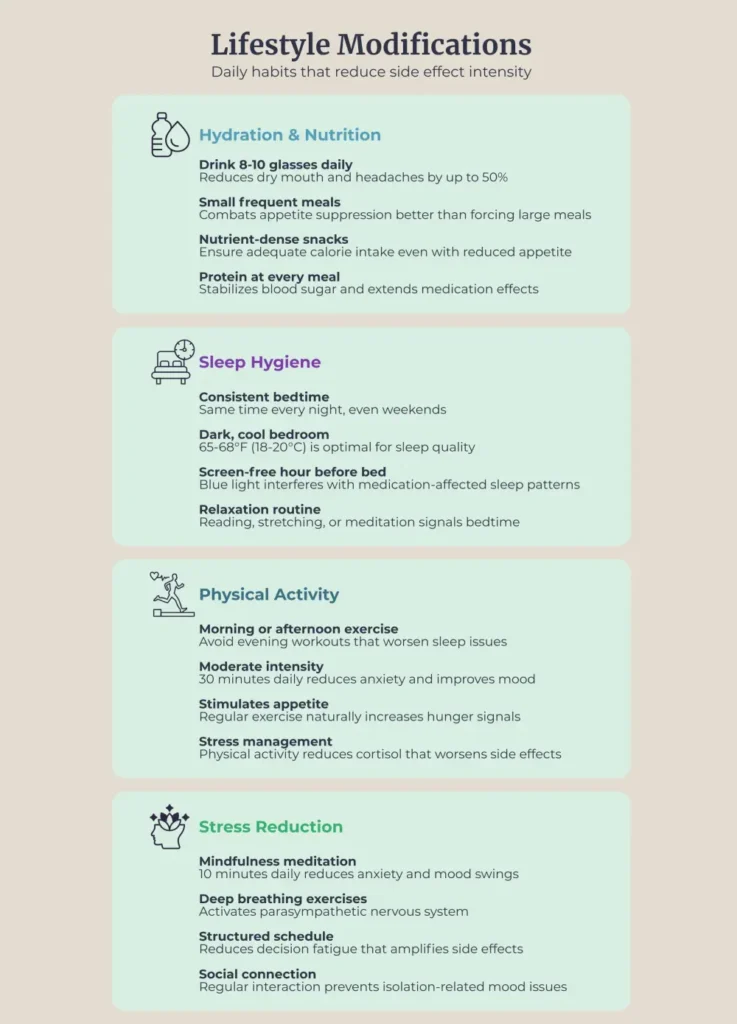
Practical Management Strategies:
- Carry protein snacks (nuts, cheese sticks, hard-boiled eggs) for when hunger returns
- Set phone alarms for consistent daily dosing—irregular timing worsens side effects
- Switch caffeinated drinks to after 2 p.m. cutoff if sleep suffers
- Use blackout curtains and white noise machines if medication disrupts sleep architecture
- Track side effects with specific metrics (hours slept, meals eaten, mood ratings)
- Request pill splitters from your pharmacy if dose adjustments help
Medication "holidays" during weekends or school breaks give some children's bodies a rest from constant stimulant exposure. This strategy helps with appetite and growth concerns, but doesn't suit everyone. Discuss with your doctor if breaks make sense for your situation.
Changes in delivery method sometimes eliminate problems without altering the active ingredients. Methylphenidate patches (Daytrana) bypass stomach upset entirely. Liquid formulations let you fine-tune doses more precisely than pills. Chewable tablets work for people who struggle with swallowing capsules.
Is ADHD Medication Addictive?
Beyond managing immediate side effects, many people worry about long-term dependency risks. Stimulant ADHD medications carry a controlled substance classification because they can be misused. Taking them as prescribed rarely leads to addiction, though. Research shows that properly managed ADHD treatment actually reduces substance use risk in people with ADHD by improving impulse control and reducing the self-medication many use to cope with symptoms.
The question "Is Ritalin addictive?" comes up frequently. When crushed and snorted or injected, yes – stimulants can be misused. Taken orally as prescribed under medical supervision, the risk stays minimal. Extended-release formulations further reduce abuse potential since they can't produce rapid highs.
Non-stimulants like Strattera, Intuniv, and Kapvay carry virtually no abuse potential. They don't create euphoria or the reinforcing effects that lead to addiction. This makes them preferable choices for individuals with personal or family histories of substance use disorders.Anyone with an addiction history needs closer monitoring during treatment. The Canadian Centre for Addictions recognizes this intersection between ADHD and addiction. We provide thorough assessment, frequent check-ins, and integrated support addressing both conditions simultaneously instead of treating them as separate concerns.

When Should You Contact Your Doctor About Side Effects?
Contact your healthcare provider if side effects persist beyond three weeks without improvement. What felt manageable initially might become increasingly disruptive to daily functioning. Waiting months, hoping things improve on their own, rarely works out well.
Don't hesitate to reach out if side effects worsen over time instead of improving. This pattern suggests the medication isn't right for you, regardless of how well it controls ADHD symptoms.
Regular monitoring appointments (ideally every three to six months) help detect concerning patterns early. Your healthcare provider will track height and weight in children, monitor blood pressure and heart rate, and assess overall medication effectiveness. Between appointments, keep a symptom diary noting when side effects occur, their severity, and what makes them better or worse. This information helps your doctor make more precise adjustments.
FAQ
How long do ADHD medication side effects last?
Most common side effects improve within two to three weeks as your body adjusts to the medication. Appetite changes and sleep difficulties resolve first for many people, though others might take up to six weeks. Persistent issues beyond this timeframe usually require dosage adjustments or medication changes instead of continued waiting.
Can I stop ADHD medication if the side effects are too severe?
Never stop medications abruptly without medical guidance. Suddenly discontinuing can cause withdrawal symptoms or rebound effects where ADHD symptoms return more intensely. Contact your doctor immediately if the side effects feel intolerable. They can create a safe discontinuation plan or switch you to alternative treatments.
Do children and adults experience different side effects?
Children more commonly face appetite suppression and temporary growth delays. Adults report sleep disturbances and mood-related issues more frequently. Children might also struggle articulating what they're experiencing, making careful observation by parents and teachers crucial for identifying problems early.
Which types of ADHD medication have fewer side effects?
Non-stimulants cause less appetite suppression and sleep disruption compared to stimulants in most cases. However, they may cause drowsiness, dizziness, and take longer to show benefits. The "best" option varies dramatically between individuals—what causes minimal side effects for one person might be intolerable for another.
How do I know if my ADHD medication dose is too high?
Extreme irritability, emotional flatness (feeling like a "zombie"), severe anxiety, restlessness, or feeling excessively "wired" suggest your dose needs adjustment. Physical signs include rapid heartbeat, excessive sweating, or tremors. Children might become unusually withdrawn or tearful when the dosage exceeds their optimal level.
Can ADHD medications affect my recovery from addiction?
With proper medical supervision, ADHD treatment can support recovery by improving impulse control, reducing the emotional dysregulation that triggers substance use, and decreasing the need for self-medication. The Canadian Centre for Addictions specializes in managing both conditions simultaneously, providing close monitoring and integrated support throughout treatment.
Article sources
- Cortese, S., et al. (2018). "Comparative efficacy and tolerability of medications for attention-deficit hyperactivity disorder in children, adolescents, and adults: a systematic review and network meta-analysis." The Lancet Psychiatry, 5(9), 727-738. Available at: https://pubmed.ncbi.nlm.nih.gov/30097390/
- Faraone, S.V., et al. (2021). "The World Federation of ADHD International Consensus Statement: 208 Evidence-based conclusions about the disorder." Neuroscience & Biobehavioral Reviews, 128, 789-818. Available at: https://pubmed.ncbi.nlm.nih.gov/34391797/
- Swanson, J.M., et al. (2017). "Young adult outcomes in the follow-up of the multimodal treatment study of attention-deficit/hyperactivity disorder: symptom persistence, source discrepancy, and height suppression." Journal of Child Psychology and Psychiatry, 58(6), 663-678. Available at: https://pubmed.ncbi.nlm.nih.gov/28295249/
- Moran, L.V., et al. (2019). "Psychosis with Methylphenidate or Amphetamine in Patients with ADHD." New England Journal of Medicine, 380(12), 1128-1138. Available at: https://pmc.ncbi.nlm.nih.gov/articles/PMC6668944/
- Chang, Z., et al. (2014). "Stimulant ADHD medication and risk for substance abuse." Journal of Child Psychology and Psychiatry, 55(8), 878-885. Available at: https://pubmed.ncbi.nlm.nih.gov/24611799/
- Sommer, B.R., et al. (2018). "Appetite effects of central nervous system stimulants in children with ADHD and comorbid conditions." Journal of Child and Adolescent Psychopharmacology, 28(6), 394-402. Available at: https://pubmed.ncbi.nlm.nih.gov/29570388/
- Hammerness, P., et al. (2009). "Cardiovascular risk of stimulant treatment in pediatric attention-deficit/hyperactivity disorder: update and clinical recommendations." Journal of the American Academy of Child & Adolescent Psychiatry, 48(3), 240-248. Available at: https://pubmed.ncbi.nlm.nih.gov/19242289/
- Castells, X., et al. (2011). "Efficacy of central nervous system stimulant treatment for people with attention deficit hyperactivity disorder: a systematic review and meta-analyses of randomised controlled trials." BMJ Open, 1(1), e000166. Available at: https://pmc.ncbi.nlm.nih.gov/articles/PMC3191378/