

We offer medical detox and multiple addiction treatment options in our
luxury treatment centres in Port Hope, Cobourg, and Ottawa.
Main Signs of Heroin Use

Spotting the signs of heroin use early gives a family more time to act, and in Canada, the cost of missing them has climbed because fentanyl now makes up most of the illegal drug supply. Preliminary Public Health Agency of Canada data recorded 2,787 apparent opioid toxicity deaths in the first six months of 2025, and 97% of them were accidental. Men accounted for 72% of those deaths, and adults aged 30 to 39 made up the largest age group at 26%.
You'll Learn
- Why one detail in a person's eyes points toward opioids
- Which household items look harmless until you know their purpose
- How the way heroin is taken leaves its own marks on the body
- The daily rhythm that separates occasional use from dependence
- What Canadian law says about calling 911 during an overdose
What Are the Signs of Heroin Use in the First Hour After a Dose?
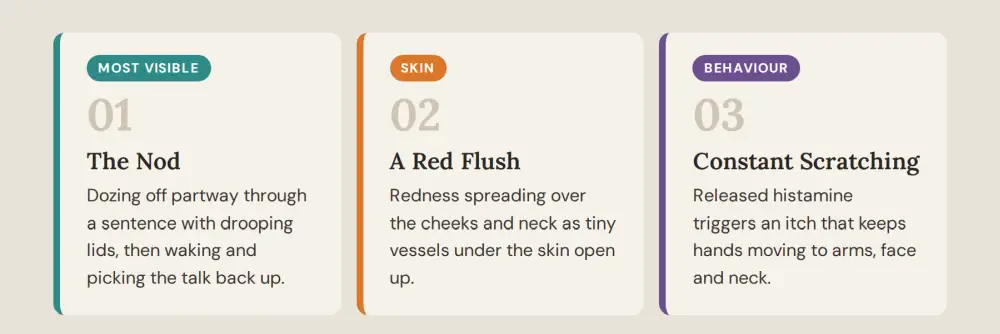
Within minutes of an injected dose, heroin converts to morphine and acts on the opioid receptors that govern alertness, breathing and pupil size. Anyone wondering what the earliest signs of heroin use look like can start with the nod, where a person drifts in and out of sleep mid-conversation with heavy eyelids, then rouses and carries on as if nothing happened. The face and neck can look flushed because the drug widens small blood vessels in the skin, and scratching starts as histamine release sets off itching.
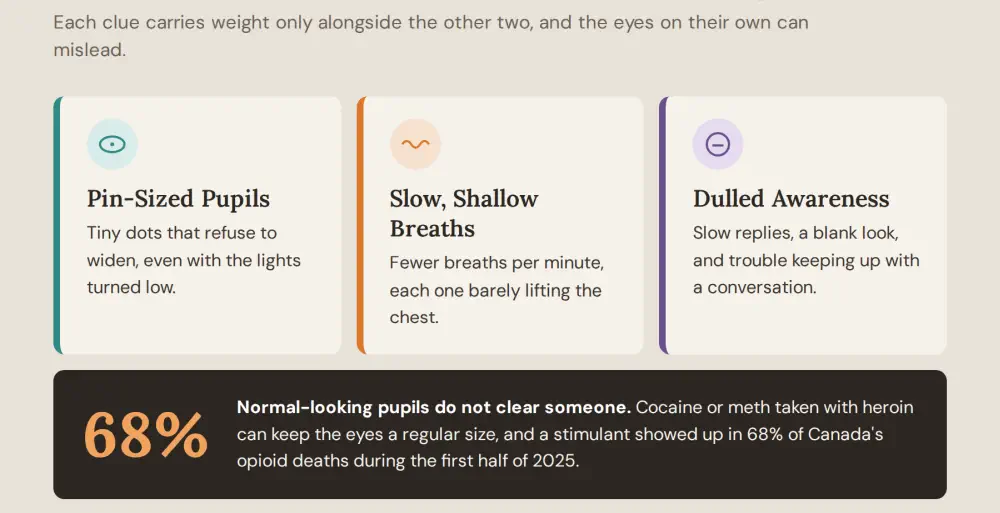
Pupils that shrink to pinpoints and stay small in a dim room belong to the classic trio clinicians look for, alongside slow, shallow breathing and dulled awareness. Cocaine and methamphetamine widen the pupils, so tiny pupils point toward an opioid. Normal-looking eyes do not rule heroin out, since a stimulant taken at the same time can mask the effect, and PHAC found a stimulant also involved in 68% of opioid deaths from January to June 2025.
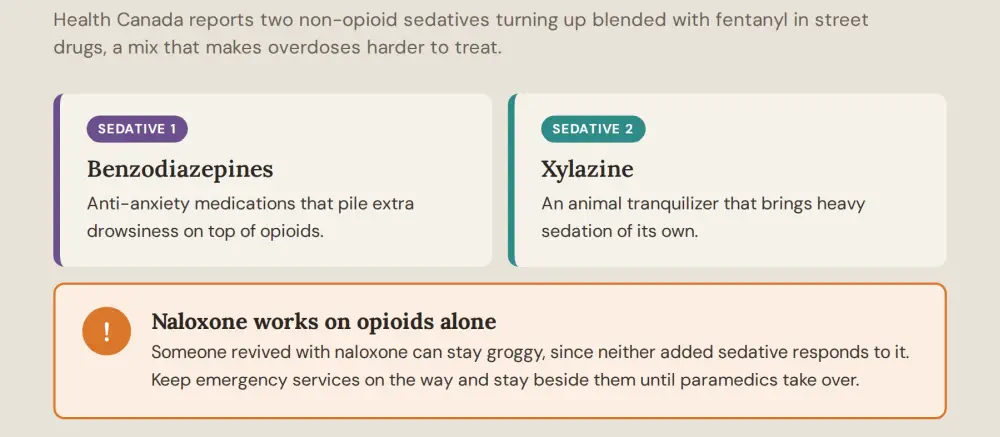
Health Canada reports that benzodiazepines and xylazine are also being mixed with fentanyl in the illegal supply, which complicates treatment. Both are sedatives that naloxone does not reverse, so a person can stay drowsy after an opioid overdose has been treated. A single dose can pass unnoticed, yet repeated use starts leaving marks that last for months.
Which Physical Signs of Heroin Use Reveal How Someone Takes It?
The way heroin enters the body decides where its physical signs show up, so marks on the skin, hands and face can reveal how a person is using it.
Marks Left by Injecting
Track marks form along veins on the inner arms, the backs of the hands, the feet and the skin between the toes. Bruises, scabs and abscesses follow when injection sites become infected.
A person who starts wearing long sleeves through a July heatwave may be covering those sites. The damage reaches past the skin, since screening finds hepatitis A, B or C in roughly 80% to 90% of people who inject opioids.
Burns and Coughing From Smoking
Heated foil and lighters leave small burns or soot on the fingertips and lips. A dry, persistent cough without a cold is another giveaway. Smoking can look like the safer route, yet Health Canada lists smoking opioids alongside injecting as a habit that raises overdose risk, and smoked heroin still produces dependence.
Nasal Damage From Snorting
Repeated snorting irritates the lining of the nose and can eventually perforate the wall between the nostrils. Long before that point, families notice constant sniffing and nosebleeds.
Across every route, weight drops, constipation becomes routine, menstrual cycles turn irregular, and hygiene slips. Sores from picking at itchy skin appear on the face and arms. Organ damage that builds beneath the surface is covered in our guide to the wider damage heroin does to the body.
Which Household Items Point to Heroin Use?
Paraphernalia can turn up in pockets, bathroom cabinets and car consoles well ahead of any admission of use. Each of the items below has an ordinary explanation on its own, and a cluster of them carries far more weight.
- Spoons or bottle caps with scorch marks underneath, used to dissolve the drug over a flame
- Small cotton balls or torn cigarette filters, used to strain the liquid before injecting
- Tinfoil with dark streaks or burn lines, used for smoking
- Cut straws, hollowed pens or rolled bills, used for snorting
- Syringes, orange needle caps, and belts or shoelaces used to raise a vein
- Folded paper squares or small baggies with powder residue
- Lighters kept in unusual numbers by a non-smoker
When one of these items turns up, a calm response keeps the later conversation possible. Take a photo, note the date and location, and leave the item where it was unless it poses a danger. Used needles belong in a puncture-proof container, and a local pharmacy can explain how to dispose of sharps safely.

How Does a Person's Routine Change Once Heroin Comes First?
A daily heroin habit needs daily cash, and the shortfall shows up in wallets, drawers and the medicine cabinet. Small amounts disappear from wallets, jewellery and electronics go missing, and requests to borrow come with vague or changing reasons. Prescription painkillers left over from a relative's surgery can vanish as well. Belongings that once mattered, a gaming console or a bike, quietly get sold online.
Daily schedules bend around the drug as well, with mornings slept away, work hours missed or swapped without explanation, and absences of several hours that go unaccounted for. New contacts appear who call briefly, meet outside, and never come in. At home, phones stay face-down, questions draw anger out of proportion to what was asked, and holidays or birthday dinners get skipped.
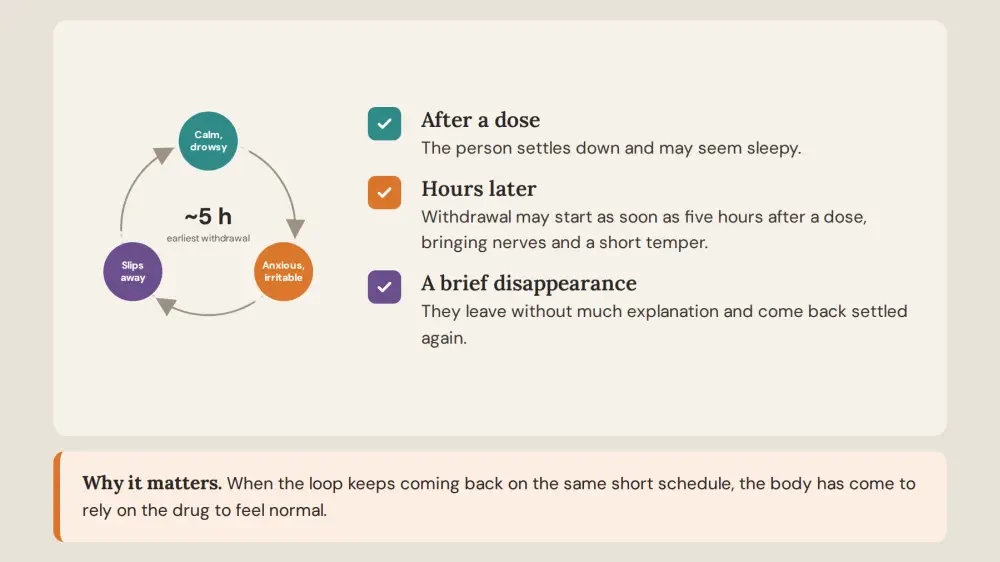
A repeating daily rhythm gives a family one behavioural sign of heroin use; it can time by the clock. A person seems calm or sleepy after using, then turns anxious and irritable several hours later, since heroin withdrawal can begin in as little as five hours. After a short, unexplained absence, the calm returns. A cycle that resets every few hours, day after day, points well beyond occasional use.
H2: Which Signs of Heroin Addiction Do Clinicians Use to Make a Diagnosis?
Clinicians diagnose opioid use disorder when repeated use over 12 months causes problems, and at least 2 of 11 criteria are present, with 6 or more marking a severe case. Those criteria include taking more than intended, failing to cut back, strong cravings, hours lost to getting and recovering from the drug, rising tolerance, and using to avoid withdrawal. Several of these signs of heroin addiction are visible from the outside, especially the broken promises to stop. Tolerance shows up in concrete ways, such as a person who started with one dose a day and now needs several, or someone who moves from smoking to injecting to feel the same effect.
Withdrawal confirms physical dependence, and each clinical symptom has a version families see at home.
| Withdrawal symptom | How it can look at home |
| Dilated pupils, sensitivity to light | Squinting in ordinary room light |
| Runny nose, watery eyes, yawning | Sniffling that gets blamed on allergies or a cold |
| Goosebumps, chills, sweating | Shivering one moment, sweating through a shirt the next |
| Muscle aches | Complaints of aching and trouble getting comfortable |
| Insomnia | Awake through the night, exhausted by day |
| Nausea, vomiting, diarrhea | Skipped meals and frequent bathroom trips |
Tolerance and withdrawal set in quickly with heroin because of how strongly it acts on the brain's reward pathways, which our article on why heroin is so addictive explains in detail. Dependence at that level also raises the stakes of every dose, because nobody buying from the illegal market can know how potent a given batch will be.
What Does a Heroin Overdose Look Like, and What Should You Do in the Next Few Minutes?
During an overdose, the lips and fingernails turn blue or grey, the skin goes cold and damp, and breathing slows, weakens or stops, sometimes with a gurgling or snoring sound, according to Health Canada. Someone who does not respond to a loud voice or a firm shake is in an emergency.
- Call 911.
- Give naloxone if you have it. Kits cost nothing at participating Ontario pharmacies, and the pharmacist shows each person how to use one, with no prescription or Ontario health card needed.
- Follow the dispatcher's instructions, including rescue breathing if asked.
- Stay until paramedics arrive, as naloxone can wear off before the opioid does and a second dose may be needed.
Fear of police keeps some people from dialling 911, and the Good Samaritan Drug Overdose Act was passed to reduce that fear. The law protects the caller, the person overdosing and anyone else at the scene from simple possession charges and from breaching possession-related conditions of parole, probation or pre-trial release. The caller stays covered even after leaving the scene, though the law offers no shield for trafficking or outstanding warrants.

How Can You Bring Up Heroin Without Starting a Fight?
Conversations about heroin go better when they rest on dated, specific observations, so write down what you saw and when before saying a word. "You missed work three times this month, and I found burnt foil in the car on Tuesday" lands differently from "you're using again." Choose a moment when the person is neither high nor sick, and speak from your own worry.
When tolerance and withdrawal show up together, these signs of addiction to heroin call for medical care, so arrive with a concrete next step already in hand. In residential care, withdrawal happens under 24/7 nursing supervision and away from the person's supply and contacts. The weeks that follow go to building coping skills with psychologists before the person returns home. Reviewing the program options for heroin addiction treatment in Ontario ahead of the conversation means the next call is ready once the person agrees.
If the answer is no, pushing harder in the same sitting tends to end the conversation. Keep a naloxone kit somewhere everyone in the house knows about, stop covering debts or missed workdays, and raise treatment again after the next crisis.
Ready to Take the First Step?
Addiction doesn't get better on its own. Call us today for a free, confidential consultation and find out which program is right for your needs.
Using the Same Signs to Spot a Relapse
The checklist keeps its value after treatment ends, because the return of pinpoint pupils, missing cash or the old daily rhythm can be the first warning that use has resumed. That moment carries extra danger, since Health Canada names a dose taken after a period of not using as a higher overdose risk, and families who know the signs of heroin use can act at the first slip.
FAQ
How long does heroin show up in a urine test?
Standard urine screens detect heroin and similar opioids for roughly 12 to 36 hours after use. A marker called 6-MAM, produced only when the body metabolizes heroin, appears in urine for up to 24 hours and confirms heroin specifically.
Will a standard drug test catch fentanyl?
Basic opiate screens are built to detect morphine-type drugs, and fentanyl's different chemical structure means it needs its own test. A negative opiate result can miss fentanyl entirely, so ask the clinic or lab for a fentanyl-specific screen.
Can the signs of heroin use be confused with other conditions?
Prescribed opioid painkillers and some medications, including the blood pressure drug clonidine, also shrink the pupils and cause drowsiness. A bad flu shares the runny nose, aches and chills of withdrawal, so several signs appearing together over weeks tell a family more than any single symptom.
Can a family force an adult into addiction treatment in Ontario?
No Ontario law lets a family place an adult in addiction treatment against their will. The Mental Health Act allows short involuntary hospital admissions only when a person meets criteria tied to a mental disorder, and the province has not introduced involuntary addiction treatment legislation as of fall 2026.
Is it safe to quit heroin cold turkey at home?
Withdrawal can bring vomiting and diarrhea severe enough to cause dehydration, and clinical guidance advises stopping only under medical supervision. Fear of those symptoms is one reason dependent people keep using, which makes stopping alone hard to sustain.
Article sources
- Health Canada. "Canada's overdose crisis and the toxic illegal drug supply." Government of Canada. https://www.canada.ca/en/health-canada/services/opioids/overdose-crisis-toxic-illegal-drug-supply.html
- Public Health Agency of Canada. "Opioid- and Stimulant-related Harms in Canada: Key findings." Health Infobase, December 2025. https://health-infobase.canada.ca/substance-related-harms/opioids-stimulants/
- StatPearls. "Heroin Toxicity." NCBI Bookshelf. https://www.ncbi.nlm.nih.gov/books/NBK430736/
- Medscape. "Heroin Toxicity: Background, Etiology, Pathophysiology." eMedicine. https://emedicine.medscape.com/article/166464-overview
- Shah M, Huecker MR. "Opioid Withdrawal." StatPearls, NCBI Bookshelf. https://www.ncbi.nlm.nih.gov/books/NBK526012/
- Health Canada. "Opioid overdose." Government of Canada. https://www.canada.ca/en/health-canada/services/opioids/overdose.html
- Dydyk AM, Jain NK, Gupta M. "Opioid Use Disorder: Evaluation and Management." StatPearls, NCBI Bookshelf. https://www.ncbi.nlm.nih.gov/books/NBK553166/
- Government of Ontario. "Use a naloxone kit to temporarily reverse opioid overdoses." Ontario.ca. https://www.ontario.ca/page/get-naloxone-kits-free
- Health Canada. "About the Good Samaritan Drug Overdose Act." Government of Canada. https://www.canada.ca/en/health-canada/services/opioids/about-good-samaritan-drug-overdose-act.html