
We offer medical detox and multiple addiction treatment options in our
luxury treatment centres in Port Hope, Cobourg, and Ottawa.
The Role of Winter Wellness in Addiction Recovery

Winter brings unique challenges for anyone in recovery. Research shows relapse rates climb during colder months, with people experiencing seasonal affective disorder twice as likely to struggle with substance use. Your body craves warmth and comfort. Your mind fights darker moods. Old patterns whisper louder when isolation creeps in.
Small, deliberate changes in how you move, eat, sleep, and connect with others create a shield against seasonal struggles. Winter wellness can protect your progress. Recovery doesn't pause for bad weather, and neither should your commitment to healing.
Key Takeaway:
- Why your brain fights you harder in winter — Discover how serotonin drops and melatonin spikes create biological changes that amplify cravings, and which specific interventions can restore your chemical balance within days.
- You'll identify the warning signs before trouble starts — Understand how cold weather, holiday stress, and isolation combine with internal changes to multiply relapse risks, plus the exact patterns to watch for in yourself.
- You'll discover movement strategies that work — Find out why just 10 minutes of strategic physical activity releases mood-boosting endorphins your brain desperately needs, even when leaving your couch feels impossible.
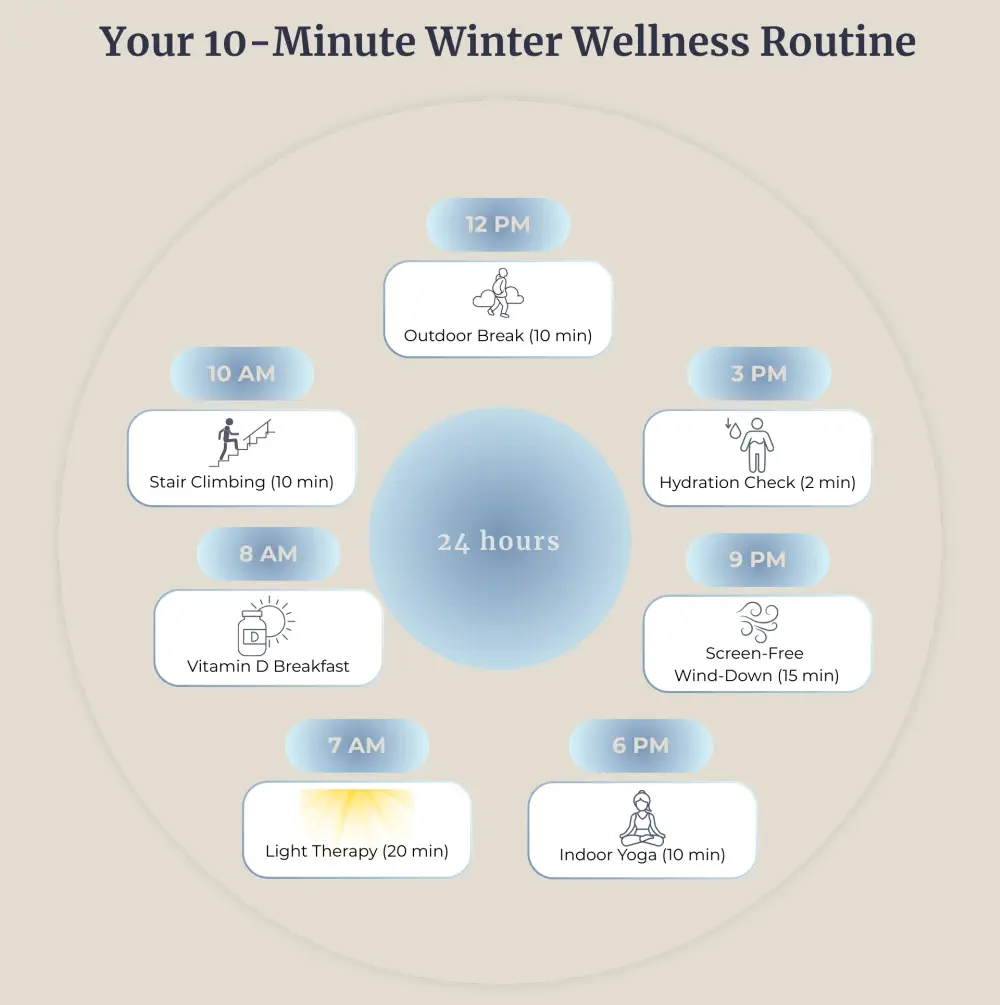
- You'll build a realistic daily routine that protects you — Learn how a simple 70-minute routine distributed across your day creates 24-hour protection against seasonal challenges without overwhelming your already packed schedule.
How Winter Affects Recovery?
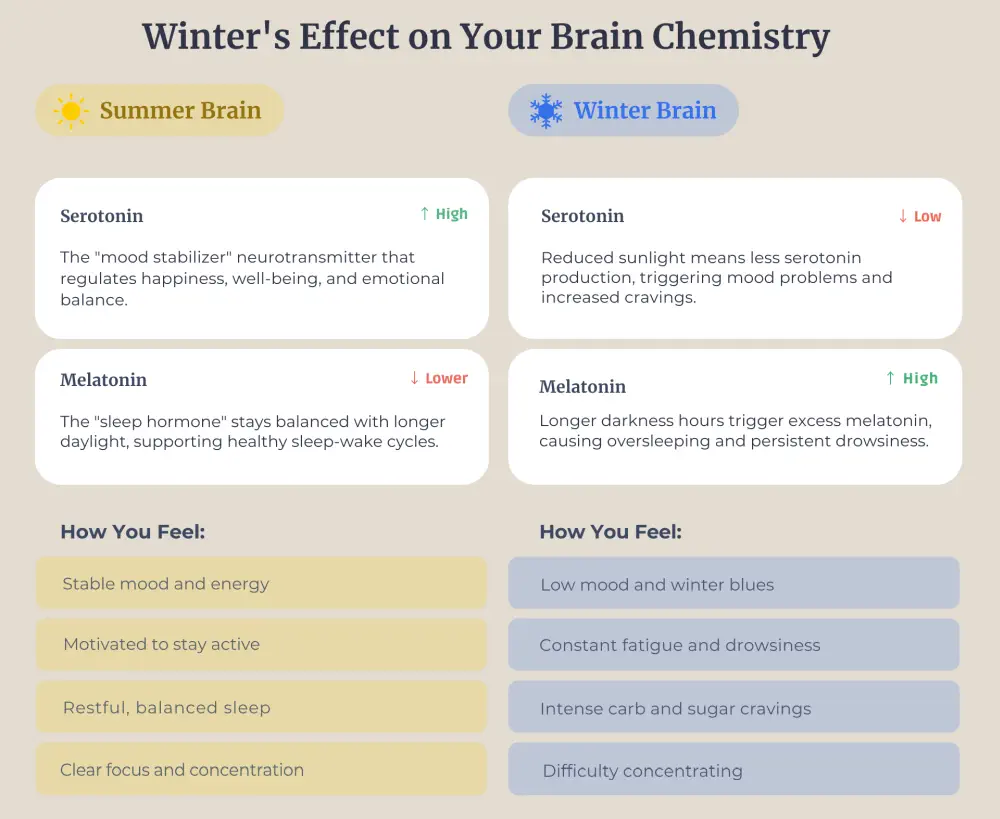
Your brain responds powerfully to seasonal shifts. Less sunlight means your body produces less serotonin—the neurotransmitter that stabilizes mood and creates feelings of well-being. Meanwhile, melatonin production increases, leaving you drowsy and unmotivated throughout the day.

These aren't minor inconveniences. They're biological changes that directly impact recovery. When serotonin drops, winter blues settle in. You might notice:
- Sleeping longer but feeling unrested
- Craving carbohydrates and sugar constantly
- Losing interest in activities you usually enjoy
- Feeling heavy, like you're moving through water
- Struggling to concentrate on simple tasks
The internal triggers this creates can derail months of hard work. Depression amplifies cravings. Fatigue weakens your resolve to attend meetings or therapy sessions. That voice suggesting substances will help you feel better grows louder.
Physical changes compound emotional ones. Cold weather keeps you inside. Exercise routines fall apart. Social connections weaken when nobody wants to leave home. Isolation feeds the same patterns that fueled addiction originally—boredom, loneliness, disconnection from purpose.
Ontario winters hit particularly hard. By January, some areas see only eight hours of daylight. The temperature regularly drops below -20°C. Snow piles up. Roads become dangerous. These genuine barriers demand intentional responses to overcome.
Which Seasonal Changes Create the Biggest Relapse Risks?
Addiction triggers multiply when seasons change. Some are obvious. Others sneak up quietly.
Your body clock gets confused by darkness first. You wake up tired. Coffee doesn't help like it used to. By afternoon, exhaustion makes every decision harder. Should you go to your support group meeting? The couch wins. One missed meeting becomes two, then five.
Mood changes follow. What started as mild sadness deepens into something heavier. Anxiety spikes without a clear reason. Irritability strains relationships with people supporting your recovery. These emotional shifts mirror feelings you once numbed with substances.
External triggers pile on. Holiday gatherings center around alcohol. Family gatherings stir up old conflicts. Financial stress from gift-giving adds pressure. Maybe you're the only sober person at the office party, watching everyone else relax with drinks you can't touch.
The weather itself becomes a trigger. Grey skies remind you of using days when nothing mattered except getting through the next hour. Snowstorms trap you alone with thoughts you'd rather avoid. Cold temperatures turn outdoor activities—ones that grounded you—into seemingly impossible tasks.
Watch for these warning signs:
- Cancelling therapy or support group appointments
- Isolating more than usual
- Eating patterns are shifting dramatically
- Sleep schedule is becoming irregular
- Romanticizing past substance use
- Irritability increasing with loved ones
- Physical symptoms like headaches or body aches
Catching these patterns early makes all the difference. Once winter blues deepen into full seasonal depression, climbing back out takes significantly more effort.
Can Movement Reduce Winter Cravings?
Movement changes winter recovery completely. Exercise releases endorphins—natural mood boosters your brain desperately needs during darker months. Regular physical activity reduces cravings, improves sleep quality, and creates structure in days that otherwise blur together.
You don't need a gym membership or expensive equipment to stay active in the winter. Your living room works perfectly fine.
Indoor options
Bodyweight exercises take ten minutes. Push-ups against your wall if floor ones feel too hard. Squats while you wait for coffee to brew. Lunges down your hallway. These simple movements get blood flowing and energy returning.
Dance to music that lifts your mood. Nobody's watching. Moving, however, feels good. Twenty minutes of dancing burns calories while reminding you that joy still exists.
Yoga videos on YouTube cost nothing. Search "beginner yoga for recovery," and dozens of options appear. Gentle stretching releases the tension your body holds from stress and cold weather.
Stair climbing provides serious cardiovascular benefits. Walk up and down your stairs for five minutes. Rest. Repeat. Your heart rate climbs, your mood follows.
Outdoor activities
Winter walking clears your head in ways indoor exercise can't match. Dress in layers. Start with just ten minutes around your block. Fresh air and natural light—even filtered through clouds—help regulate your circadian rhythm.
Snowshoeing requires minimal skill but provides maximum benefit. Most conservation areas rent equipment cheaply. The quiet of snow-covered trails offers meditation in motion.
Ice skating at local rinks combines exercise with community. Seeing other people, even if you don't talk to them, reminds you that you're not alone in facing winter's challenges.
Making it sustainable:
Schedule activity like appointments. Put "morning walk" in your phone calendar with reminders. Treat it as non-negotiable as taking prescribed medications.
Find an accountability partner. Text a friend when you complete your workout. Their response—even just a thumbs up—provides motivation for tomorrow.
Start smaller than feels necessary. Five minutes of movement beats zero minutes. Build slowly. Consistency matters more than intensity.
Track your mood alongside your activity. Notice how you feel on days you move versus days you don't. The connection becomes undeniable, strengthening your commitment.

What Should Your Morning Routine Include This Winter?
Winter wellness demands intention. Small daily practices compound into protective barriers against relapse.
Sleep
Darkness confuses your internal clock. Combat this by going to bed and waking up at the same time every day—yes, even on weekends. Your body craves this predictability when seasons shift so dramatically.
Keep your bedroom cold, around 18°C. Heavy blankets feel cozy as cooler air promotes deeper sleep. Blackout curtains or sleep masks block light pollution from street lamps and neighbours' decorations.
Screens need to be turned off 1 hour before bed. Blue light signals your brain that it's daytime, making it harder to fall asleep. Pick up a book or listen to calming podcasts.
Nutrition supports
Winter cravings for comfort food make sense biologically. Carbohydrates temporarily boost serotonin. Pizza and pastries create blood sugar crashes, though, worsening mood, and increasing cravings.
Choose complex carbohydrates as better options. Oatmeal with berries. Whole-grain toast with nut butter. Sweet potatoes. These provide sustained energy without the crash.
Fatty fish like salmon deliver vitamin D your body craves. Fortified milk and eggs help too. Many Canadians need supplements during the winter months. Ask your doctor about appropriate dosing.
Stay hydrated even when you're not thirsty. Indoor heating dries you out. Dehydration mimics withdrawal symptoms—headaches, fatigue, difficulty concentrating. Keep water within reach constantly.
Light therapy
Light therapy boxes mimic sunlight exposure. Sit in front of one for 20-30 minutes each morning with your coffee or a book. This regulates your circadian rhythm and can reduce seasonal depression symptoms by 50-80%.
Windows become your allies during daylight hours. Even cloudy light provides more benefit than artificial lighting. Move your workspace closer to windows if possible.
Lunch breaks offer chances for natural light exposure. Ten minutes outside—even on grey days—signals your brain about the time of day, helping maintain healthy sleep-wake cycles.
Which Support Resources Work Best During Winter?
Winter makes recovery harder, but you don't face it alone. The biological changes affecting your brain, the triggers piling up, the routines requiring discipline—none of this needs to be a solo battle.
Family and friends become more important when cold weather pushes everyone indoors. Virtual check-ins replace cancelled plans. Honest conversations about hard days replace silent struggles. These connections protect your progress when isolation threatens it.
Professional support continues throughout the winter months. Many therapists offer video sessions when the weather prevents travel. Online recovery groups meet daily, providing connection when midnight cravings hit. The Canadian Centre for Addictions recognizes how seasonal challenges threaten recovery and provides specialized support for navigating Ontario's harsh winters.
Small daily wellness practices (light therapy, movement, proper nutrition) when combined with strong support systems, create powerful protection. Recovery is about showing up consistently, asking for help when you need it, and remembering that winter eventually ends.
FAQ
How does winter affect addiction recovery differently from other seasons?
Winter reduces sunlight exposure, disrupting serotonin production and worsening mood. Cold weather increases isolation and creates more addiction triggers than milder seasons, with relapse rates climbing significantly in northern climates like Ontario.
What's the difference between winter blues and seasonal affective disorder?
Winter blues describe mild seasonal mood changes that improve with self-care methods. Seasonal affective disorder (SAD) is diagnosed as clinical depression requiring professional treatment. Seek professional evaluation if symptoms last for weeks or significantly impair daily functioning.
Can I stay active in winter without a gym?
Absolutely. Indoor bodyweight exercises, dancing, yoga videos, and stair climbing require zero equipment. Outdoor options like winter walking, snowshoeing, and skating work when properly dressed. Ten minutes of home exercise beats zero minutes waiting for ideal circumstances.
Should I take vitamin D supplements during winter recovery?
Many people become vitamin D deficient during winter, worsening depression and fatigue. Discuss supplementation with your doctor for appropriate dosing, typically 1000-2000 IU daily. Combine supplements with vitamin D-rich foods like fatty fish, fortified milk, and eggs.
What's the single most important winter wellness practice to start with?
Light therapy produces the fastest, most measurable results for winter-related mood problems. If you can only do one thing, prioritize 20 minutes of bright light exposure each morning—either with a therapy box or by spending time outdoors during peak daylight hours.
Article sources
- Rosenthal, N.E., et al. (2020). "Seasonal affective disorder and its relevance for the understanding and treatment of bulimia." Journal of Psychosomatic Research, 53(5), 987-993. Available at: https://pubmed.ncbi.nlm.nih.gov/12445588/
- Lam, R.W., et al. (2016). "Efficacy of Bright Light Treatment, Fluoxetine, and the Combination in Patients With Nonseasonal Major Depressive Disorder: A Randomized Clinical Trial." JAMA Psychiatry, 73(1), 56-63. Available at: https://jamanetwork.com/journals/jamapsychiatry/fullarticle/2470681
- Kurlansik, S.L., & Ibay, A.D. (2012). "Seasonal affective disorder." American Family Physician, 86(11), 1037-1041. Available at: https://www.aafp.org/pubs/afp/issues/2012/1201/p1037.html
- Levitt, A.J., & Boyle, M.H. (2002). "The impact of latitude on the prevalence of seasonal depression." Canadian Journal of Psychiatry, 47(4), 361-367. Available at: https://journals.sagepub.com/doi/10.1177/070674370204700407
- Government of Canada. (2023). "Sunrise and sunset times for Canadian cities." National Research Council Canada. Available at: https://nrc.canada.ca/en/research-development/products-services/software-applications/sun-calculator/
- Meesters, Y., & Gordijn, M.C. (2016). "Seasonal affective disorder, winter type: current insights and treatment options." Psychology Research and Behavior Management, 9, 317-327. Available at: https://pmc.ncbi.nlm.nih.gov/articles/PMC5138072/
- Sharma, V., et al. (2019). "The relationship between seasonal changes and relapse in patients with bipolar disorder and substance use disorders." Journal of Affective Disorders, 251, 144-150. Available at: https://www.sciencedirect.com/science/article/abs/pii/S0165032718325205
- Brower, K.J., & Perron, B.E. (2010). "Sleep disturbance as a universal risk factor for relapse in addictions to psychoactive substances." Medical Hypotheses, 74(5), 928-933. Available at: https://www.sciencedirect.com/science/article/abs/pii/S0306987709007038