We offer medical detox and multiple addiction treatment options in our
luxury treatment centres in Port Hope, Cobourg, and Ottawa.
Love Addiction: How It Can Harm Your Life

Relationships should enrich your life, not consume it entirely. Yet for some people, romantic connections become an all-consuming need that eclipses everything else — work, friendships, personal goals, even basic self-care. This pattern has a name: love addiction. It's a condition where the pursuit of romantic validation becomes as compulsive as any substance dependency, leaving devastation in its wake.
Research indicates romantic dependency symptoms affect approximately 3% to 6% of the general population, with rates climbing to 25% among college students. These cycles of desperation feel impossible to escape. Recognition marks the first step toward freedom, and grasping how deeply this pattern damages your life provides the motivation to seek help.
Key Takeaways:
- What happens in your brain when romantic obsession activates the same neural pathways as cocaine, creating genuine chemical dependency on romantic relationships
- The warning signs that separate healthy attachment from obsessive patterns destroying your mental health, relationships, and physical well-being
- The root causes, from childhood trauma to attachment wounds that make some people vulnerable to relationship obsession, while others maintain healthy boundaries
- The hidden damage love addiction inflicts on career prospects, financial stability, friendships, and family bonds, beyond the obvious romantic turmoil
- How emotional dependency feeds the cycle of anxiety, desperate seeking, temporary relief, and crushing withdrawal that keeps people trapped in toxic relationship patterns
What Is a Love Addiction?
Love addiction represents an excessive emotional reliance on romantic partners for self-worth, identity, and emotional stability. Unlike healthy love, which supports both individuals' growth and respects autonomy, this addictive pattern creates one-sided dynamics where independence dissolves completely.
How Do Neurochemicals Create Love Addiction
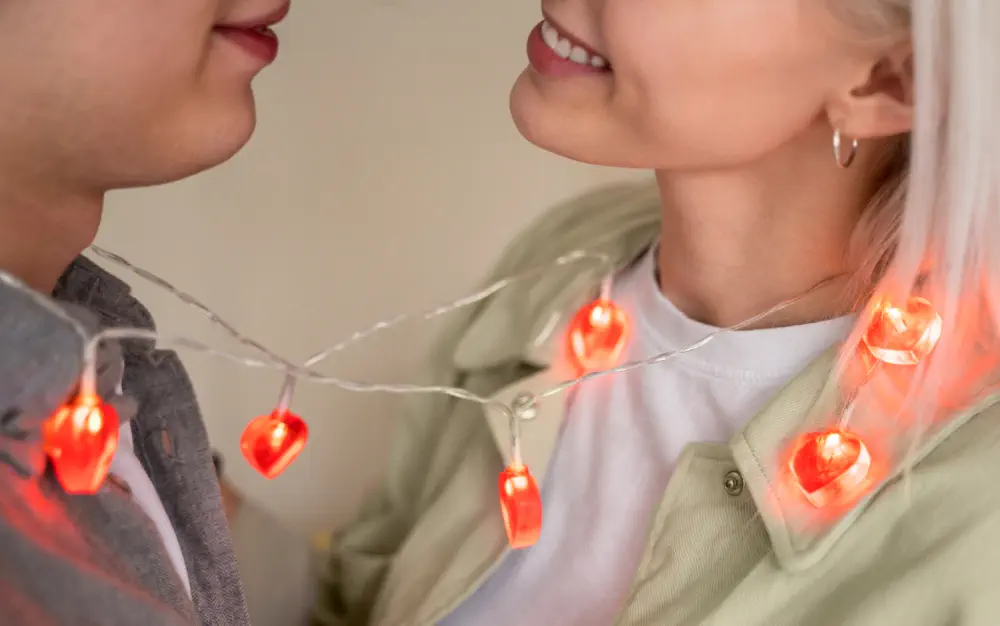
Psychiatric manuals don't officially recognize the term, yet experts increasingly classify it as a behavioural addiction sharing striking parallels with substance dependencies. The brain releases dopamine, oxytocin, and other neurochemicals during romantic experiences. For most people, these create pleasant feelings that enhance bonding. For those with compulsive romantic attachment, the neurochemical surge becomes something they chase compulsively, regardless of consequences.
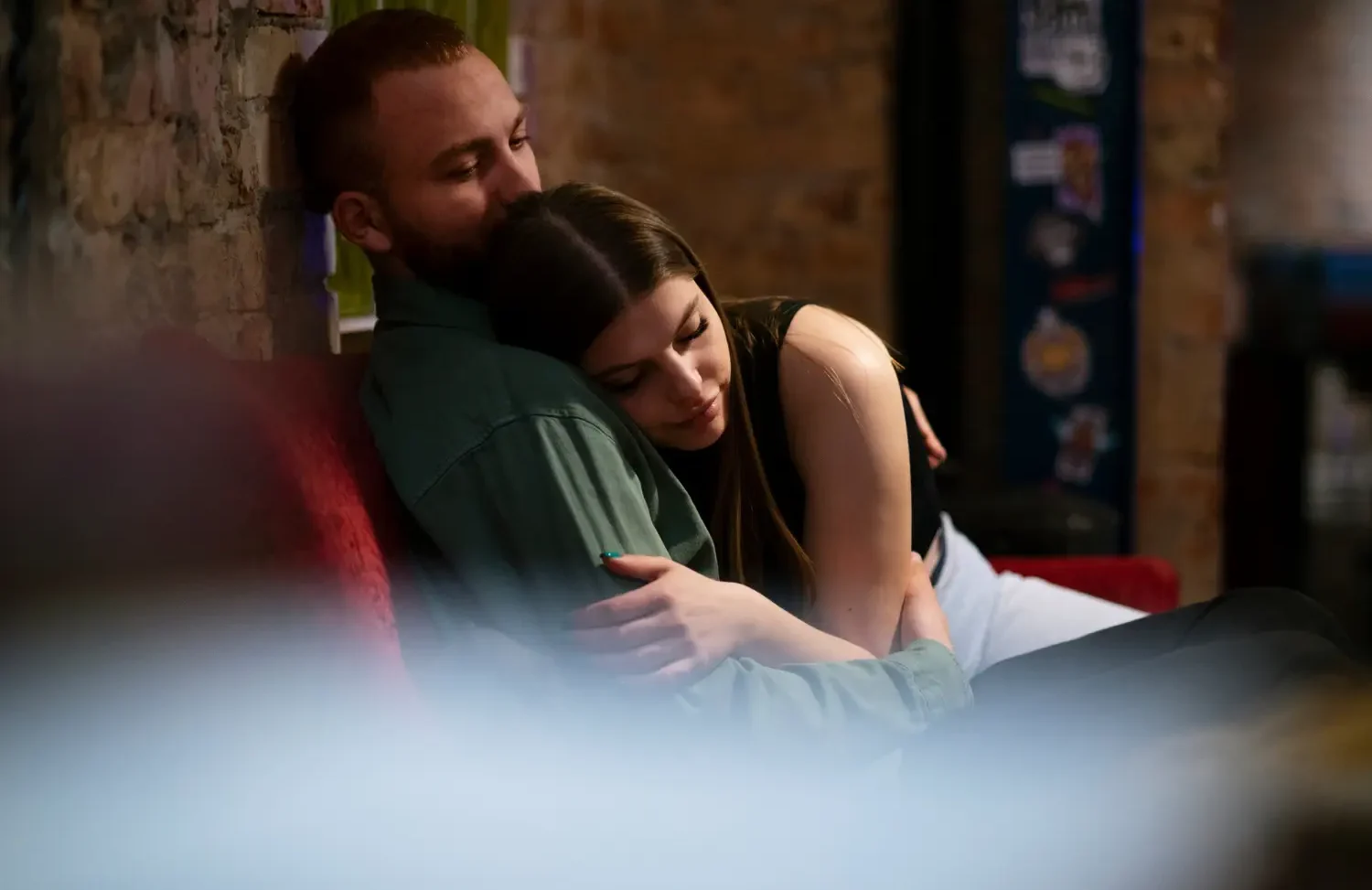
What is a love addiction in practical terms? It's when you can't function without constant romantic validation. Your partner becomes your entire world. Their moods dictate yours. Their approval determines whether you feel worthwhile. This goes beyond romantic devotion—you're trapped in a prison built from emotional dependency and fear.
How Does Your Reward System Create Romance Addiction
Neuroimaging research published in PMC (PubMed Central) demonstrates that romantic obsession activates the brain's reward system regions, also activated by cocaine use, specifically the ventral tegmental area, nucleus accumbens, and caudate nucleus. Both trigger dopamine-driven reward signals. Both create tolerance, requiring increasingly intense experiences to feel satisfied. Both produce genuine withdrawal symptoms when the source disappears.
How Do You Recognize Love Addiction Symptoms?
Warning signs of romantic dependency manifest across emotional, behavioural, and physical domains. Many people dismiss these warning signs as "just being romantic" or "caring deeply." Reality tells a different story.
Emotional Warning Signs
Emotionally, you experience obsessive thinking that won't quit. Partners dominate your mental space during work meetings, family dinners, and attempts to sleep. You replay conversations endlessly. Every text message gets analyzed for hidden meaning. Fear of abandonment colours every interaction, making you desperate for reassurance that they still care.
Your self-worth evaporates without their approval. One compliment sends you soaring. One perceived slight destroys you for days. These wild mood fluctuations exhaust everyone around you, but you can't control them because your emotional regulation depends entirely on someone else's behaviour.
How Does Your Behaviour Change with Relationship Obsession
Behaviourally, patterns emerge that betray the addiction. You jump from relationship to relationship, unable to tolerate being single for even brief periods. The emptiness feels unbearable. Each new partner temporarily fills the void — until the initial excitement fades and you're hunting again for that romantic high.
You stay in toxic relationships that damage you. Friends voice concerns. Family members worry. You see the red flags yourself, yet leaving feels impossible. The pain of separation terrifies you more than ongoing abuse or neglect. This tolerance of harmful treatment mirrors how substance users continue despite mounting consequences.
Your personal responsibilities suffer. Work performance drops because you're distracted or exhausted from relationship drama. Friendships fade because you cancel plans whenever your partner wants attention. Hobbies disappear. Personal goals get abandoned. Everything becomes secondary to maintaining the relationship.
Physical Symptoms and Health Impact
Physically, compulsive romantic attachment takes a toll. Sleep disturbances plague you — either insomnia from anxiety or oversleeping from depression when relationships falter. Chronic fatigue persists regardless of rest. The immune system weakens under constant stress. Some people experience headaches, digestive problems, or muscle tension directly tied to relationship turbulence.
What Factors Lead to Love Addiction?
Romantic dependency rarely appears randomly. Roots usually trace back to childhood experiences that shaped how you learned to seek connection and validation.
Childhood Trauma Role
Insecure attachment patterns form early. Children who experienced inconsistent caregiving, emotional neglect, or outright abandonment end up with nervous systems wired for anxiety in relationships. Their brains never learned healthy self-soothing. They never internalized the secure knowledge that they're inherently worthy of love.
As adults, these individuals desperately seek the consistent affection that childhood denied them. Romantic partners become stand-ins for parents who couldn't provide stable love. Each relationship represents another attempt to finally receive the unconditional acceptance they've craved since infancy.
Trauma and Self-Worth Issues
Childhood trauma amplifies vulnerability. Physical, emotional, or sexual abuse teaches children that their worth depends on others' treatment of them. Low self-esteem becomes foundational to their identity. They enter adulthood believing they need external validation to have any value.
Previous relationship trauma compounds the problem. Betrayals, abandonments, or rejections create wounds that never heal properly. Healthy boundaries never form. Some people adopt increasingly desperate strategies to avoid future pain—clinging tighter, sacrificing more, accepting less.
Biological and Cultural Influences
Genetic factors play a role, too. Research suggests people with family histories of addiction show greater susceptibility to all addictive behaviours, including love addiction. Their brain chemistry responds more intensely to reward experiences, making the neurochemical rush of new romance particularly compelling.
Cultural messages don't help. Movies, songs, and social media glorify obsessive love as the ultimate romantic ideal. "I can't live without you" becomes a declaration of devotion when it's actually a warning sign. Young people absorb these messages and mistake emotional dependency for passion.
These root causes, left unaddressed, create widespread damage across every life domain.
How Does Relationship Obsession Harm Your Daily Life?
Mental health deteriorates steadily. Anxiety becomes your constant companion, fed by fears of abandonment and desperate needs for reassurance. Depression descends during relationship turbulence or between partnerships, bringing hopelessness that colours everything grey. Some people experience symptoms mimicking borderline personality disorder—intense fears of abandonment, unstable sense of self, and extreme emotional reactivity.
Identity dissolves completely. Ask yourself who you are without a romantic partner, and you draw a blank. Interests became their interests. Friends became their friends. Goals shifted to accommodate their needs. Now you're a ghost of your former self, defined entirely by relationships that come and go.
Physical Health Consequences
Physical health suffers under chronic stress. Cortisol floods your system constantly, weakening immune function and leaving you vulnerable to illness. Sleep deprivation accumulates. Appetite changes lead to weight fluctuations. Some people end up with stress-related conditions like high blood pressure or digestive disorders.
Relationships and Social Isolation
Relationships outside romance crumble. Friends grow tired of being abandoned whenever you enter a new relationship, only to be desperately needed again when it ends. Family members feel hurt by your neglect and worried by your choices. Social isolation increases as your world shrinks to just you and whoever you're currently fixated on.

Career and Financial Impact
Professional consequences mount. Missed deadlines pile up because relationship drama consumed your attention. Opportunities pass you by because you couldn't focus during crucial moments. Some people lose jobs entirely after too many absences or too much visible distress at work. Financial stability erodes alongside professional standing.
The cycle perpetuates itself. Each failed relationship reinforces beliefs about your unworthiness. Each desperate attempt to fill the emptiness drives potential partners away or attracts people who exploit your vulnerability. Trauma accumulates, making future healthy relationships even harder to build.
This destructive pattern has a name at its core: emotional dependency.
What's the Connection Between Love Addiction and Emotional Dependency?
Emotional dependency means relying entirely on others for feelings of security, worth, and stability. Dependent individuals lack internal resources for emotional regulation, so they seek external sources. Romantic partners become emotional life support systems.
The Addiction Cycle
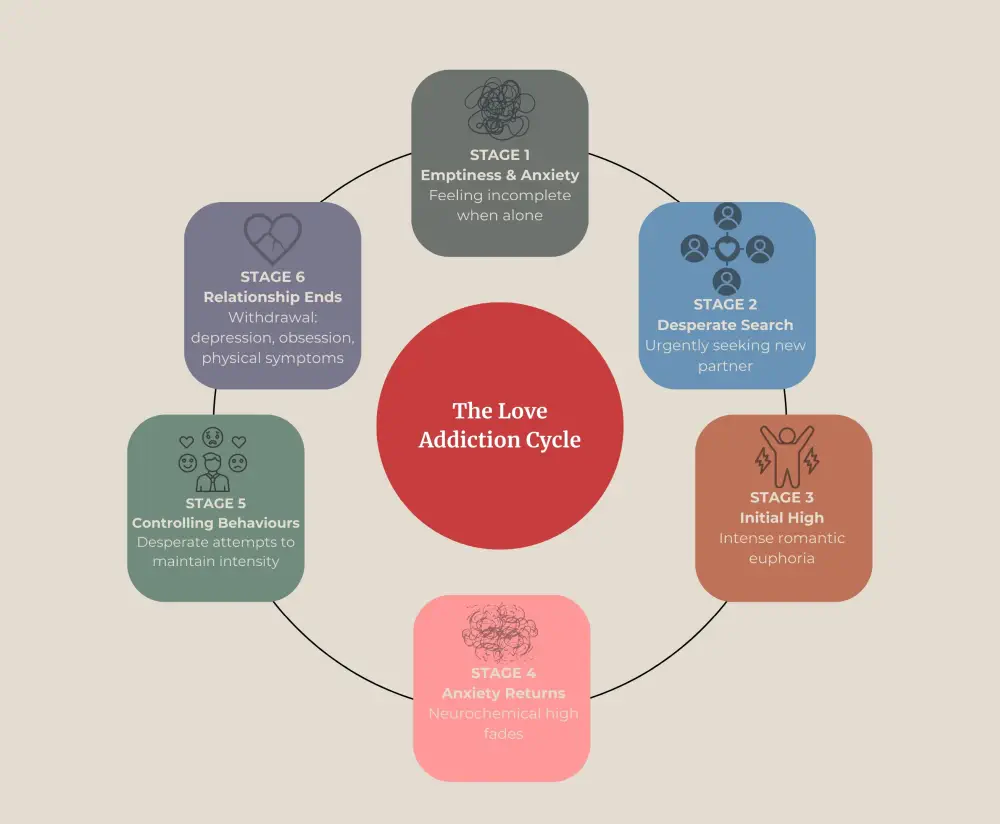
Love addiction represents emotional dependency taken to its most destructive extreme. All addictive behaviours share this quality: using external substances or experiences to manage internal states you can't regulate alone. For some people, that external substance is romantic love.
Research published in Frontiers in Psychology found that emotional dependency correlates strongly with multiple addictive behaviours. People with anxious attachment styles and poor impulse control showed elevated rates of both relationship addiction and substance abuse. What connects them? Inability to self-soothe or tolerate uncomfortable emotions without external intervention.
Breaking this cycle requires deliberate action and professional support.
How Can You Break Free from Love Addiction?
Love addiction damages every aspect of life—from mental health and relationships to career and physical well-being. The cycle of emotional dependency traps people in patterns that feel impossible to escape, yet recovery remains achievable with proper support.
Recognition marks the beginning of change. Professional help, whether through therapy, support groups, or treatment programs, provides the guidance needed to break free and rebuild a healthier relationship with yourself and others.
Ready to break free? Contact the Canadian Centre for Addictions at 1-855-499-9446 for professional support addressing romantic dependency.
FAQ
Is love addiction a real medical condition?
While not officially listed in the DSM-5, love addiction exhibits characteristics consistent with other behavioural addictions. Clinicians increasingly recognize it as a legitimate condition requiring treatment, sharing neurobiological features with substance dependencies.
Can you be addicted to a person?
Yes. The brain's reward pathways activate similarly whether seeking drugs or romantic attention. People can form compulsive patterns around specific individuals, experiencing cravings, tolerance, and withdrawal symptoms characteristic of addiction.
How long does recovery from love addiction take?
Recovery timelines vary based on severity, trauma history, and treatment engagement. Initial stabilization might take several months. Deeper healing addressing underlying attachment wounds usually requires one to two years of consistent therapeutic work.
What's the difference between loving someone and being addicted to them?
Healthy love supports both partners' individual growth, respects boundaries, and maintains separate identities. Addictive attachment involves desperate dependency, identity loss, tolerance of harmful treatment, and inability to function without the relationship. The distinction lies in whether love enhances or consumes your life.
Can love addiction lead to substance abuse?
Absolutely. Studies show strong correlations between emotional dependency in relationships and substance use disorders. Many people with relationship obsession turn to alcohol, drugs, or other addictive behaviours, attempting to manage overwhelming emotions when relationships fail.
Article sources
- Sussman, S., et al. (2011). "Prevalence of the addictions: A problem of the majority or the minority?" Evaluation & the Health Professions, 34(1), 3-56. Available at: https://journals.sagepub.com/doi/10.1177/0163278710380124
- Fisher, H.E., et al. (2010). "Reward, addiction, and emotion regulation systems associated with rejection in love." Journal of Neurophysiology, 104(1), 51-60. Available at: https://pmc.ncbi.nlm.nih.gov/articles/PMC2913636/
- Earp, B.D., et al. (2017). "Addicted to love: What is love addiction and when should it be treated?" Philosophy, Psychiatry, & Psychology, 24(1), 77-92. Available at: https://muse.jhu.edu/article/651566
- Reynaud, M., et al. (2010). "Is love passion an addictive disorder?" The American Journal of Drug and Alcohol Abuse, 36(5), 261-267. Available at: https://pubmed.ncbi.nlm.nih.gov/20545602/
- Zou, Z., et al. (2016). "Definition of substance and non-substance addiction." Advances in Experimental Medicine and Biology, 1010, 21-41. Available at: https://pubmed.ncbi.nlm.nih.gov/28050828/
- Burkett, J.P., & Young, L.J. (2012). "The behavioral, anatomical and pharmacological parallels between social attachment, love and addiction." Psychopharmacology, 224(1), 1-26. Available at: https://pmc.ncbi.nlm.nih.gov/articles/PMC3469771/