We offer medical detox and multiple addiction treatment options in our
luxury treatment centres in Port Hope, Cobourg, and Ottawa.
Can You Take Melatonin With Alcohol?

Reaching for a supplement to sleep off a few drinks can feel harmless, since melatonin comes from your own body and alcohol brings on drowsiness by itself, yet that reasoning does not hold up.
Health professionals advise against combining melatonin and alcohol, because the two together deepen sedation and slow your thinking more than either produces alone, and the supplement cannot repair the damage alcohol does to a full night of sleep.
The trouble runs past a single groggy morning, reaching from the melatonin your body stops releasing after a few drinks to the nightly habit the mix can quietly build.
You'll Learn
- What two supposedly gentle sleep helpers do to each other once they share your bloodstream.
- The reason a few evening drinks quietly lower the melatonin your brain was about to release.
- What drives the heavy, unsteady sedation when both land at the same time.
- The side effect that tempts people into swallowing far more melatonin than they should.
- Why melatonin cannot rescue a hangover, and can leave its own grogginess on top of one.
- The waiting window that keeps a nightcap from cancelling out your dose.
- The moment a nightly mix of drinks and supplements turns into a warning sign.
Is It Safe To Combine Melatonin and Alcohol?
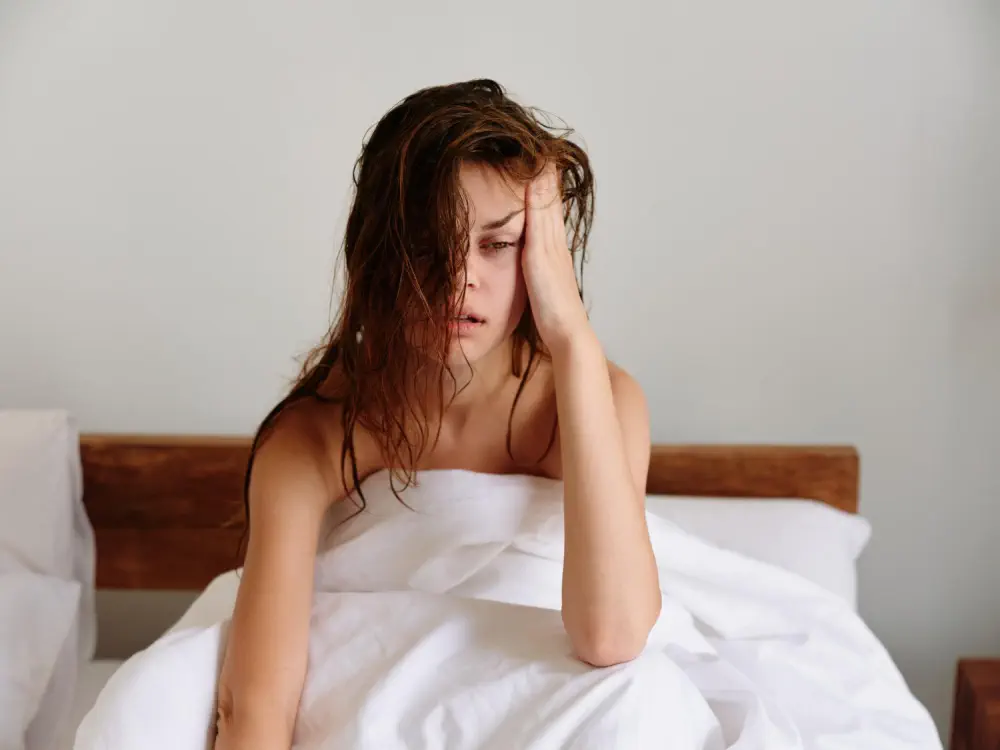
The short answer is no, and clinicians recommend keeping them apart.
Melatonin signals the body that night has arrived and quiets the brain's wake-promoting activity so sleep can follow 1. Alcohol slows that same central nervous system, so taking melatonin with alcohol stacks two slowing effects at once.
That stacking tends to produce:
- Heavier drowsiness than either substance causes alone
- Poorer coordination and slower reaction time
- Duller thinking and weaker judgement
The supplement also does nothing to repair the sleep that alcohol fractures later in the night, so the pairing carries the drawbacks without the benefit.
How Does Drinking Change the Melatonin Your Body Already Makes?
Alcohol does more than add its own drowsiness, because it suppresses the melatonin your body was about to release. Your pineal gland normally sends that hormone out once darkness falls, rising through the overnight hours to keep circadian timing steady 2.
Evening drinking cuts that release sharply. A controlled study of healthy volunteers found alcohol lowered nocturnal melatonin by roughly 41 percent around midnight, with heavier drinking causing a steeper drop and a rise in the body's alerting chemicals that the researchers linked to disturbed sleep 3.
That suppression is why the sleepiness after a few drinks never becomes real rest, and why the link between alcohol and melatonin runs opposite to what most people expect.
Why Does The Melatonin and Alcohol Interaction Intensify Sedation?
The two intensify each other largely because of the liver, which handles most of the breakdown of melatonin and clears much of an oral dose before it reaches the bloodstream 4.
Alcohol claims the liver's attention at the same time, so both substances can stay active longer than planned. That extended overlap deepens sedation, slows breathing during sleep, and can lower blood pressure enough to bring on dizziness.
Here is how the three situations compare:
| On its own | Effect on the nervous system | Effect on the night's sleep |
| Melatonin | A gentle cue that prompts sleep timing | Supports the body's own rhythm |
| Alcohol | Sedates early, then rebounds and disrupts | Fragments the second half of the night |
| The two combined | Deeper, longer suppression | Broken sleep with heavier next-day dullness |
Who faces the most risk?
The combined slowdown lands hardest on people whose breathing or circulation is already vulnerable:
- Older adults, who clear both substances more slowly
- Anyone with sleep apnea, whose breathing can drop further overnight
- People with low blood pressure, prone to dizziness and falls
What Are The Common Alcohol and Melatonin Side Effects?
The reactions from mixing the two range from unpleasant to outright unsafe, and they grow stronger the more you drink. The ones people notice most:
- Excessive drowsiness that stretches well past waking
- Dizziness and unsteadiness, with a higher chance of falls
- Anxiety and low mood the following day
- Headache and nausea, alongside a dull, foggy head
- Slowed coordination and delayed reaction time
- Morning grogginess that is hard to shake
A behavioural risk is on top of the physical ones.
When the mix fails to deliver deep sleep, the pull is to take another dose, then another, which is how a supplement most people treat as harmless edges toward a melatonin overdose, a state that can leave you groggier and more unwell the next day than the sleeplessness it was meant to solve.
Can Melatonin Prevent or Cure a Hangover?
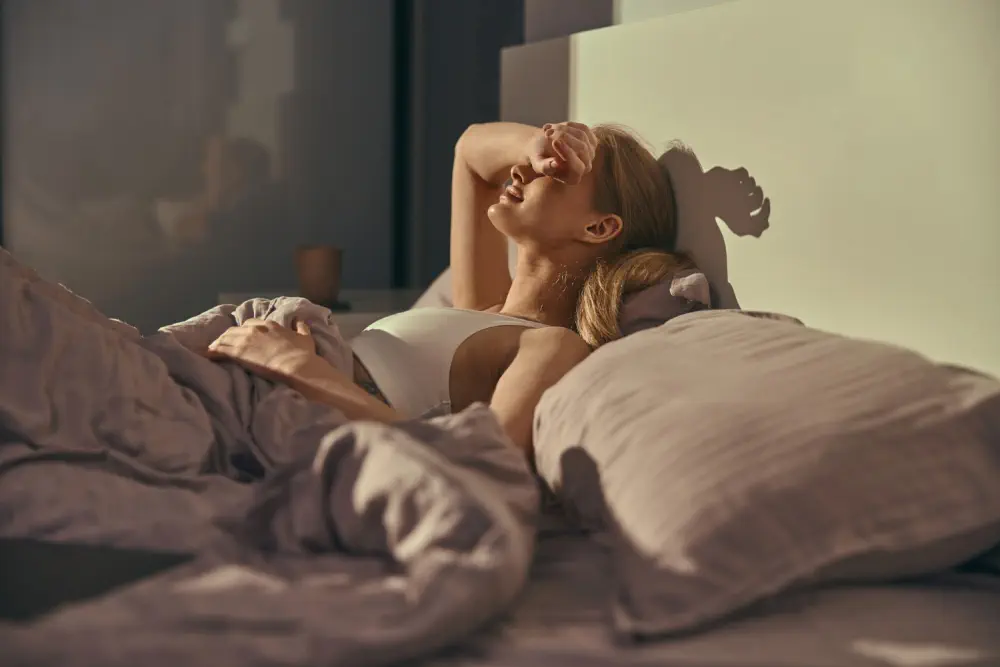
No. Melatonin has no power over a hangover, and taking it after drinking tends to make the following morning worse.
Melatonin cannot:
- Speed your body's clearing of alcohol
- Neutralize the by-products behind hangover symptoms
- Ease the headache, nausea, or mental fog that follow a heavy night
The hangover comes from the alcohol itself. Research on the morning after heavy drinking shows real declines in attention, memory, and driving ability for as long as the after-effects last, and combining melatonin and alcohol does nothing to shorten that window 5.
The supplement carries its own catch, since a dose taken too late can leave behind a melatonin hangover of grogginess, dull focus, and heaviness that trails well into your waking hours, and the larger doses many people take make it worse.
Stacked on top of an alcohol hangover, that second melatonin hangover can turn a slow morning into a lost one, so pairing the two hands you both at once.
How Long Should You Wait To Take Melatonin After Drinking?
The safest choice is to skip melatonin on any night you have been drinking and let your body settle on its own. Canadian guidance favours the lowest effective dose in general, since more does not reliably improve sleep and the evidence for melatonin in ordinary insomnia stays mixed 6.
If sleep still will not come, a few rules lower the risk:
- Wait several hours after your final drink so the alcohol has mostly cleared
- Keep the dose low, and give it time to work
- Skip it altogether on heavy nights, when the slowdown is greatest
The timing question points to a deeper one for anyone who needs melatonin most nights to fall asleep after drinking, since that pattern shows less of a passing sleep problem and more of a reliance building around both. Once the nightly pairing of melatonin and alcohol turns into routine, both melatonin's addictive potential and the drinking behind it deserve an honest look.
When Does Relying On Melatonin After Drinking Point To a Bigger Problem?

A line runs between an occasional restless night and a sleep problem that keeps returning because drinking keeps driving it. Reduced melatonin and a delayed nocturnal peak show up in people with alcohol dependence, so the sleeplessness that sends someone back to the supplement can itself mark how far the drinking has gone 7.
A few signs suggest the problem runs deeper than sleep:
- Needing a drink most evenings to fall asleep
- Depending on melatonin nearly every night to drift off
- Sleep that stays broken even after cutting back
- A rising tolerance, where the usual amount no longer works
When drinking is the force behind the broken sleep, the durable fix addresses the drinking.
Medically supervised withdrawal removes the danger from the early days, structured coping skills replace the reach for a bottle or a sleep aid, and family involvement rebuilds the support that dependence erodes.
Residential care built around alcohol addiction treatment in Ontario keeps that work in one controlled setting, where our trained staff guide recovery around the clock and no one faces the hardest nights alone.
The Safer Way to Sleep After a Night Out
Sleep tends to right itself once alcohol stops steering it, which is the part no supplement can shortcut. The reader who keeps needing a chemical nudge to sleep after drinking has already found the more useful answer, and it points squarely at the drinking behind the sleeplessness.
Ready to take the first step?
Addiction doesn't get better on its own. Call us today for a free, confidential consultation and find out which program is right for your needs.
Sources
- Savage RA, Zafar N, Yohannan S, Miller JMM. "Melatonin." StatPearls. StatPearls Publishing. https://www.ncbi.nlm.nih.gov/books/NBK534823/
- Arendt J, Aulinas A. "Physiology of the Pineal Gland and Melatonin." Endotext. MDText.com. https://www.ncbi.nlm.nih.gov/books/NBK550972/
- Ekman AC, Leppäluoto J, Huttunen P, Aranko K, Vakkuri O. "Ethanol inhibits melatonin secretion in healthy volunteers in a dose-dependent randomized double blind cross-over study." The Journal of Clinical Endocrinology & Metabolism. https://pubmed.ncbi.nlm.nih.gov/8370699/
- Tordjman S, Chokron S, Delorme R, et al. "Melatonin: Pharmacology, Functions and Therapeutic Benefits." Current Neuropharmacology. https://pubmed.ncbi.nlm.nih.gov/28503116/
- Gunn C, Mackus M, Griffin C, Munafò MR, Adams S. "A systematic review of the next-day effects of heavy alcohol consumption on cognitive performance." Addiction. https://www.ncbi.nlm.nih.gov/pmc/articles/PMC6282576/
- Hamel C, Horton J. "Melatonin for the Treatment of Insomnia: A 2022 Update." Canadian Agency for Drugs and Technologies in Health. https://www.ncbi.nlm.nih.gov/books/NBK605080/
- Vengeliene V, Noori HR, Spanagel R. "Activation of Melatonin Receptors Reduces Relapse-Like Alcohol Consumption." Neuropsychopharmacology. https://pmc.ncbi.nlm.nih.gov/articles/PMC4864625/
FAQ
How long after drinking should I wait before taking melatonin?
The safest move is to skip melatonin entirely on a night you have been drinking. If sleep is out of reach, wait several hours after your last drink so the alcohol has mostly cleared, then take the lowest dose that tends to help you.
Will melatonin help me sleep after I have been drinking?
Not in any meaningful way. Alcohol has already disrupted the structure of your sleep, and melatonin cannot rebuild it, so the pairing usually leaves you with lighter sleep and more grogginess the next morning than either one would on its own.
Can you take melatonin with a glass of wine?
Wine follows the same rules as any other alcohol. What matters is the amount you drink and how close it falls to your melatonin dose, not the type of drink, so even a single glass with dinner warrants a gap before you reach for the supplement.
Is taking melatonin every night safe?
For most healthy adults, short-term use is considered low-risk. Nightly reliance is a different matter, because leaning on it every evening can hide stress, alcohol use, or a sleep disorder that would be better treated at its source than masked with a supplement.
Does melatonin interact with medications besides alcohol?
Yes. Melatonin can interact with blood thinners, blood-pressure and diabetes medications, and hormonal birth control, among others, so a quick review with your pharmacist is worth doing before you combine it with anything you take regularly.